
The foundational work that sets strategy up for success
This is the foundation underneath every confident commercial move in food and drink. It is the brief that lands when something has shifted and the data is not telling you why, when a category is moving and you cannot read the direction, when an emerging behaviour is starting to look like a real trend, or when you are about to invest and need to see the territory clearly before you commit.
The work spans two modes. Structured insight research, where the question is “we need to know this for certain.” And agile innovation immersion, where the question is “we need to get closer to what is changing.” Most briefs use both. The data-led structured work tells you what is happening at scale. The immersive innovation work tells you where the category is moving next, and why.
What lands at the end of the work is a clear, commercially framed read on the category, the consumer and the trends shaping both. Not a 200-slide deck. An expert recommendation, with the evidence behind it, built for the person who has to make the decision.
Two toolkits. One challenge. Used alone or together.
Insight tools sit inside our Strategic Insight capability and are used when the brief needs structured, evidence-led research that will stand up in a board pack. Innovation tools sit inside our Innovation capability and are used when the brief needs more immersive, market-facing work that gets a team closer to the category, the consumer and what is moving next. Most programmes use a combination of the two.
Innovation tools
Accelerate insight and decision-making with immersive tools that scan emerging trends, surface what’s next, and bring teams up to speed quickly.
Used when you need deeper strategic understanding of your category and consumer to inform decisions, shape strategy and move forward with confidence.
-
Consumer and Category Data Immersion
Structured deep-dives that immerse marketing, NPD, innovation and category teams in the category, consumer and the competitive landscape.
-

Social Scraping & Trends
Real-time scanning of what is being said, shared and signalled across social, search and culture, curated specifically for food and drink.
-
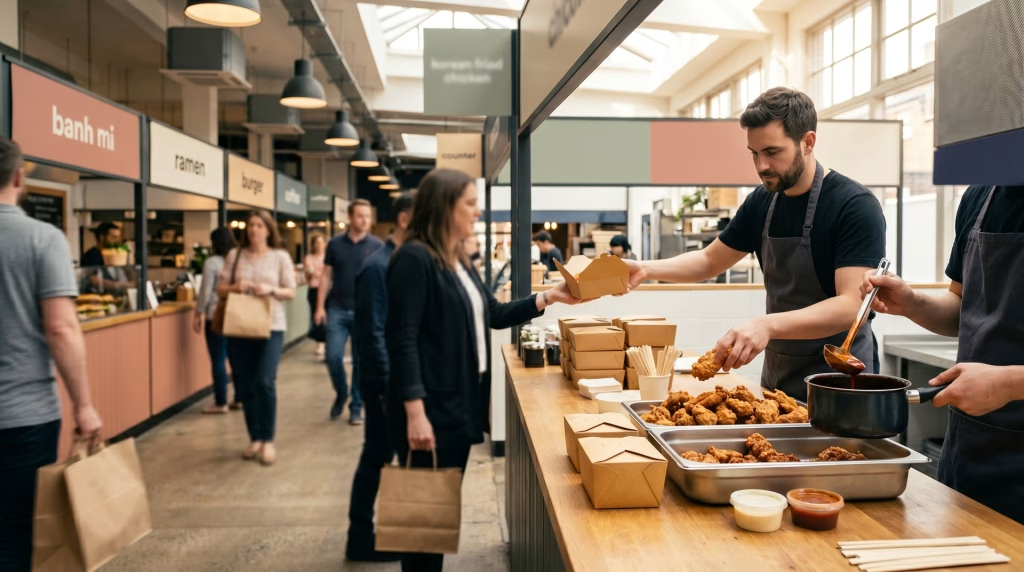
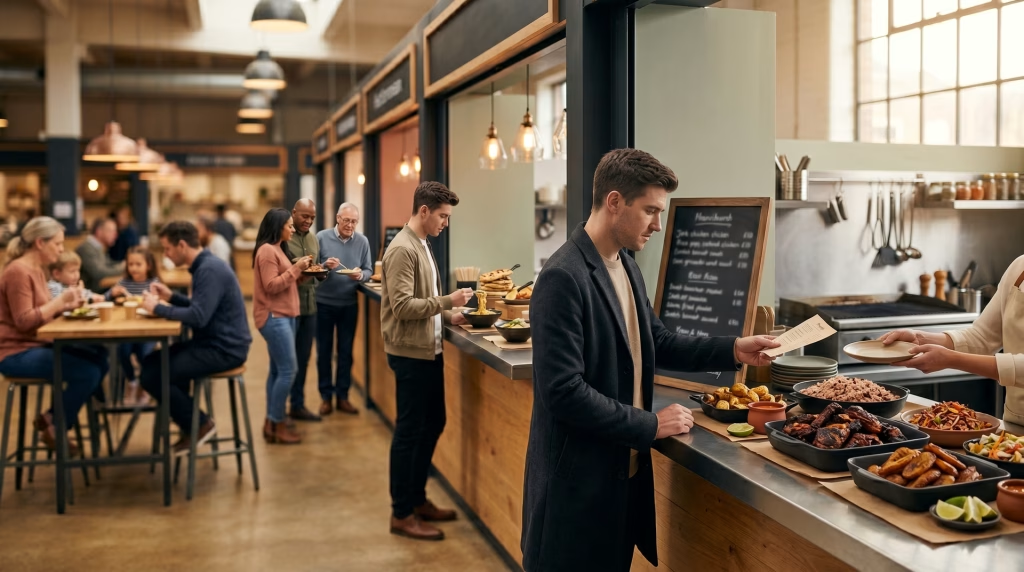
Food Safaris & Competitor Review
A bespoke exploration of the markets, restaurants, retail aisles and overseas territories that are shaping your category
-
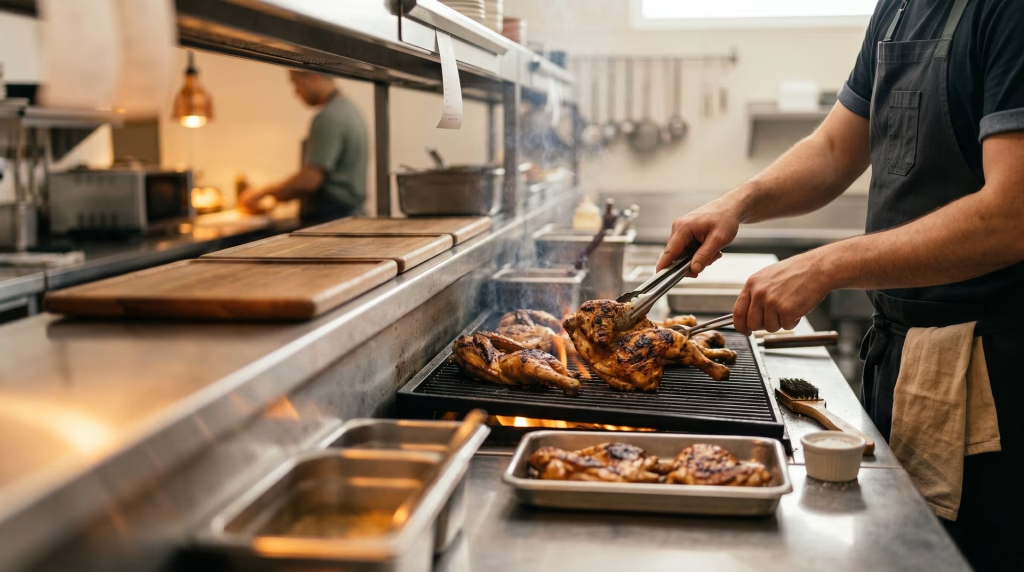
QSR Operation Review
Specialist operational deep dives for QSR brands looking to understand their own performance, uncover inefficiencies and identify better ways of working across the business.
Insight tools
Structured research and evidence-led understanding. Used when the brief needs to land with statistical confidence or strategic depth.
-
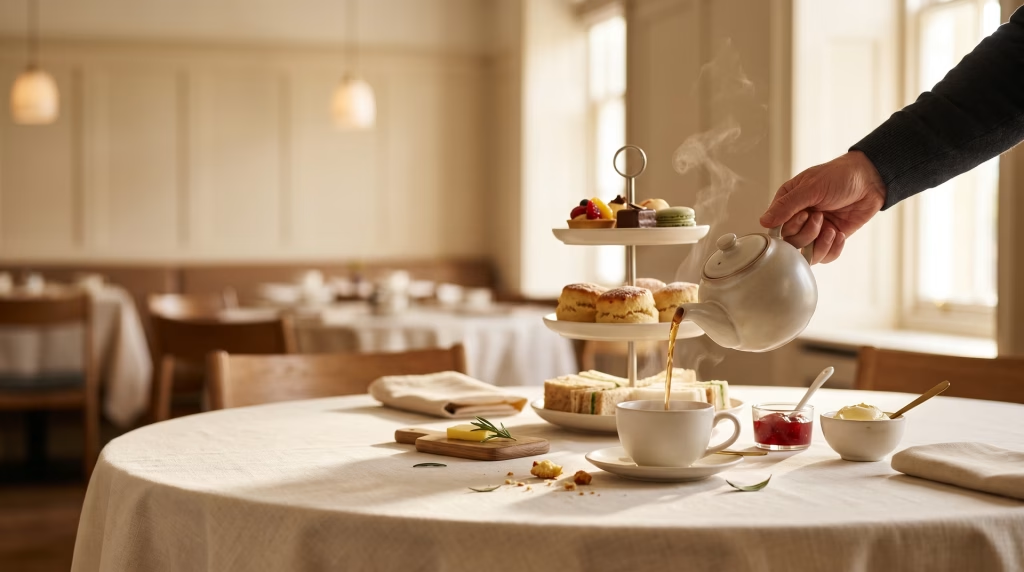
Usage and Attitude Studies
Foundational consumer research that maps category usage, brand awareness, consumer attitudes and the drivers of choice across the audiences that matter.
-
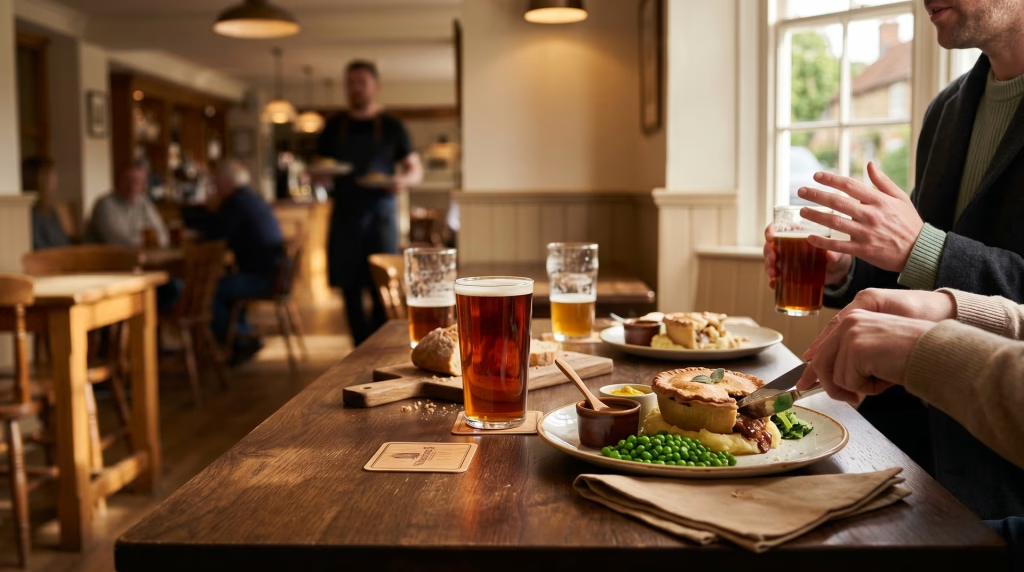
Ethnography
Deep behavioural observation of how food and drink lives in real homes, real kitchens, real eating moments and real social contexts.
-
Segmentation
Structured consumer segmentation that produces actionable audience groupings, not descriptive profiles that gather dust.
-

Creative Workshops
Expert-facilitated ideation workshop to unlock innovation.
How we run decode work
-
We scope around the decision
Twenty minutes on a scoping call. You tell us the decision behind the brief. We tell you which combination of insight and innovation tools will get you to a usable answer, and whether the work is best run sequentially or in parallel.
-
Signal first, structure second
Most decoding programmes start with the fast, immersive innovation tools to map the territory, then layer the structured insight work on top to validate and quantify. That sequence means the structured research is asking the right questions by the time it runs, rather than wasting sample on a hypothesis that the signal work would have dismissed.
-
Senior interpretation throughout
The interpretation matters more than the volume of data. Every programme is led by a senior specialist who stays close from first session to final readout. This is strategy-led work, shaped by experienced consultants and directors who know how to read what the data is really saying.
-
A recommendation, not death by PowerPoint
We close with a clear, commercially framed read on the category, the consumer and the trends shaping both. What you should believe. What you should do about it. What the implication is for the next move on your innovation, brand or commercial agenda.
If your brief sounds like one of these, you are in the right place
- We are about to invest in this category and we need to understand it properly before we commit.
- Something has shifted in the category and our existing data is not telling us why.
- We have a hunch about an emerging trend and we need to know whether it is real, how big it is, and how fast it is moving.
- We are repositioning a brand and we need to see the category through fresh eyes before we make the call.
- A new team has taken over this brief and we need to bring them up to speed at the right level of depth.
- We have data, but no one has had the time to read it properly and turn it into a point of view.
If you already have a good foundational understanding, then we can help you use that to unlock growth.

Specialist by sector. Commercial by intent.
Decoding work only earns its keep when the interpretation is sharper than the data. Most agencies can run the tools. Fewer can read what the tools are saying in a way that translates to a commercial decision. FIS Group sits in that smaller group for one reason: food and drink is the only sector we serve, and our team has worked client-side inside retailers, manufacturers and operators. The category already lives in the heads of the people running the work.
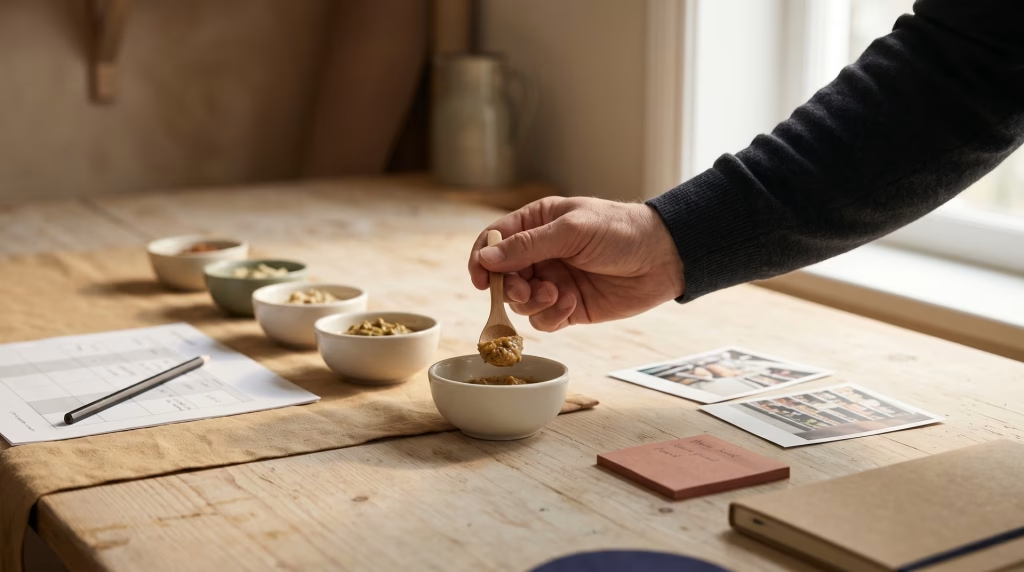
Decoded the category. What comes next?
Decoding is the front end of the lifecycle. Once the territory is clear, most clients move into one of three places, depending on what the work has surfaced.
-
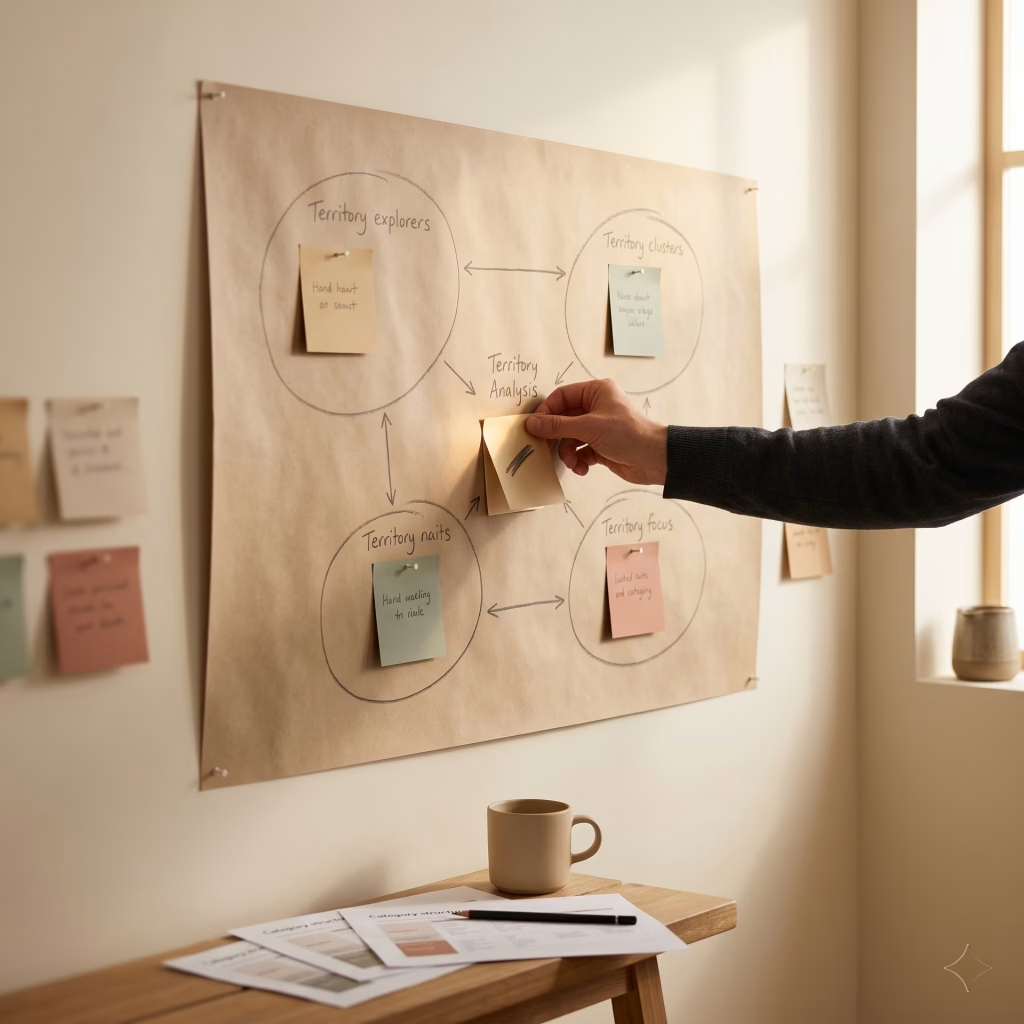
Unlock Growth Opportunities
You have decoded the category. Now the question is where to play, where to stretch, and where to lead. We can turn category understanding into commercial direction through opportunity mapping, future pipeline building and platform and territory development.
-
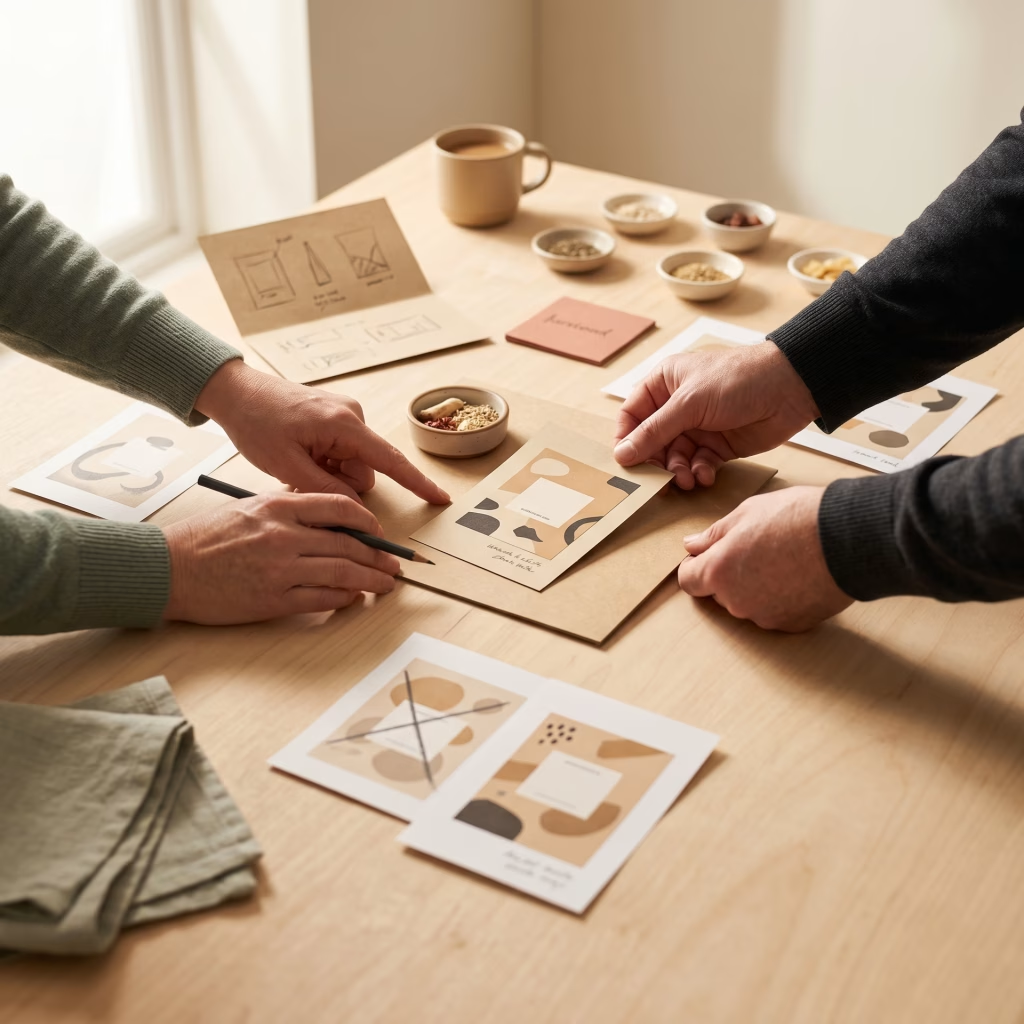
Ideation & Concept Development
You have decoded the category and you have a point of view on where the opportunity sits. The next move is generating and pressure-testing concepts that can build into it. Creative workshops, Hothouse, co-creation, concept labs and concept screening.
-
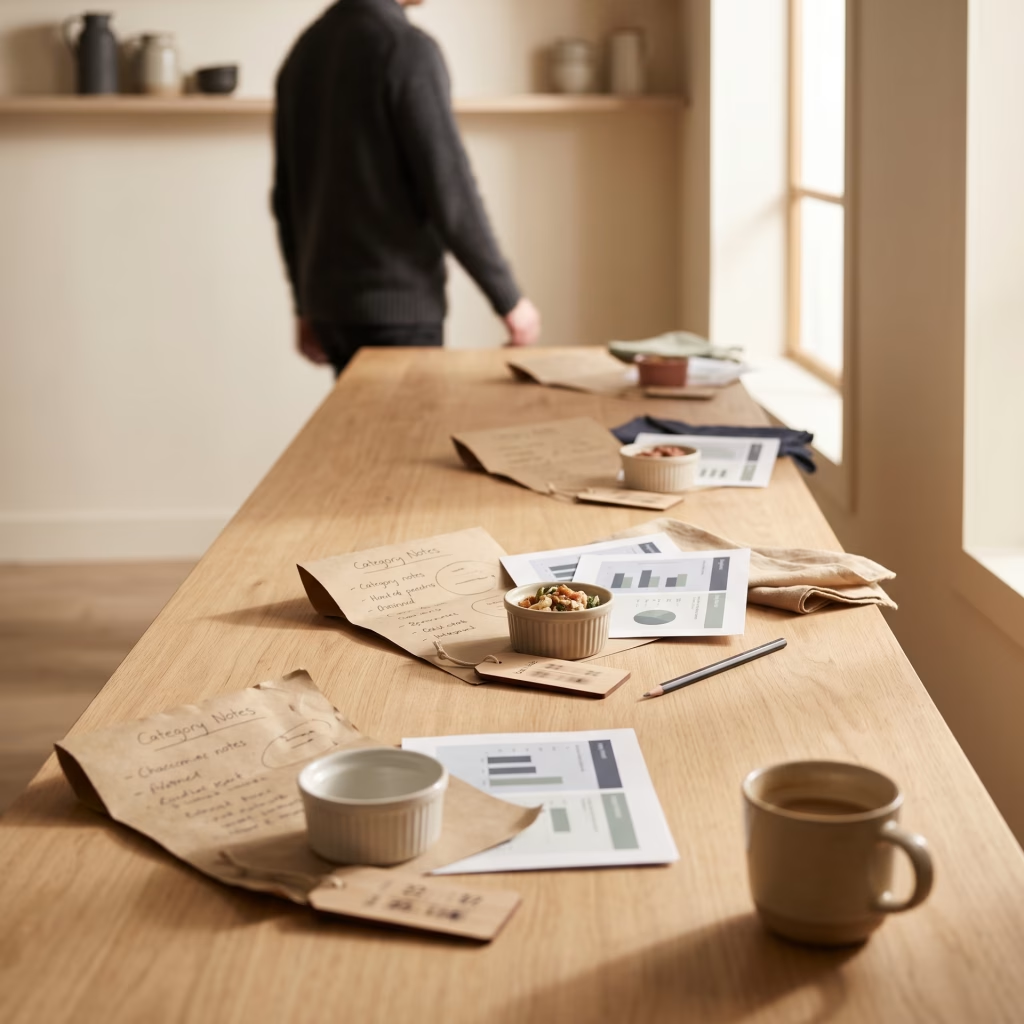
Stay Ahead with Continuous Insight
Some categories need decoding once. Others need decoding continuously, because the consumer, the channel or the competition will not sit still.

Built for every sector in food and drink
-
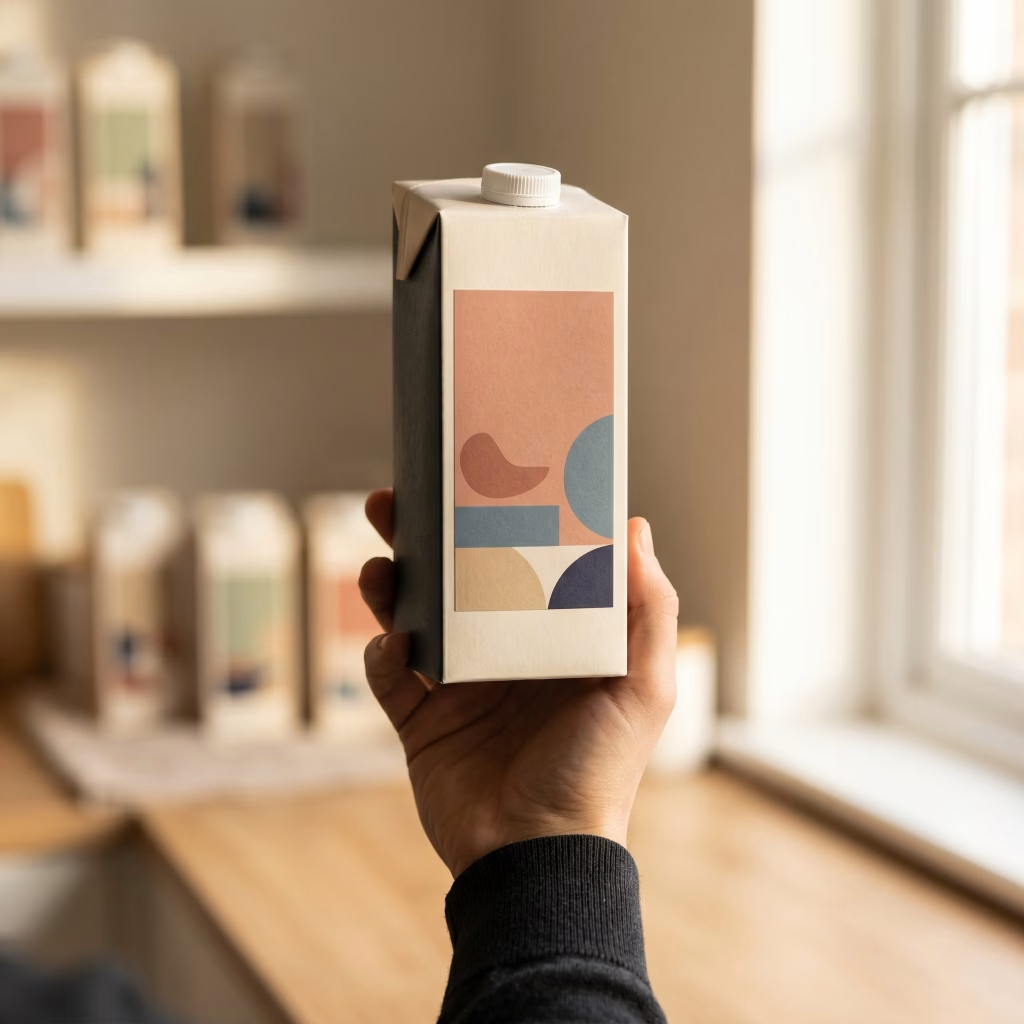
FMCG and branded manufacturers -

Grocery, retail and own label -
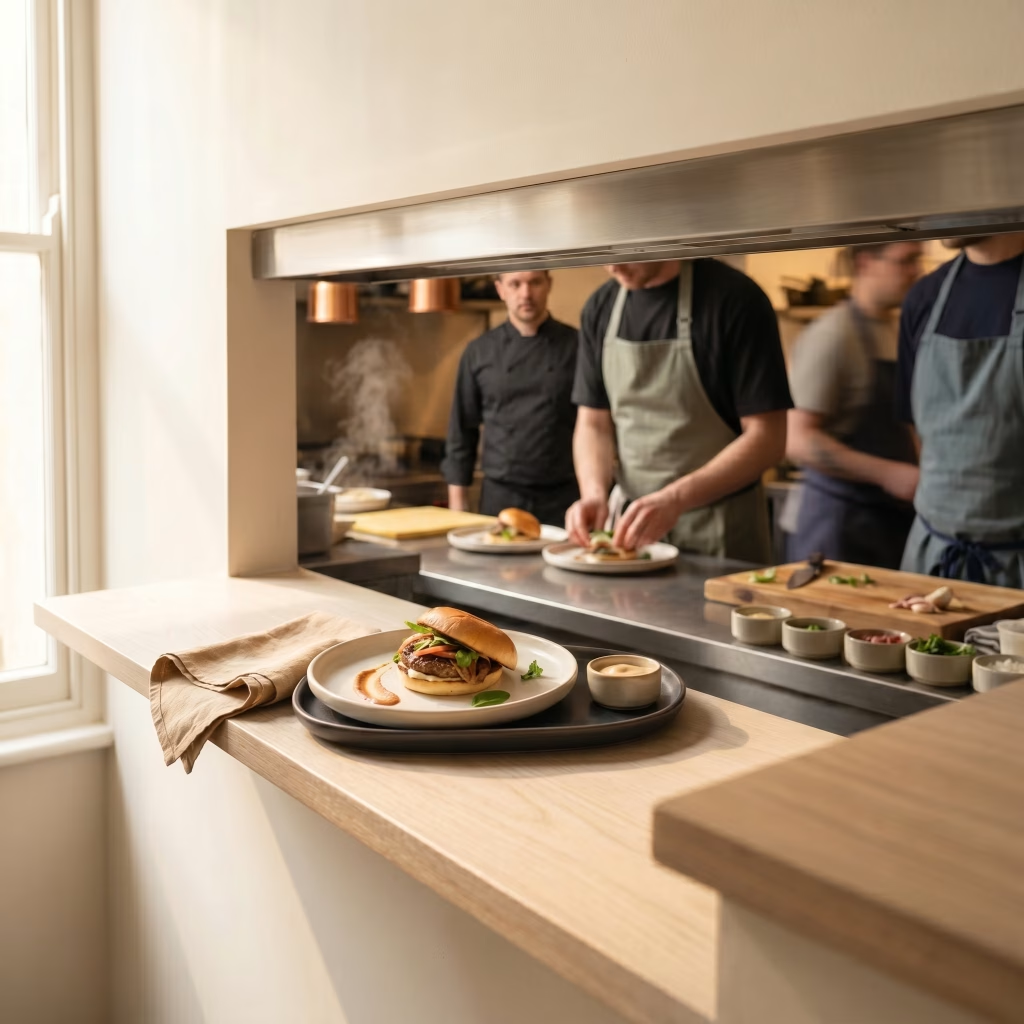
Food service -
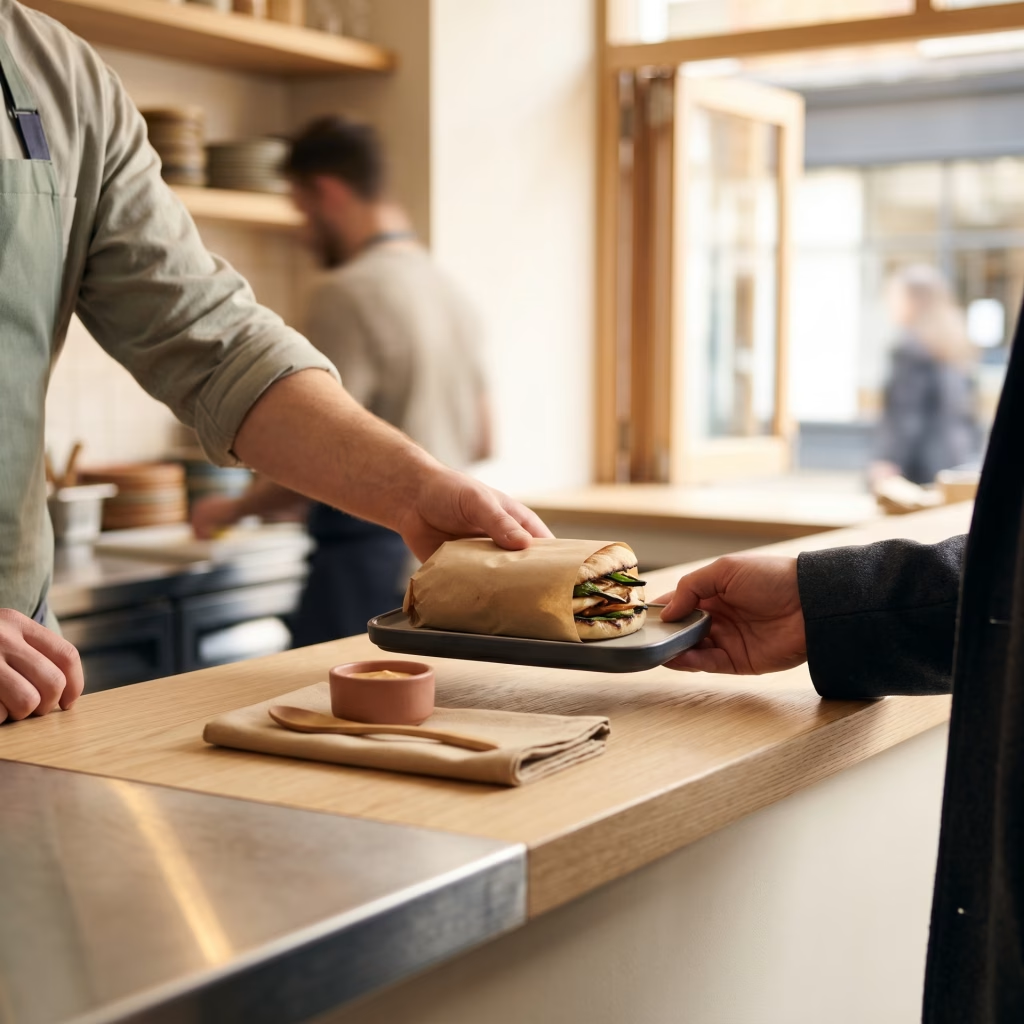
QSR and high street -
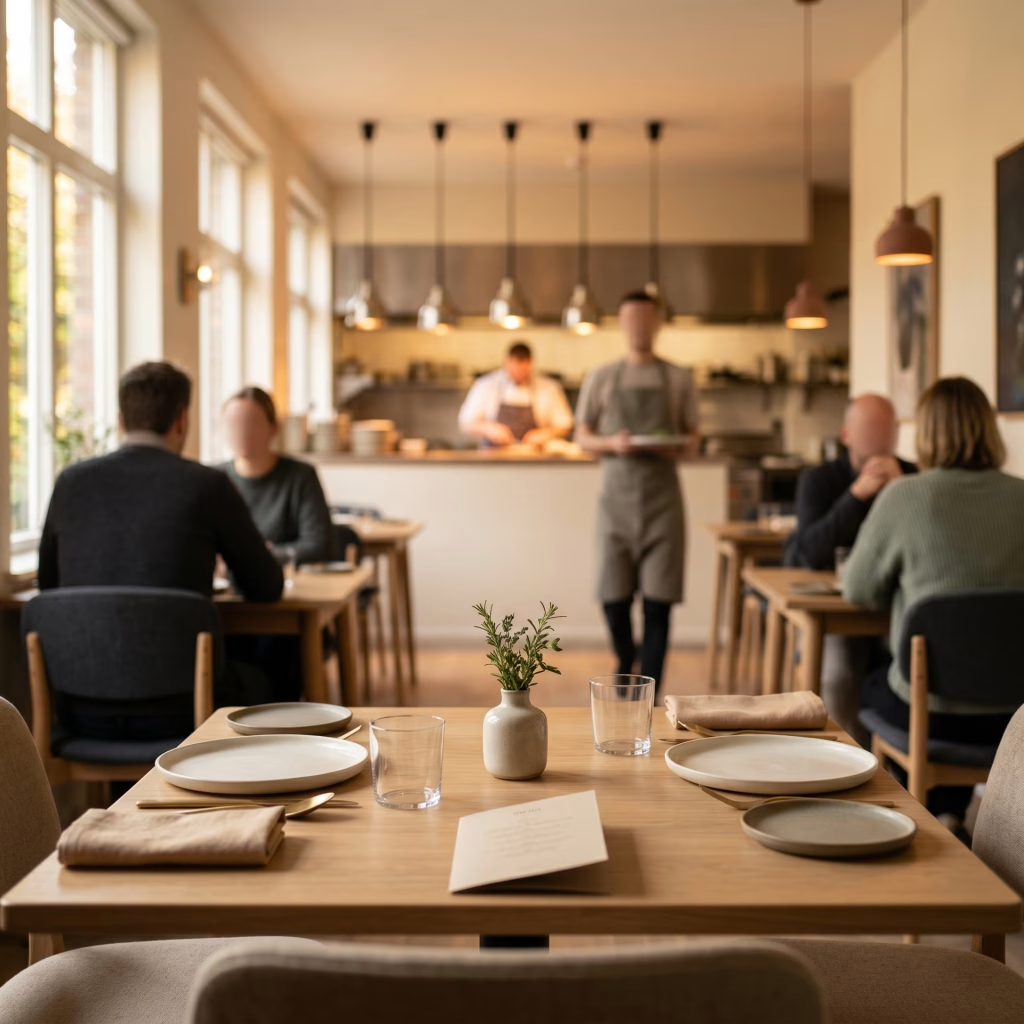
Hospitality
View our case studies
-
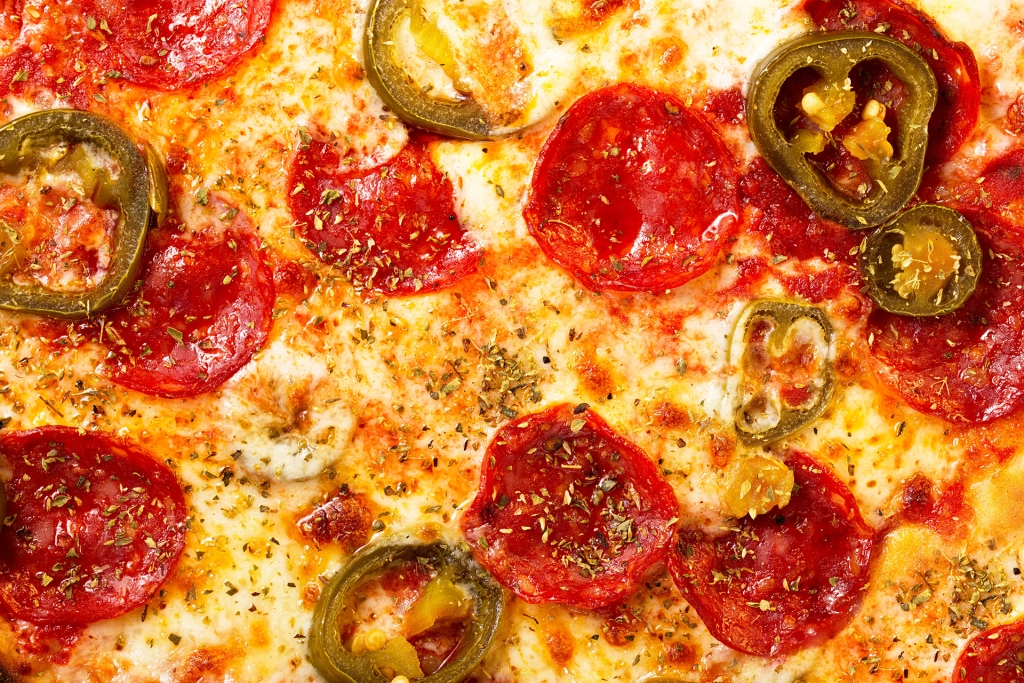
Domino's
Domino's needed a long-term research partner to support continuous product validation, supplier benchmarking and innovation pipeline development. FIS Group has delivered years of rigorous consumer testing and strategic insight, acting as an extension of the Domino's team across every stage of menu development.
-
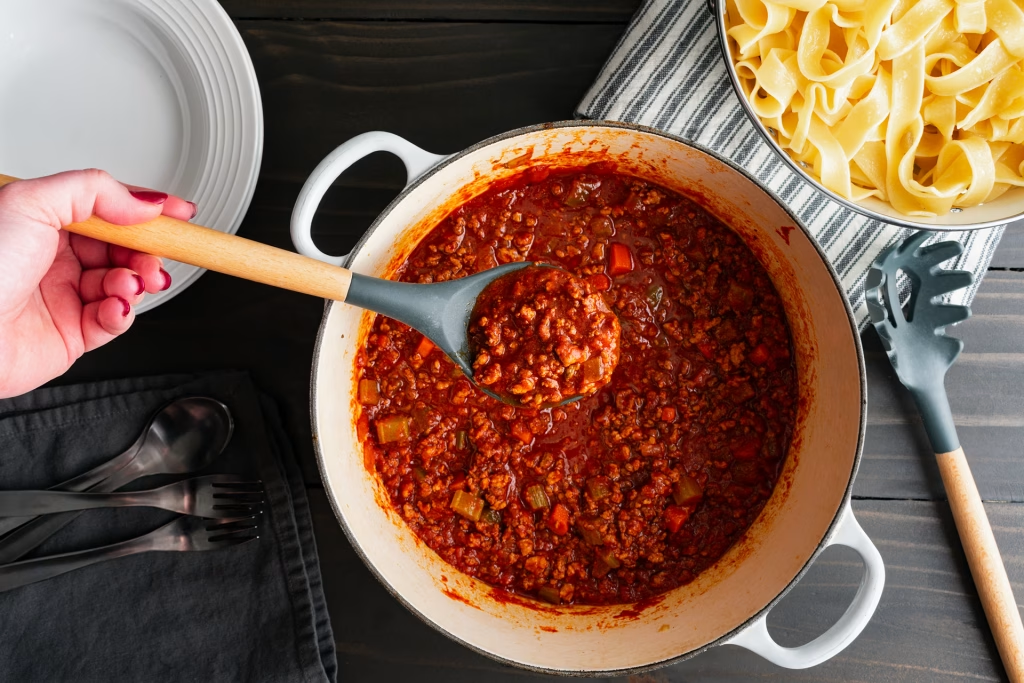
Mars
Mars needed a true research partner to decode consumer meal behaviour across three markets. FIS Group delivered a bespoke Meal Moments programme combining in-the-moment diary capture, qualitative exploration and strategic workshop facilitation – turning occasion-level data into immediate commercial direction.
-
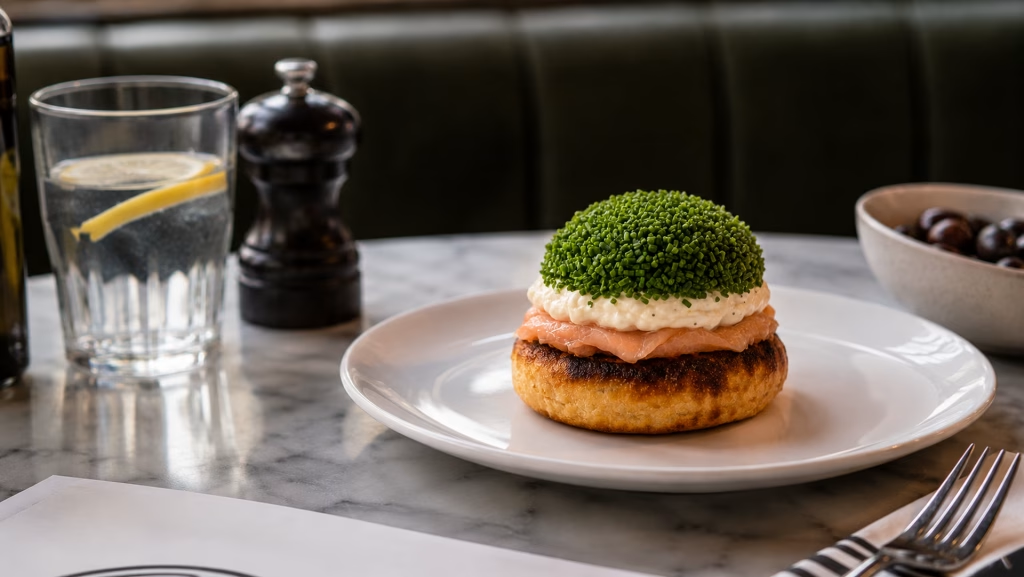
Pizza Express
Pizza Express needed trend-led hero dishes for their Christmas 2024 and September seasonal launches. FIS Group delivered a two-phase innovation sprint from concept ideation through kitchen development to full supplier briefing specifications, with all menu items reaching restaurants nationwide on schedule.

FAQs
Insight tools sit inside our Strategic Insight capability and are used when the brief needs structured, evidence-led research. Innovation tools sit inside our Innovation and Optimisation capability and are used when the brief needs faster, more immersive work. Most decoding briefs use a combination of both. The two toolkits are designed to work together rather than as alternatives.
Either. A lot of our work is single-tool: a piece of ethnography, a U&A study, a social trends scan. The page lists ten tools because most decoding briefs benefit from a combination, but if your brief is genuinely scoped to one tool we will scope it that way.
Single-tool projects run from two to eight weeks depending on method and sample. A full multi-tool decoding programme typically runs eight to sixteen weeks. The biggest variables are the number of consumer-facing sessions, the markets involved and the depth of analysis required at the end.
A clear, commercially framed read on the category, the consumer and the trends shaping both, with a recommendation for what to do next. We do not deliver a 200-slide deck unless the brief specifically calls for one. The deliverable is built for the person who has to make the decision, which usually means a tight document with the evidence underneath available on request.
Syndicated data is the raw material. We are the interpretation layer that turns it into a commercial point of view. A lot of our data mining work starts with the data you have already bought and surfaces what no one has had time to read. We do not duplicate syndicated data; we make it useful.
Yes. We deliver internationally across mainland Europe, the United States and the United Arab Emirates, with senior FIS Group oversight on every market and trusted local partners on the ground where the brief requires them. Multi-market programmes are scoped and led centrally so the readout is integrated rather than stitched together.
Both work. If you have existing syndicated data, internal sales data or previous research, we will use it as the starting point and add the layers needed to fill the gaps. If you have nothing, we will scope a programme that builds the picture from the ground up. The scoping call is where we agree which.
Most clients move into opportunity work to turn category understanding into commercial direction, or into idea generation if the opportunity is already clear. Some move into continuous insight to keep tracking what the decoding work surfaced. We scope the next phase as soon as the decoding work lands, so the momentum does not stall.
Need to see your category clearly before you commit?
Tell us what you are trying to understand. We will tell you which combination of insight and innovation tools will get you there, what the timeline looks like, what it will cost, and who will run it. Twenty minutes on a scoping call with a senior decode specialist.