When the answer is what consumers cannot tell you, because they do not know they are doing it
Ethnography sits in the Discovery phase when you need to understand what people actually do, not just what they say they do. The gap between the two is often where the most important insight lives. We work in the environments that matter in food and drink – kitchens, shops, restaurants and at fixture. That means shopalongs, eatalongs and cookalongs, conducted in-person or digitally depending on what the brief needs. It’s most valuable when real-world behaviour is central to the question: how people navigate a fixture, what actually happens when they cook, where a product fits – or doesn’t – in a real kitchen. Powerful for NPD, packaging development and any brief where the in-home or in-store reality is likely to challenge the assumptions on the brief.
Shopalongs
We shop alongside consumers to understand what really happens at fixture – how they navigate, what they notice, what they pick up and put back, and what drives the final decision.
Cookalongs
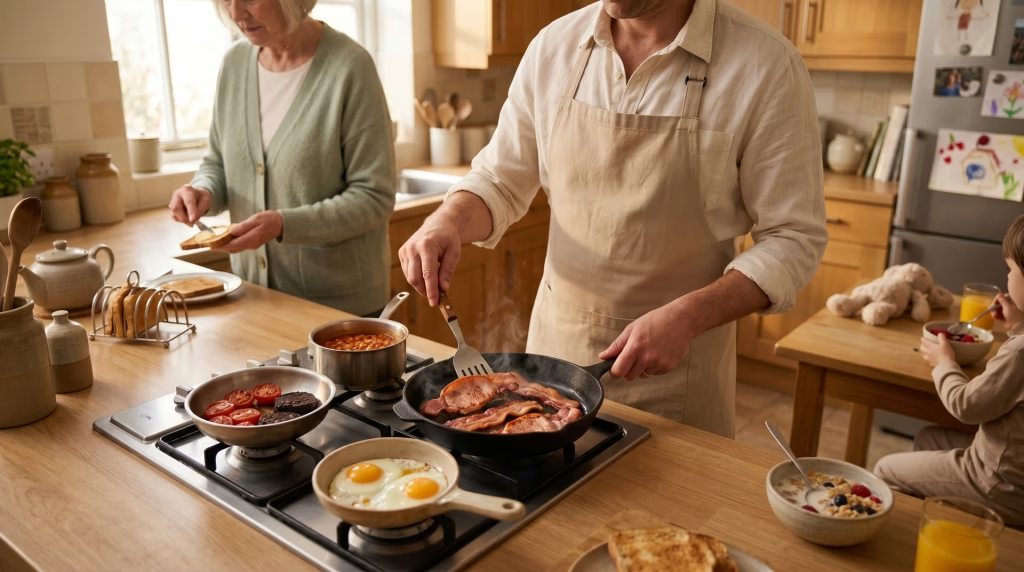
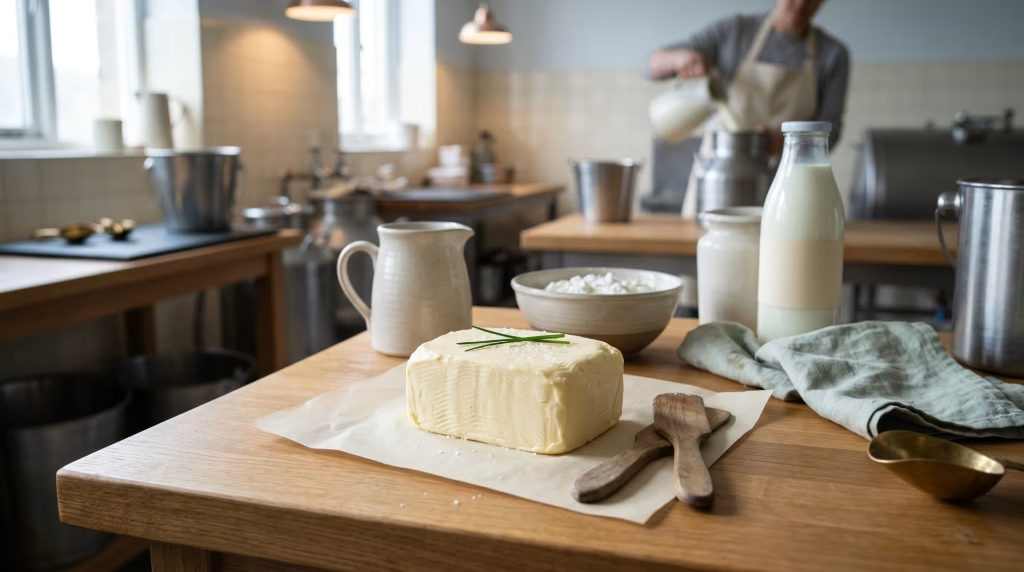
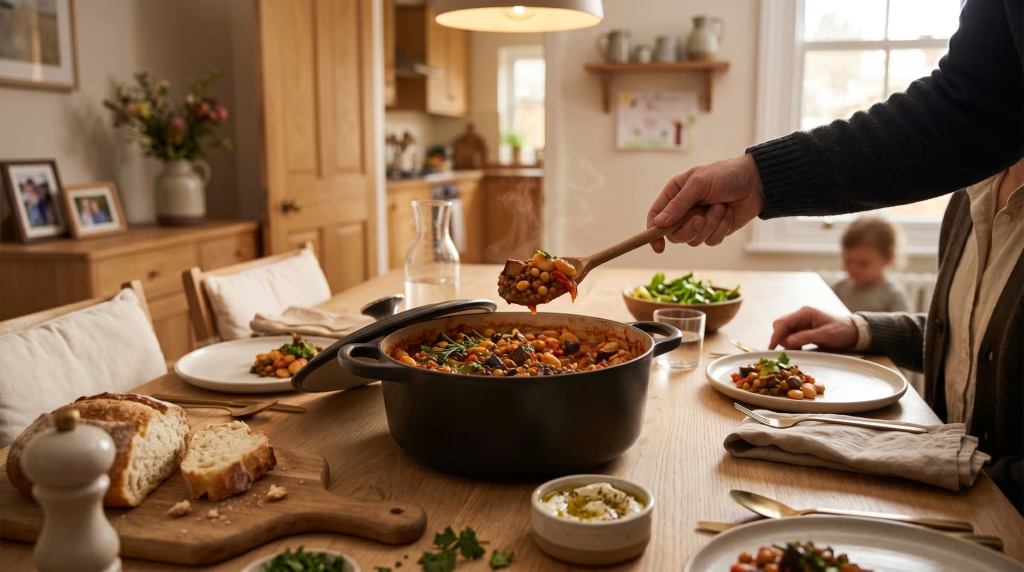
We visit consumers at home – looking in the cupboards, understanding what they stock and why, and observing how they actually cook with the category. What people say they do in the kitchen and what they actually do are rarely the same thing.
Eatalongs
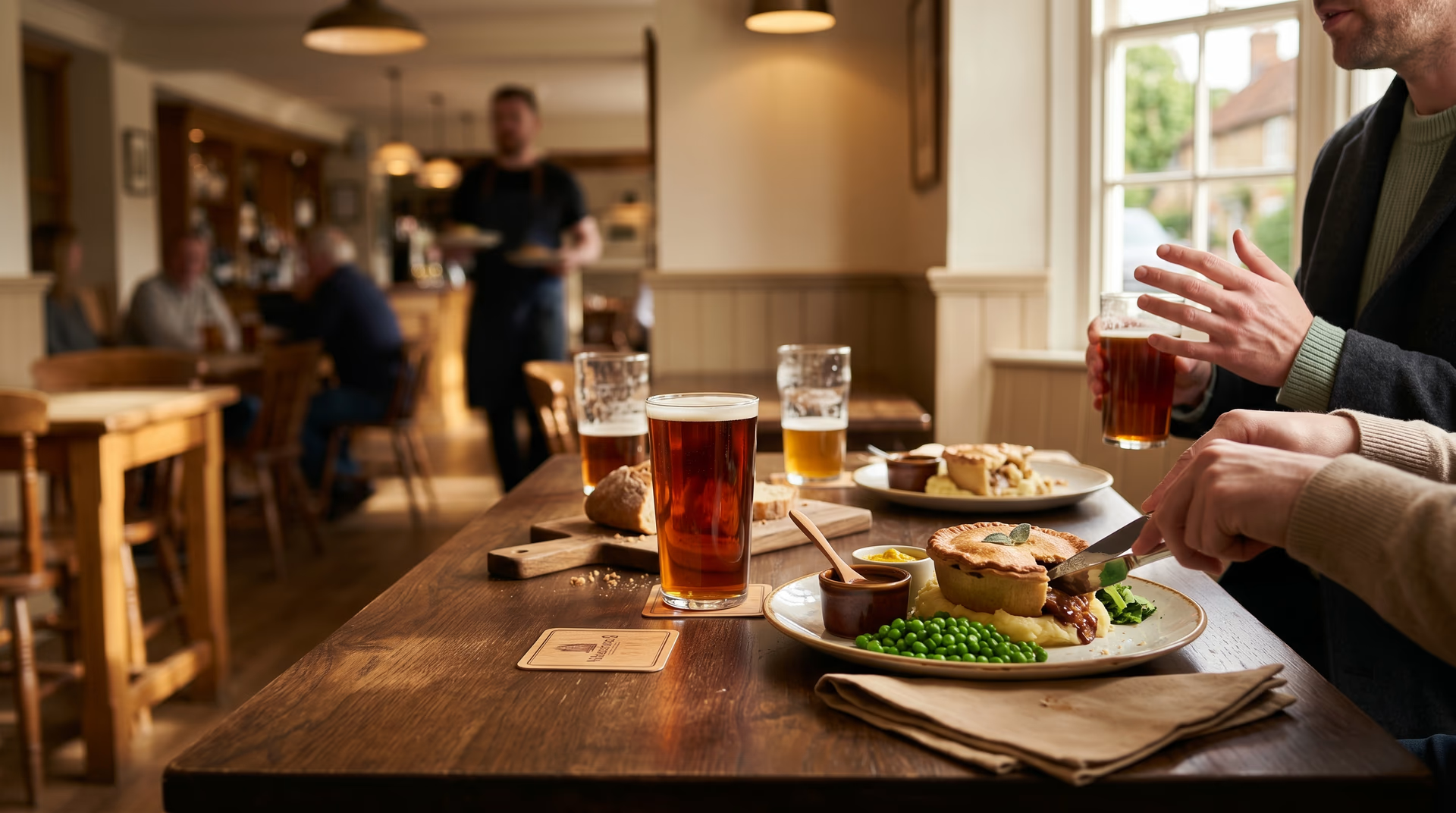
We join consumers at a restaurant or food occasion – observing, asking questions and understanding the real context of choice, experience and behaviour in the moment it happens.
Single-day in-context observation
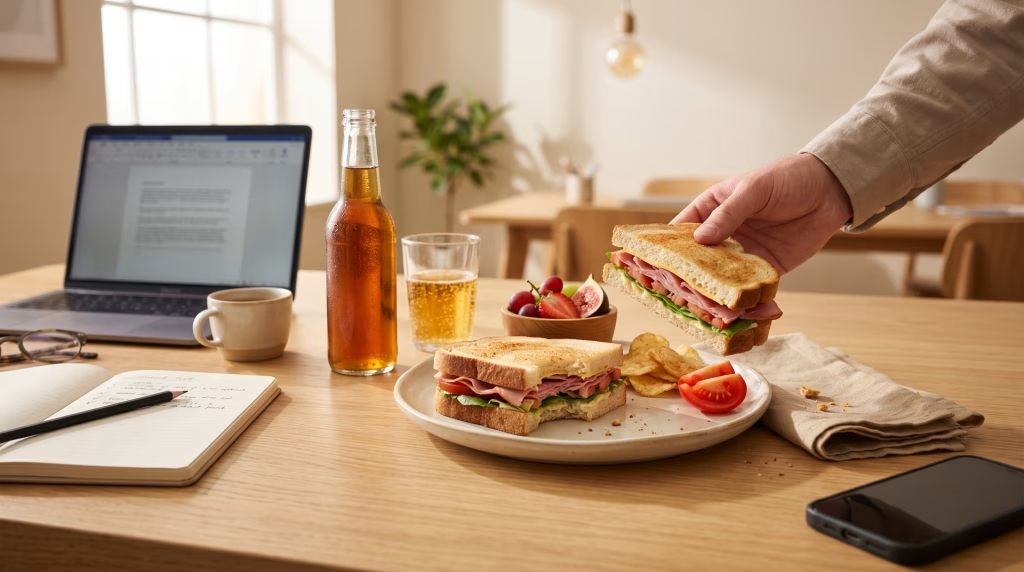
Focused observation of a specific consumer moment or occasion (a meal preparation, a social occasion, a routine snacking moment), typically across six to ten households or contexts. Used for briefs anchored on a specific eating moment rather than on broader household behaviour. Typical commitment: four to six weeks from brief to readout, with the observation window concentrated in a single fieldwork phase.
Multi-household in-context study
Deeper observation across eight to fifteen households, with multiple visits per household across different eating moments and contexts. The standard ethnographic format for most food and drink briefs, balancing depth per household with breadth across audience profiles. Typical commitment: eight to twelve weeks from brief to readout, with the observation window typically spanning two to four weeks of fieldwork.
Longitudinal household ethnography
Sustained observation of a smaller set of households (four to eight) over an extended window (one to three months), used for habit-driven categories and behavioural-shift work where the patterns only surface across time. The richest ethnographic format, with the highest depth-per-household but the smallest sample. Typical commitment: three to six months end-to-end, scoped specifically to the category and the behavioural question.
Food and drink is all we do
We are not a generalist ethnographic consultancy that takes the occasional food brief. Food and drink is the only sector we work in. Our senior researchers have the social science depth to do ethnographic work properly and the food and drink specialism to make it commercially actionable. The work lands with people who get it on the first read, and the interpretation comes back framed for the people who actually have to make the decision.
That focus is why we work with 11 of the UK’s top 40 food and drink brands.
Other ways to decode consumer behaviour
Ethnography is one tool in the broader Decode toolkit. Depending on the brief, one of these might be a better fit, or a stronger partner alongside the ethnographic work.
-
Usage and Attitude Studies
Foundational consumer research that maps category usage, brand awareness, consumer attitudes and the drivers of choice across the audiences that matter.
-
Consumer and Category Data Immersion
Structured deep-dives that immerse marketing, NPD, innovation and category teams in the category, consumer and the competitive landscape.
-
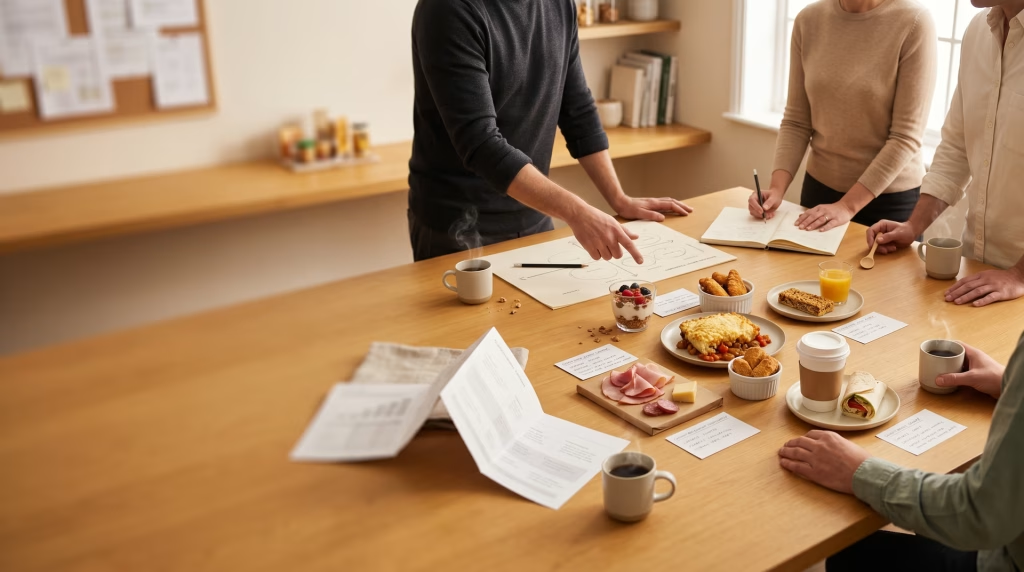
Opportunity Mapping
Strategic mapping of where to play in food and drink.

View our case studies
-
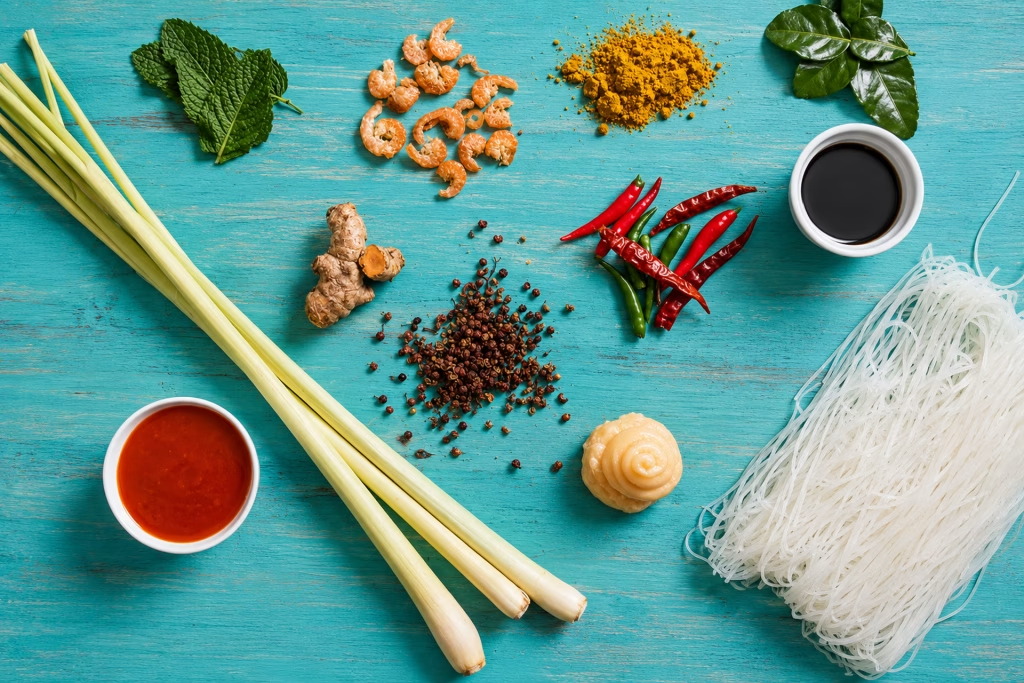
Oscar Mayer
Oscar Mayer needed category understanding in convenience and discount channels that could drive retailer conversations. FIS Group delivered a multi-phase programme combining quantitative, qualitative and innovation expertise, turning research into a commercial asset at the negotiating table.
-
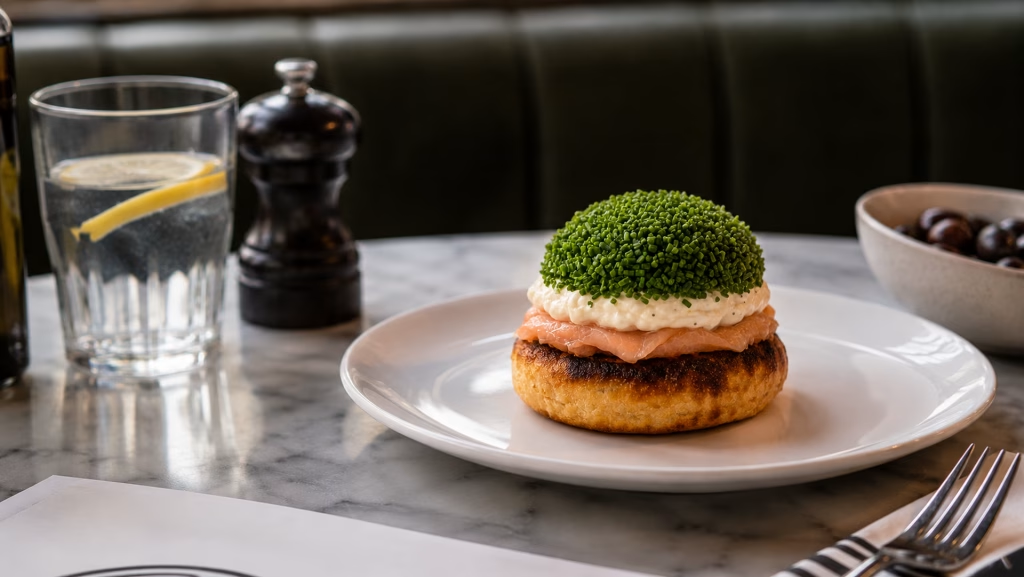
Pizza Express
Pizza Express needed trend-led hero dishes for their Christmas 2024 and September seasonal launches. FIS Group delivered a two-phase innovation sprint from concept ideation through kitchen development to full supplier briefing specifications, with all menu items reaching restaurants nationwide on schedule.
-
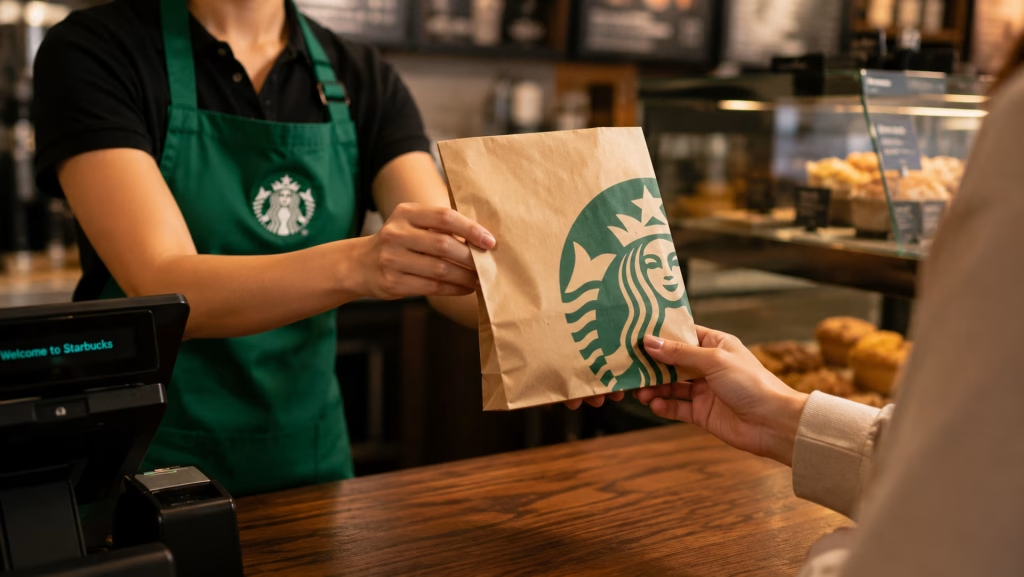
Starbucks
Starbucks needed cross-market ideation around iconic bakery platforms for EMEA, with a focus on winning with Gen Z. FIS Group facilitated a structured innovation workshop with trend-led platforms, generating ten big concepts refined into illustrated, testable briefs now entering NPD pipelines across multiple markets.
FAQs
Ethnography uses small samples by design, because the methodology trades breadth for depth. The work surfaces unconscious behaviour, household dynamics, social rituals and cultural meaning, which cannot be observed at survey scale. The findings are credible because they are rooted in directly observed behaviour rather than in reported response, and because the senior interpretation surfaces patterns across households rather than treating each household as a statistical unit. Where the brief needs scale validation, we routinely pair ethnographic work with quantitative U&A or segmentation to combine the depth with the breadth.
Depends on the format. Single-day in-context observation typically runs four to six weeks from brief to readout. Multi-household in-context studies (the standard format) typically run eight to twelve weeks. Longitudinal household ethnography runs three to six months end-to-end. We give realistic timelines at proposal stage based on the format and the depth the brief requires.
Sometimes, but not always. The ethnographic methodology depends on the consumer behaving naturally in their own environment, and a larger group of observers (including client team alongside the senior researcher) often changes how the consumer behaves. Where the brief allows it, the client team can join specific moments (typically de-briefs or selected observation visits). We will recommend the right level of team involvement on the scoping call.
Yes. We run ethnographic projects across the UK, mainland Europe, the US and the UAE, with local recruit, local fieldwork support where the language and cultural context need it, and senior FIS Group oversight throughout. International ethnographic work is particularly valuable when the consumer culture is structurally different from the home market, because translated consumer assumptions are commercially dangerous and ethnography surfaces what the assumption misses.
Senior researchers with social science depth and food and drink specialism. The senior person you meet on the scoping call is the same person who runs the fieldwork and interprets the work. No handover to a junior researcher mid-project, because ethnographic interpretation depends on continuity between observation and analysis.y
A working readout session with the team, a structured written deliverable scoped for the audience, and the photographic and video material from the fieldwork. Much of the value of ethnographic work is the team experiencing the observed reality rather than just reading the interpretation, so the observational material is provided alongside the written work where the audience needs it. Format agreed at the start.
Project-based, scoped against the format, the number of households, the depth of observation and the geographic scope. Single-day in-context observation work is the lowest entry point; longitudinal multi-market household ethnography is the highest. We will give you a clear, all-in quote at proposal stage with no hidden extras.
Got a question that needs answering in real life, not in a research setting?
Tell us the commercial question, the consumer context to observe, the audience to recruit, and the timeline. We will tell you whether ethnography is the right tool, what format makes sense, what depth the brief requires and what it will cost. Twenty minutes on a call. No qualifying call before the qualifying call.
Senior researchers with social science depth. Observation in real contexts. Anthropological interpretation.