
One model, three capabilities, every project
What connects every project is the specialism in food and drink. It is the golden thread that runs through every brief, every workshop, every readout, every recommendation. Every member of the team specialises in food and drink – some through working within the industry, all through a genuine passion for the category. We put the right people on the right projects, which means the team working on your brief brings directly relevant experience rather than a generalist view. The specialism is what makes the integrated model integrated.
The integrated model is commercially valuable for one specific reason: food and drink commercial decisions almost never fit cleanly into a single capability box. Trend spotting and consumer exploration surfaces opportunities that want to flow into ideation and concept development. Strong concepts want to move into concept validation, then product development and product testing. Validated products want to flow into commercialisation, launch and scale. And brands that have launched want to stay competitive by feeding insight back into the front end. The integrated model means each handover is internal rather than between firms, which preserves the strategic intent, the consumer evidence and the senior judgement across the commercial cycle.
Specialism across every sector that matters
Food and drink is not one commercial context. A grocery FMCG brand operates under different commercial pressures from a QSR operator. A foodservice manufacturer faces different category dynamics from a premium hospitality brand. A challenger brand scaling into national distribution has different commercial questions from an established brand defending shelf space. And the strategic tension between own label and branded; where to invest, how to differentiate, how to protect margin sits at the heart of some of the most consequential decisions in the category. The specialism in food and drink only earns its weight when it extends across the commercial contexts where food and drink decisions are made.
FIS Group works across many sectors of food and drink, with extensive experience in each. The team knows the buyer dynamics, the retail environment, the foodservice operations, the QSR commercial calendar, the hospitality landscape and the own label versus branded commercial pressures from inside each context. Briefs land with people who understand the sector on the first read rather than people learning the sector on the job.
Food service (hospitality, travel, QSR and delivery)
Operators across hospitality, travel, quick service, casual dining and delivery, plus contract caterers and workplace dining. This is the channel with the fastest commercial calendar in food and drink, where menu development, operational practicality and consumer experience all have to come together at pace.
Manufacturers (branded and own label)
Branded and own label food and drink manufacturers supplying grocery, carrying the commercial pressures of category leadership, range architecture, premiumisation, HFSS regulation and the retailer relationship. From the branded businesses that need to defend a category position to the own label development cycle, this is where food and drink commercial decisions are made at scale.
Primary suppliers
The businesses supplying ingredients and components into manufacturers and retailers, where the commercial picture is shaped by cost pressure, specification, supply security and the constant push to add value further up the chain. Getting closer to the consumer and category thinking is often what turns a supplier into a genuine partner.
Growers
Producers and growers at the very start of the food and drink chain, working with seasonality, quality, yield and the realities of getting fresh produce to market. The right insight here connects what happens in the field to what consumers actually want on the plate, which is a connection too often missing.
Challenger and scale-up businesses
Premium challenger and scale-up food and drink businesses carving out category positions against established competition. This is where commercial commitments are weighed against runway, and the right insight at the right moment is what unlocks the next stage of growth.
Specialism you can only get from working in the industry
The integrated insight and innovation model works because the senior team running it has the industry experience to make the model substantive rather than structural. Most of our senior team have worked client-side in food and drink. Brand director, NPD director, category lead, foodservice operations manager, retail buyer, supply chain lead. We have worked and developed stage gate processes, made the trade off calls, negotiated with other departments with differing KPIs and taken initial ideas to launch. They know what it feels like to sit on the other side of the table because they have been on the other side of the table.
Client side experiences means we have been in your shoes, understand your problems and challenges and have experienced this across multiple businesses and therefore know best practice solutions. You do not pay for our team to learn your category on the job. You do not have to translate your commercial reality into a research methodology that does not understand it. Projects reach our team who understand your industry and can speak the language of the business from the first call.
That experience also produces the knowledge that the integrated model depends on. The confidence to know when research alone will not solve the challenge on the table. The confidence to push back on a brief that is asking for the wrong question. The confidence to recommend a smaller version of the project that will get the buyer ninety percent of the value at sixty percent of the cost. That kind of confidence comes from operating experience and knowing how consumers think and behave, not from analytical training. This enables us to start on the front foot and make sure all deliverables are actionable and impactful.

Four steps, no theatre
-
We listen properly
Every project starts with a scoping call. Twenty minutes on a video call, sometimes longer if the brief is complex. We listen to the decision you are trying to make, the timeline you are working to, and the shape of the internal conversation that is going to land on the output. We do not launch into methodology-speak. We ask what the answer needs to unlock, and we ask who needs to believe it.<br /> If research is not the right answer, we say so. If a smaller version of the project would get you ninety percent of the value for sixty percent of the cost, we say that too. The first call is free, properly consultative and genuinely useful whether or not it turns into a project.
-
We scope an approach to suit your specific needs
Once we understand your challenge, we build a proposal that is shaped specifically around your objectives, budget and timelines. The integrated model means we can apply strategic insight, innovation and product testing in whatever combination the brief needs. Some briefs use one capability area. Some blend various stages and methodologies and some are long term programmes and partnerships. Either way, the project shape is built around your specific objectives or challenge.
-
You will have a dedicated project lead and account team throughout
From our experienced team we will pick an account lead and project team best suited to your business and your challenge. All of our services are run inhouse so we have full control throughout the project. This enable us to be agile and flexible if the scope needs changing based on the insights or new learnings. We also have our own facilities are used where it matters: Mission Kitchen in London for the strategic and innovation work, NOTED Fieldwork facilities at Bury St Edmunds and Birmingham for the consumer fieldwork at scale. Our own consumer panel ensuring high quality recruitment. You get regular check-ins at the pace that suits you, live viewing of qualitative sessions if you want it, and a direct line to the project lead whenever you need one.
-
We deliver something actionable and impactful
With every project, we aim to deliver more than just clear summaries, recommendations, and next steps. We want each engagement to be genuinely valuable-and memorable for the right reasons.<br /> <br /> We share your passion for food and drink, and that enthusiasm drives how we approach every project. Whether it’s solving a complex challenge or helping bring a new launch to life, we’re as invested in the outcome as you are.<br /> <br /> Every project concludes with a collaborative debriefing session or workshop and a clean, shareable deck. This session is structured around the decision or challenge you set out with-not a transcript of everything we heard along the way. We focus on what we found, what it means, and what you should do next. And importantly, we will continue to stay o contact for follow up questions, conversations or projects that follow as well as share relevant news with you and the team when we see it.
Week 0: Scoping call
A twenty-minute video call. You explain the brief. We ask the questions that shape the scope. You walk away with a clear sense of whether we are the right fit and what a proposal would look like.
Week 1: Proposal and sign-off
A proposal that names the senior team, sets the timeline, defines the deliverables and quotes a single all-in fee. You sign off. We start.
Weeks 2 to 3: Design and kickoff
We build the discussion guide or stimulus, design the recruit or sample, and run a kickoff session with your team to pressure-test everything before fieldwork. You sign off the materials before anything goes live.
Weeks 3 to 5: Fieldwork
The work happens. Qualitative sessions at our facilities or in context. Quantitative fieldwork in the field. Product testing in the kitchen. You can attend live, view remotely, or watch recordings back. Regular check-ins throughout.
Weeks 5 to 6: Analysis
Senior researchers analyse the output, pull out the patterns, and build a recommendation set framed around your original decision. We check the direction with you before the final readout, so there are no surprises.
Week 6 or 7: Readout and beyond
A working readout session with your team. We walk you through what we found, what we recommend and what to do next. You get a clean shareable deck afterwards, and we stay available for the questions that come up once the output has gone round the business.
The model in commercial action
Six commercial challenges across the food and drink commercial cycle. The integrated insight and innovation model applies to each one.
How the model works on a real project
Some projects that shows the integrated model in commercial action.
-

Burger King
Burger King needed in-depth consumer testing of two new burger builds across multiple variants before launch. FIS Group delivered a real-store central location test with penalty analysis and innovation expert input, providing precise optimisation insight and benchmarks to inform future menu development.
-
Oscar Mayer
Oscar Mayer needed category understanding in convenience and discount channels that could drive retailer conversations. FIS Group delivered a multi-phase programme combining quantitative, qualitative and innovation expertise, turning research into a commercial asset at the negotiating table.
-
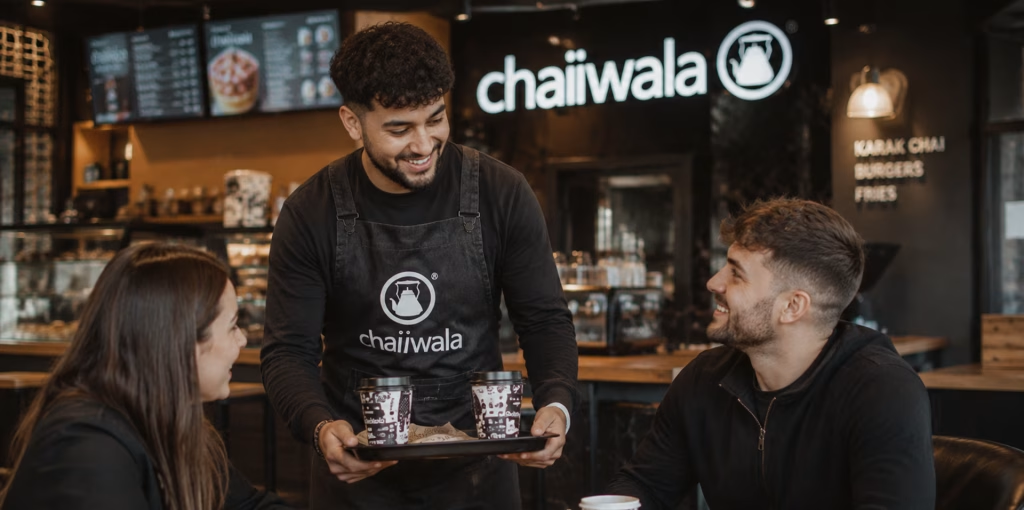
Chaiiwala
Chaiiwala needed to professionalise their product development process and rebuild their menu architecture to support a scaling QSR estate. FIS Group delivered a full operational audit, menu architecture rebuild, repositioned core items and a year-long LTO programme, through to launch day training with the senior operations team.

More of the About section
More ways into FIS Group, depending on what you want to know next.
-

Meet the Team
The senior people who lead the FIS Group end of each partnership. Kelly Dowson leads the TFP partnership; Danny Butt leads the G Force partnership. Real backgrounds, direct contact for each.
-
Our Story
Four decades of food and drink specialism, plus the strategic partnership relationships that have developed alongside the firm's growth.
-
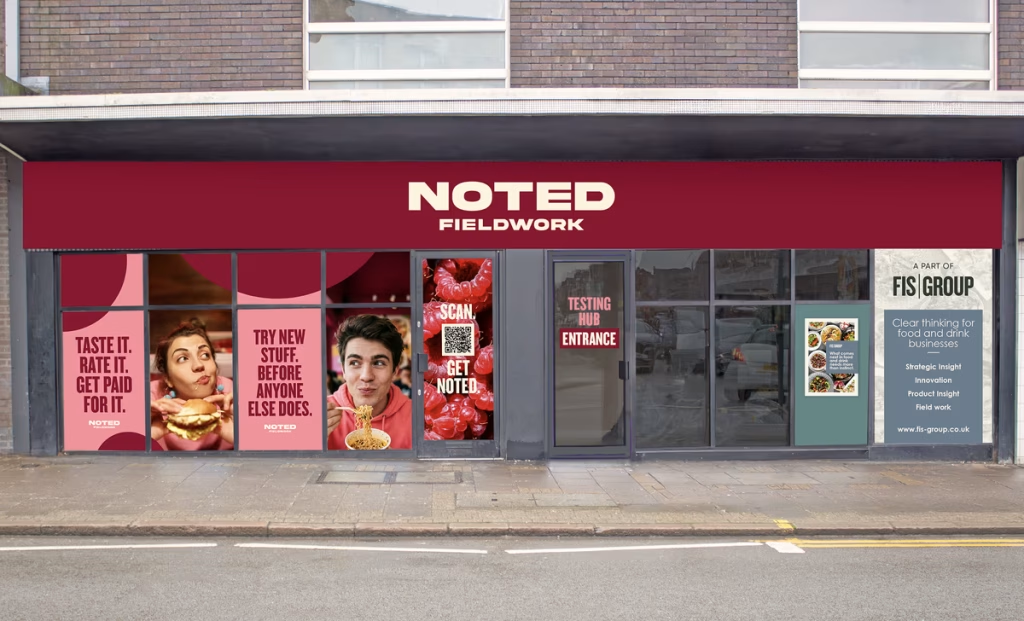
Locations
FIS Group headquarters at Mission Kitchen, London, plus dedicated NOTED Fieldwork facilities at Bury St Edmunds and Birmingham. The operational footprint behind the partnerships.
FAQ
The integrated insight and innovation model is the operational framework that runs every FIS Group project. Strategic insight, innovation consultancy and product consultancy work as one operational team rather than as three separate departments. Briefs do not get handed between teams. The senior team scoping the project on the first call is the same senior team running the work, presenting the readout and following up after. The model is integrated because the specialism in food and drink runs through every capability area as a single golden thread.
We work across seven food and drink channel areas: FMCG and branded manufacturers; grocery, retail and own label; food service; QSR and high street; hospitality; out-of-home and on-the-go; and challenger brands and scale-ups. The senior team has client-side experience in each channel, so briefs land with people who know the channel commercial reality on the first read.
Anything from two weeks for a focused product test or vox pop project through to twelve weeks or more for a full multi-market strategic insight programme. Most projects land in the four to eight week range. We give you a realistic timeline at proposal stage and stick to it.
The senior person who shows up on your first scoping call is the senior person who runs the project, from brief to readout. They are named on the proposal. There is no junior handover and no anonymous delivery team. The integrated model depends on this continuity, because the same senior judgement that scopes the brief is the same senior judgement that interprets the consumer evidence and builds the recommendations.
When a brief lands with the team, we draw on adjacent category and channel work to bring perspective the internal client team cannot have because they sit inside one business. A grocery FMCG brief benefits from QSR menu innovation thinking. A foodservice brief benefits from retailer category management principles. A challenger brand brief benefits from established brand defensive playbook thinking. The breadth produces the perspective; the perspective produces recommendations that internal teams would not have reached on their own.
We start with a twenty-minute call to understand the decision you are trying to make. Then we build a proposal shaped around that specific question, with named senior staff, a clear timeline, defined deliverables and a single all-in fee. The integrated model means we can apply strategic insight, innovation and product work in whatever combination the brief needs.
Yes. You can attend qualitative sessions in person at our facilities (Mission Kitchen in London for strategic and innovation work, or NOTED Fieldwork facilities at Bury St Edmunds and Birmingham for consumer fieldwork at scale), view remotely, or watch recordings back. We encourage live viewing whenever the timeline allows, because the work always lands better when the people making the decisions have seen the consumer in front of them.
Yes. If the question on the table would be better answered another way, or if a smaller version of the project would get you most of the value, we will say so on the first call. The senior judgement that comes from client-side experience is the value the firm delivers, and that includes the judgement to recommend against unnecessary research when the situation warrants it.
Yes. We run projects across Europe, the US and the UAE, with the same senior team, the same integrated model and the same approach. Local recruit, local moderation where the language needs it, and senior FIS Group oversight throughout.

Got a brief the integrated model would suit?
Tell us what you are trying to learn. We will tell you straight whether we are the right fit, what the project should look like and how quickly we can move. Twenty minutes on a call with the senior team, no qualifying call before the qualifying call.