
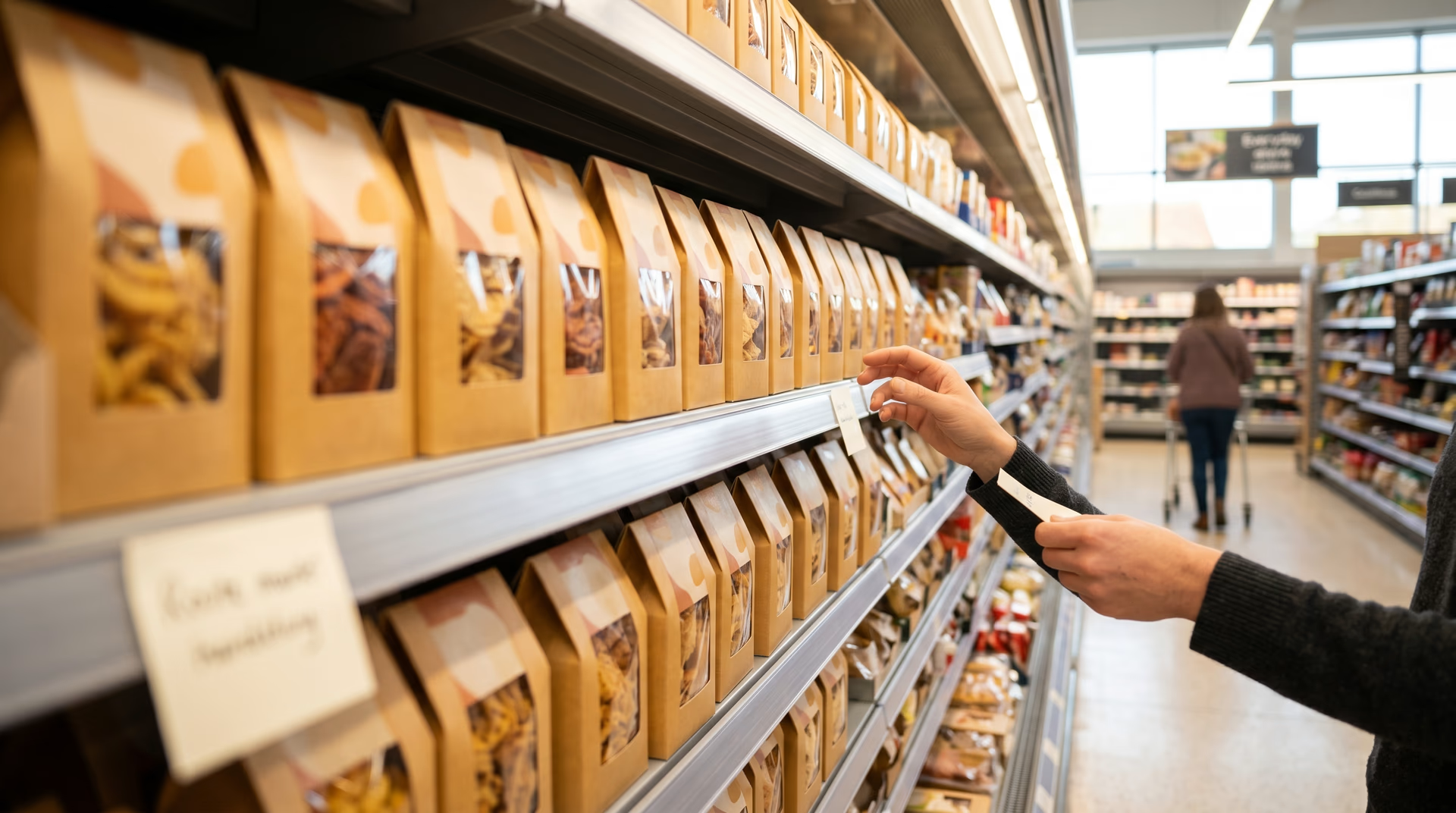
Where the validated product becomes a commercial reality
Launch and scale work is the commercial endgame; turning a validated product into a commercial outcome that delivers. The pitch that wins the listing, the manufacturing route that delivers at volume, the volume model that sizes the opportunity, and the post-launch evaluation that tells you how and how fast to scale.
Most launch briefs arrive for one of three reasons. A buyer meeting is on the calendar but the pitch lacks the depth, the category rationale and the product fit to land with a trade buyer making a real commercial decision. A product is approved internally but the route to manufacture at launch volume is not yet in place – whether that is capability, capacity or technical know-how. Or a launch has happened, the early signals are not where they need to be, and the business needs to understand why and act quickly.
In every case the question is the same: how do we turn a product that works into a commercial outcome that delivers?
Innovation tools
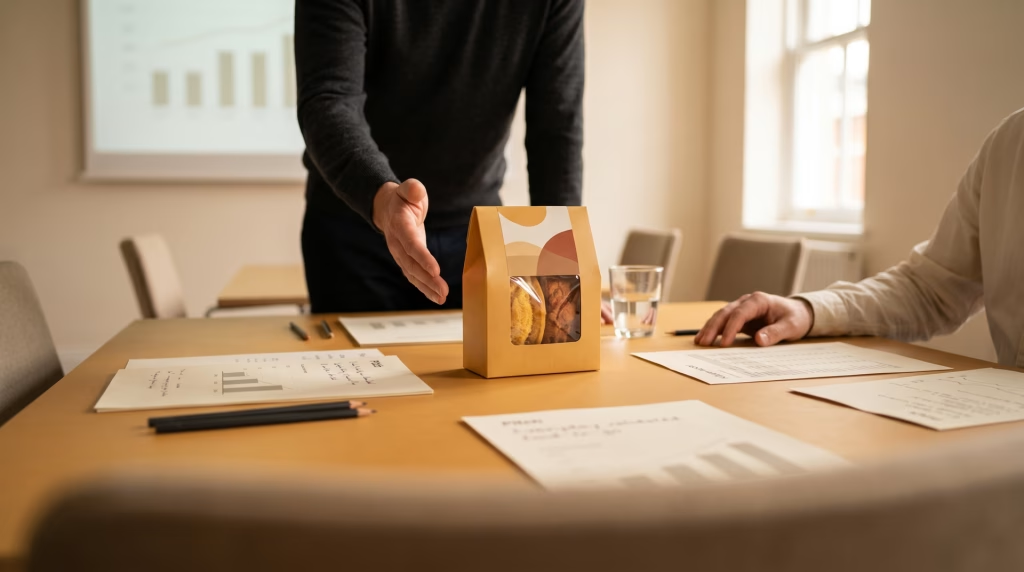
The commercial route to market. Used when the brief needs to win the pitch, sort the supply chain, or run the full concept-to-launch programme end to end.
-

Retailer Pitch Support
Specialist pitch support for food and drink brands presenting to retailers, foodservice operators and trade buyers.
-
3PM Manufacturing Solutions
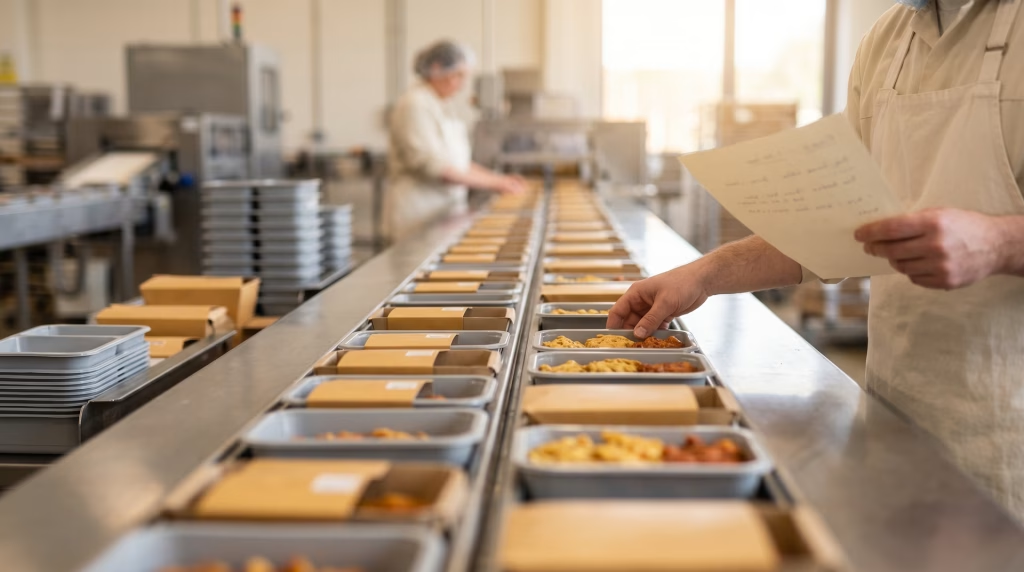
Manufacturing partner support for food and drink businesses. Supplier mapping, specification, trials and scaling production. We do not own manufacturing or place orders.
Insight tools
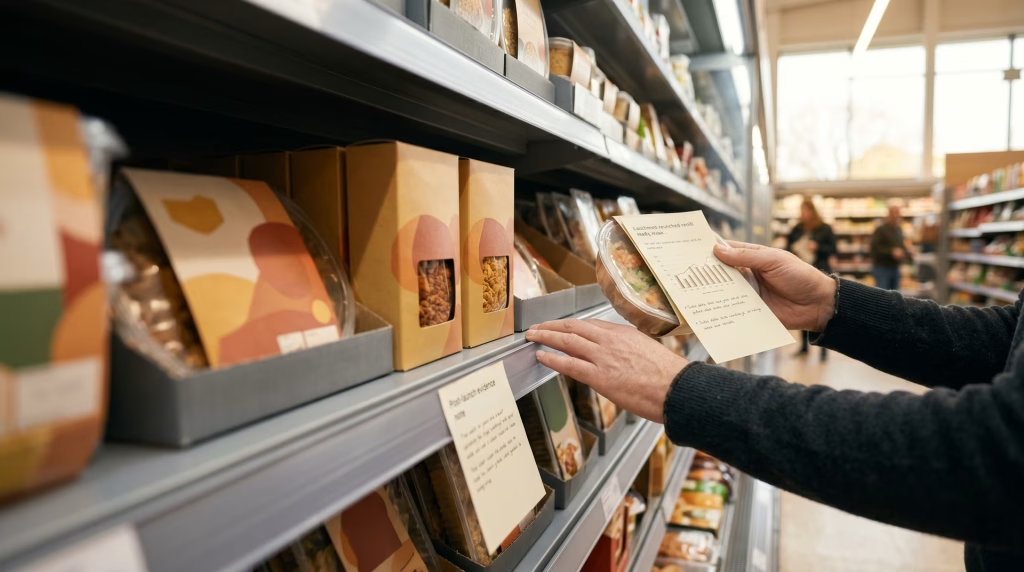
The validation and measurement side. Used when the brief needs to size the launch opportunity in volume terms, or to evaluate early in-market performance to inform the scale decision.
How we run launch and scale work
-
We scope around the commercial milestone
Twenty minutes on a scoping call. You tell us the milestone the work has to hit: the buyer meeting on the calendar, the gate decision on the horizon, the launch date already in the trade plan. We tell you which combination of pitch, manufacturing, volume and evaluation tools will get you to that milestone defendably, and which sequence delivers the most useful evidence in the time available.
-
Build the pitch around the buyer, not the product
A pitch that explains the product is a pitch that loses the listing. The pitches that win are built around the buyer's commercial reality: their category priorities, their range gaps, their margin model, their consumer demographic. Our team has sat in the chair the pitch is being made to, which means the deck is built around the questions that actually decide a listing rather than around the slides that look right.
-
Sort the supply chain before the pitch lands
Buyers ask about manufacturability early, and the question needs a credible answer before it is asked. Our third party manufacturing work runs in parallel with pitch development – so the supply chain is stress-tested, piloted at scale where needed, and confirmed before you walk into the room. Never pitch what you cannot make. A hand-finished sample is not the product that tested well, and if the manufacturing route changes the product, it changes the volume and the margin too. Getting this wrong late is an expensive problem.
-
Model the volume. Measure the launch. Inform the scale.
Robust category evidence and performance data keep the commercial case sharp throughout the early weeks in market – answering the two questions that matter most for scale: what should the launch deliver, and what is it actually delivering. The output is not a launch report; it is the evidence base for the next listing, the next pitch and the next pipeline cycle.
If your brief sounds like one of these, you are in the right place
- We have a buyer meeting in the diary and we need a pitch that will win the listing or help pulling together a category state of nation or consumer insight inputs to support it.
- Products approved but don’t know how to make it at scale & profitably
- We need a compelling business case & forecast to sell to our leadership or customer
- Need help with portfolio management & troubleshooting
- We need to craft the right story to get the buyer excited about what this could deliver
If your brief is closer to “we have a concept but we have not validated the product yet,” you are probably looking at Challenge 04 (Build, Test and Refine What Wins) first. If it is closer to “the product is launched and we need ongoing visibility on how it is performing,” Challenge 06 (Stay Ahead with Continuous Insight) is the better fit.
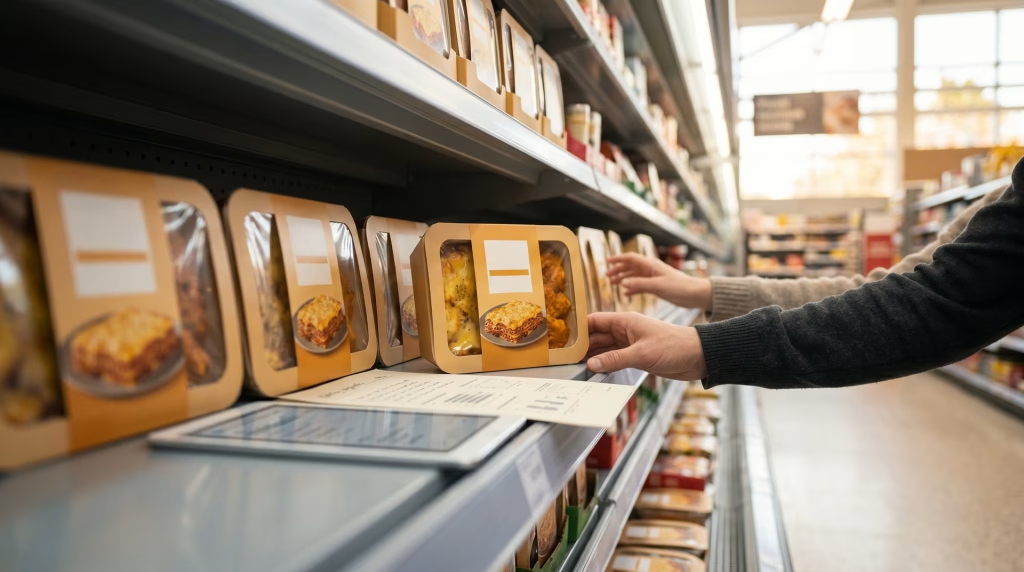
We know the tensions that buyers, product developers and portfolio managers face
Most agencies specialise in one thing, or bring in the odd contractor when a brief stretches beyond it. We have a dedicated team of specialists in-house. A brand agency might say it can handle product development, then pass it to a team like ours or a day-rate chef. Ours work as one integrated team: the developers are research-literate, and the researchers lean on the specialists to turn findings into feedback you can actually act on.
Three things make launch and scale work different here. First, specialism. Food and drink is where we are absolute experts, so the categories, the operators and the trading rhythm are already in the team and we are not learning your world on your project. Second, lived experience. Most of our consulting team has worked client-side, across different functions and different businesses, so the thinking comes from having done the job and seen a few different ways of doing it, not just advised from the outside. Third, a connected team. The pitch, the supply chain, the volume model and the post-launch evaluation are handled by the same people, so a launch runs as one continuous piece of work rather than four handovers between four agencies.
We are not a creative agency bolting a pitch deck onto a campaign, and we are not a supply chain consultancy that names a manufacturer without the commercial case to back it. We run the launch as one connected programme, with senior people who have spent time client-side and know how these decisions land in practice.
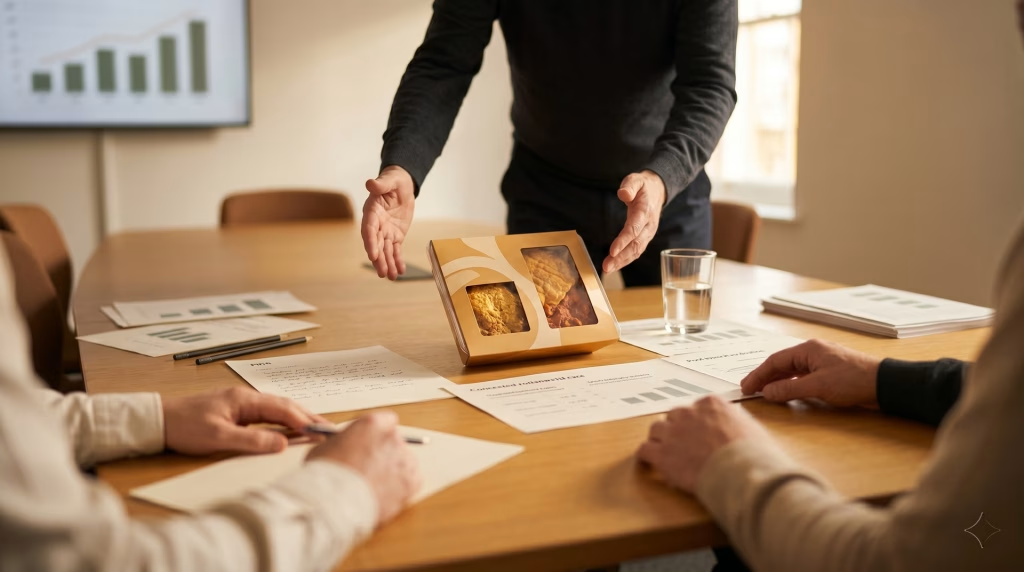
Product launched. What comes next?
Launch and scale closes with a product that has landed in market and the early evaluation that tells you what it is doing. Most clients move into one of three places from here, depending on what the launch is delivering and what the broader programme calls for next.
-
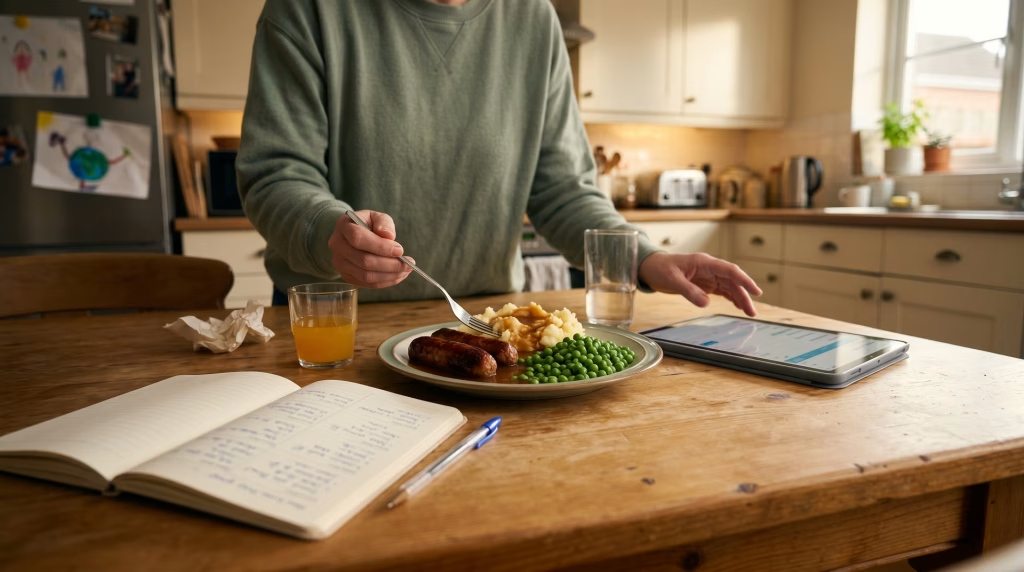
Stay Ahead with Continuous Insight
The launch has happened. The REVU framework has read the early weeks. The natural next step is moving from launch evaluation into always-on tracking. Closeness communities, tracking programmes, syndicated studies, benchmarking and meal tracking. The work that turns a one-off launch into the foundation of a continuous learning loop, so the next launch starts from a stronger position than this one did.
-
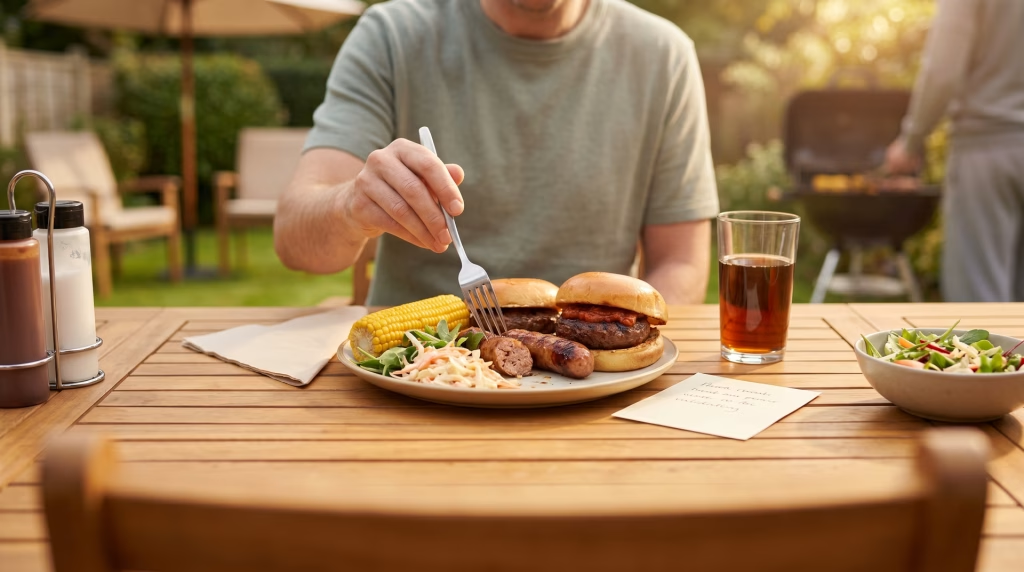
Build, Test and Refine
Sometimes a launch brief lands before the product has been properly validated. When that is the case, the strongest move is to step back into build and test work, validate the product in the conditions it will actually live in, and come into the launch phase with a proposition that has earned its commercial case.
-
Unlock Growth Opportunities
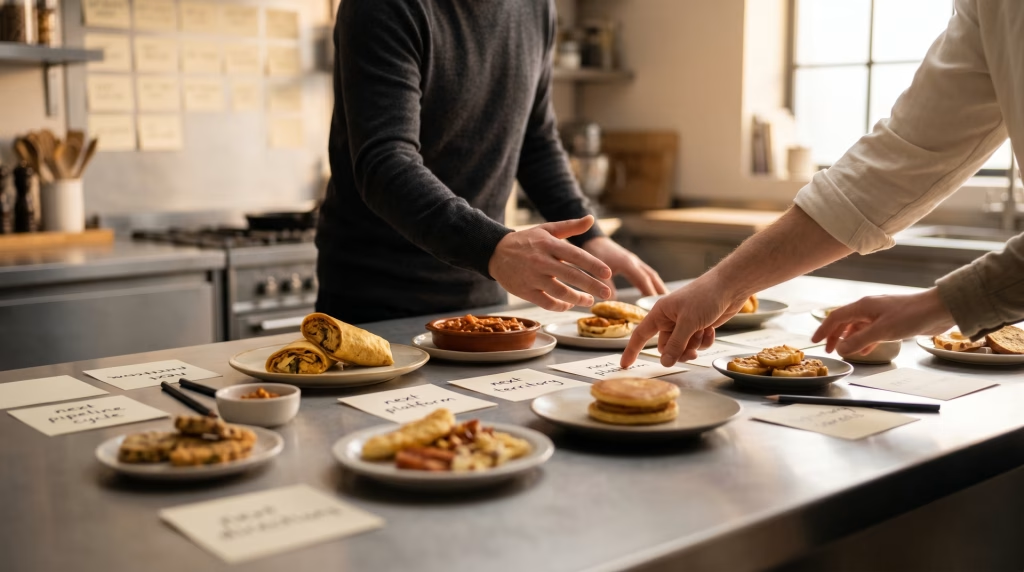
A successful launch is rarely the end of a programme. It is usually the beginning of the next one. Once the launch is live and performing, most businesses move back into opportunity work to decide where to go next, and increasingly that means incremental growth. Once you have proved a proposition can work, the natural next move is finding ways into more categories or more locations, and that proof is often what opens the door creatively to new concepts.

Supporting every sector in food and drink.
-
FMCG and branded manufacturers -

Grocery, retail and own label -
Food service -
QSR and high street -

Hospitality
View our case studies
-
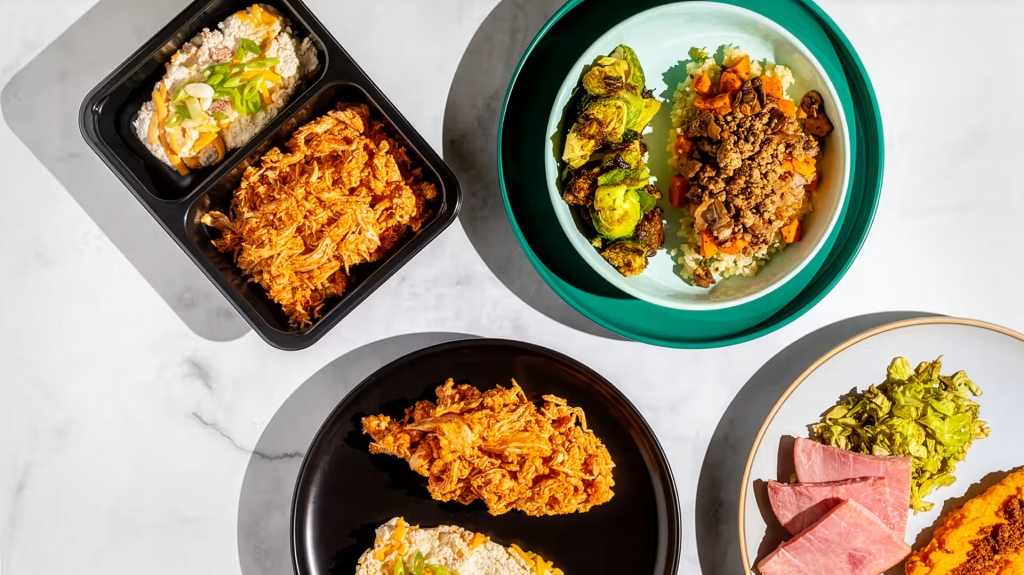
Factor 75
Factor 75 needed rapid recipe development across multiple dietary requirements while integrating seamlessly with their existing process. FIS Group embedded a development team inside Factor's Chicago facility, delivering 25 compliant recipes across GLP-1, keto and low carb requirements and establishing a scalable model for ongoing portfolio expansion.
-
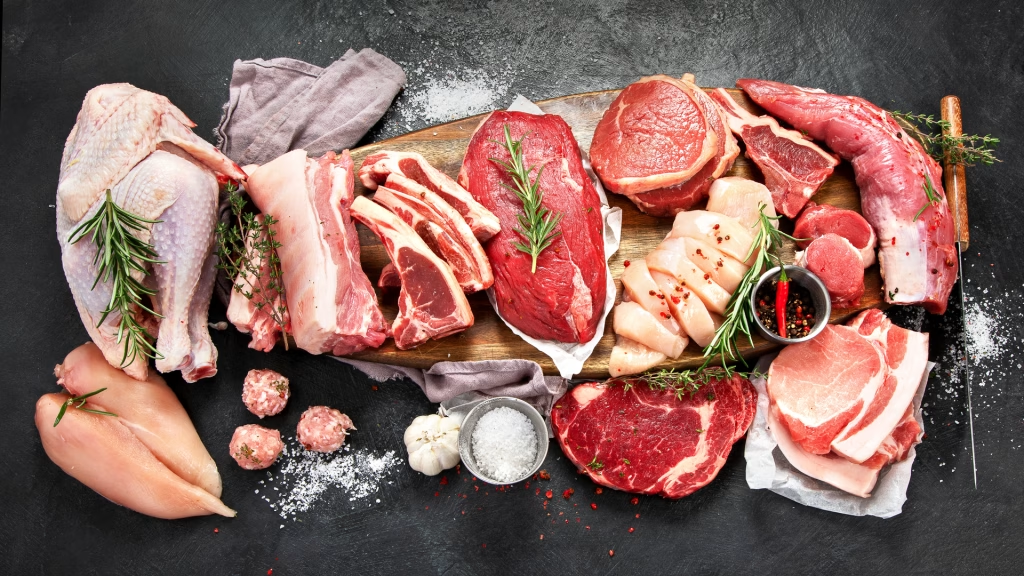
Pilgrim's Europe
Pilgrim's Europe needed a future-ready portfolio strategy balancing core business strength with breakthrough innovation. FIS Group delivered a bespoke Future Food process combining trend mapping, consumer insight, cross-functional ideation and rigorous validation, producing a fully evidenced long-term innovation roadmap.
-
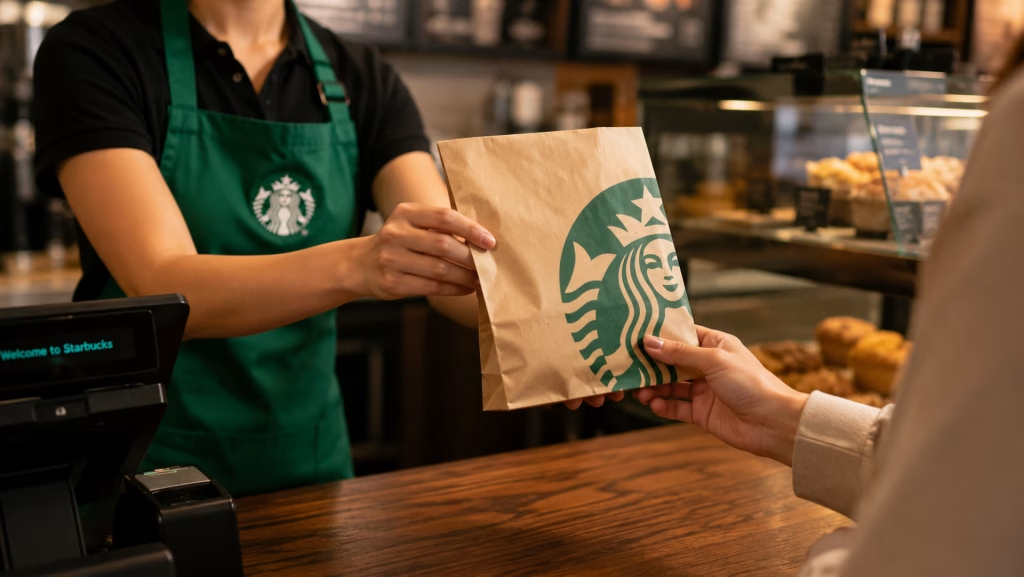
Starbucks
Starbucks needed cross-market ideation around iconic bakery platforms for EMEA, with a focus on winning with Gen Z. FIS Group facilitated a structured innovation workshop with trend-led platforms, generating ten big concepts refined into illustrated, testable briefs now entering NPD pipelines across multiple markets.

FAQs
It depends on where the gap is. At one end of the scale, it is end-to-end pitch development: the deck, the commercial case, the volume forecast, the supply chain narrative and the leave-behind. At the other end, it is targeted support against an internal pitch that is almost ready but needs sharpening. Most engagements sit somewhere in between, scoped around the specific buyer relationship and the commercial moment in front of you.
No. We are not a manufacturer. The 3PM manufacturing solution is a supply chain advisory service that scopes, shortlists and vets manufacturing partners on your behalf. We help you find the right manufacturing route; we do not deliver the manufacturing ourselves. White-label delivery is available where the recommendation needs to land without our brand attached.
Volumetric forecasting is a model, not a prophecy. The accuracy depends on the quality of the inputs (trial and repeat behaviour, channel context, promotional support, distribution assumptions) and on how realistic the assumptions are. Our work is built on real consumer simulation rather than top-down assumption, which makes it defensible in a buyer meeting or a board pack. We will tell you on the scoping call what range of accuracy we can credibly stand behind for your specific brief.
REVU is built for the early weeks of a launch when retailer sell-through data is thin, ambiguous or lagging, and a sharper read is needed to inform the scale decision. The framework captures what is actually happening in the consumer-facing moment of the launch (shopping, choosing, paying, talking) so the marketing mix, distribution plan and product proposition can be adjusted in close to real time rather than after the launch window has closed.
They sit at different points and do different jobs.
Pitch support is about winning the opportunity. It helps you put a product or proposition in front of a customer, retailer or investor with the commercial case to back it: the story, the numbers and a volume model that stands up to scrutiny.
Briefing pack creation comes later and is technical. It is the handover document that gives a product the best possible chance of being made at scale, first time. It pulls together everything a manufacturer needs: the critical control points such as pH or Brix, expected yields, equipment recommendations, the sequencing of the recipe, and how the process changes from benchtop to scale, alongside ingredient specifications, visual management and methodologies. It is effectively everything required to scale an MVP we have created, or a product you already have. That matters commercially because trials are expensive. Once you are running more than two or three at big volumes (150kg plus), the raw material bill alone climbs fast, so a strong briefing pack reduces the number of trials it takes to reach a consistent, scalable product.
Yes. Concept-to-Launch programmes are the wrapper service for clients who want the full journey from validated concept to in-market launch run as one continuous piece of work. This includes gate management, retailer pitch development, supply chain support and launch coordination, scoped against the commercial milestone the launch has to hit.
For clients who want ongoing support, we also work on a retained basis – running tenders, development plans and product programmes across the year. We plug directly into marketing, category or trading teams and handle everything product related, removing the need for a dedicated in-house head of food or development.
Both. Challenger brands and scale-ups are an active part of our client base, and the launch toolkit is well-suited to the realities of bringing a new brand into a category for the first time. Established brands typically use it for range refreshes, new platforms and category extensions. The work is scoped around the maturity of the proposition and the buyer relationship rather than the size of the brand.
Got a launch you need to land?
Tell us the milestone – the buyer meeting, the gate decision, the launch date. We will tell you what it takes to get there, how long it will take and what it will cost. Book a scoping call to get started.