
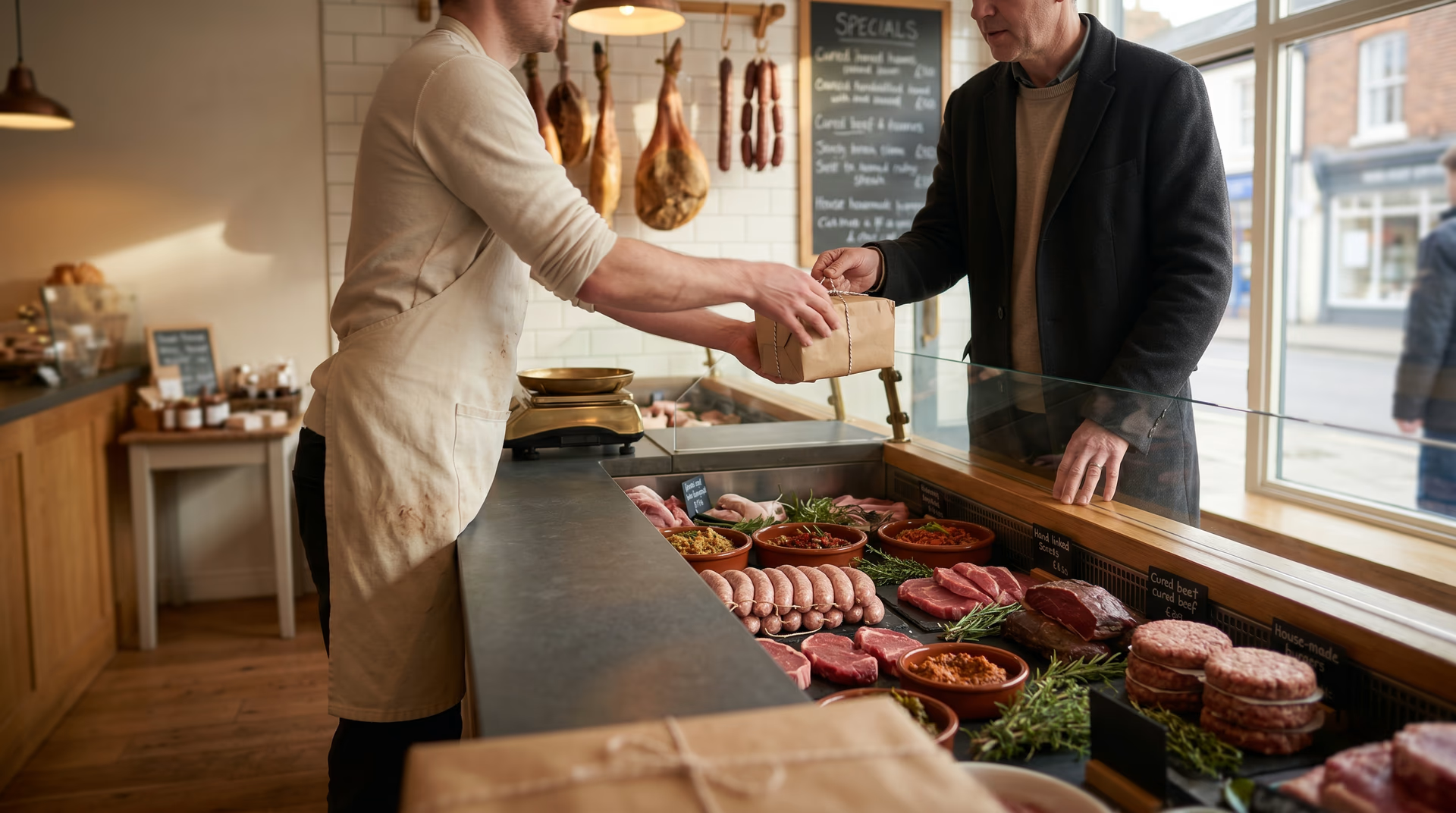
When you need to know how shoppers actually behave, not how they say they shop
The biggest gap in most food and drink shopper understanding is between what consumers say they do when you ask them, and what they actually do when they shop. They plan a meal, walk in for a top-up, leave with a basket that does not look like the plan. They commit to a brand in a survey, switch to private label at the shelf. They claim to read pack copy, glance at the front face for two seconds before deciding. The standard tools (focus groups, U&A) capture what shoppers say. They miss what shoppers do.
Shopper Explorations is the structured methodology for closing that gap. The work observes, interrogates and interprets how food and drink is actually bought, in real shopping moments rather than simulated environments. Accompanied shops with real consumers in their actual stores. Store observation of unprompted shopping behaviour. Pre and post-shop interviews that surface the gap between intended and actual purchase. Digital shopper journey work across e-commerce, click-and-collect and quick-commerce. Built specifically for food and drink, where impulse, occasion, basket logic and shelf decision combine in ways that generic shopper research misses.
It is not the right tool for every brief. If the question is about broader consumer attitudes or category usage outside the shopping moment, U&A is the better fit. If the question needs deep behavioural observation across consumer life beyond shopping specifically, ethnography goes further. If the brief is about quantitative validation of shopper hypotheses at scale, the work should be paired with a structured U&A. We will tell you straight on the scoping call which is the right call.
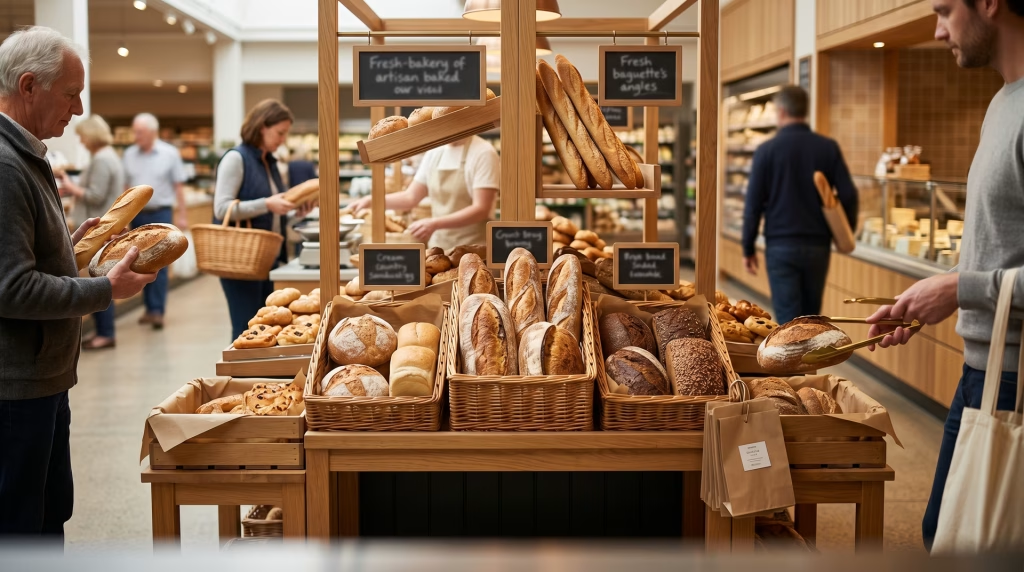
What we do differently
-
Real shopping moments, not simulated environments
Most shopper research is run in simulated environments: lab settings, mocked-up shelves, controlled stimulus. The work delivers a clean picture but a partial one, because shoppers behave differently when they know they are being observed in a research moment versus when they are actually buying for their family. Our work runs in real shopping moments: real consumers in their actual stores, real baskets, real time pressure, real decisions. The data is messier because shopping is messier, and the interpretation lands more credibly because of it.
-
Built specifically for food and drink shopping
Food and drink shopping is different from other categories. The frequency is higher, the basket is more complex, the occasion logic is more variable, the impulse layer is more significant, the price sensitivity is sharper. A shopper research approach lifted from FMCG broadly or from non-food retail misses the specific behavioural patterns that shape food and drink purchase decisions. Our methodology is built around what is actually different about food and drink shopping, with senior researchers who know the categories and the channels.
-
Integrated across physical and digital retail journeys
Most food and drink shopping is no longer entirely physical or entirely digital. The same shopper plans a meal online, checks the supermarket app for offers, browses in store, reorders click-and-collect for the next week, runs a quick top-up via quick-commerce. The shopping journey crosses channels constantly, and shopper research that captures only the in-store moment misses the upstream and downstream context. Our work integrates physical store observation with digital shopper journey research where the brief crosses channels.
-
Senior interpretation with retail and category experience
The senior person on every shopper project has worked client-side in food and drink categories with retailer-facing responsibility. The interpretation is not a generic shopper insight read; it is a commercial read that understands the retailer-brand dynamic, the category review cycle, the pack and shelf realities, and the commercial pressures that shape how the work needs to land. The recommendations come back framed for the people who actually have to make the decision.
Six commercial use cases, written as scenarios a buyer will recognise from their own brief. The aim is for the reader to see their question on this list and self-select.
Pack and shelf optimisation
You are developing or refreshing pack design and need to understand how new packs play in real shopping moments: shelf cut-through, basket selection, on-shelf navigation, against-competition response. Built specifically to feed into pack design decisions rather than as a generic shopper read.
Path-to-purchase understanding
You need to map how shoppers actually arrive at the purchase decision: the upstream needs, the channel choice, the in-store journey, the shelf decision, the basket build, the post-purchase usage. The integrated map is the foundation for brand strategy, range planning and retailer pitches.
Pre-retailer pitch shopper evidence
You are building a category pitch for a major retailer and need the shopper evidence that supports the commercial case: shopper segments, occasion behaviour, in-aisle decision drivers, basket dynamics, growth headroom. Built to land in a retailer category review meeting rather than as an internal insight document.
Category review preparation
You are preparing for a category review (yours or your retailer’s) and need a current read on the shopper reality across the category. Real shoppers, real categories, real shelf behaviour, structured against the questions the category review will actually ask.
Digital shopper journey work
Your e-commerce or quick-commerce performance is shifting and you need a structured read on how shoppers actually behave in your digital channels: search, browse, basket build, repeat purchase, conversion drop-off. Specialist digital shopper journey work, integrated with physical retail where the brief crosses channels.
Channel-specific shopper deep-dives
You are entering or optimising in a specific channel (foodservice, QSR, out-of-home, on-the-go) where the shopping logic is structurally different from grocery. Channel-specific shopper work, scoped to the operational reality of how shopping actually happens in that channel rather than against a generic shopper template.
-
How a shopper project runs
From brief to real shopping evidence
-
Scoping call
Twenty minutes on a call. You tell us the commercial question, the retail environment(s) in scope, the shopper audience to recruit against, and the timeline. We tell you whether shopper exploration is the right tool, what touchpoint mix makes sense, what retail channels should be in scope, and roughly what it will cost.
-
Methodology design and recruit
Recruit criteria, screener design, retail environment selection, touchpoint mix. Specialist shopper recruitment through food and drink panels and trusted local recruiters. We sign off the recruit, the screener and the retail venue selection with you before fieldwork starts, so the work is anchored in the right shoppers and the right shopping environment.
-
Fieldwork in real shopping moments
Accompanied shops, store observation, pre and post-shop interviews, digital shopper journey tracking. The work runs in real stores and on real e-commerce platforms rather than in simulated environments, with senior researchers on the ground (or on the screen) reading what they see in real time.
-
Senior synthesis
The senior team synthesises across the touchpoints, surfaces the patterns that matter for the commercial question, and reads the integrated shopping picture against the original brief. Senior interpretation built throughout, not bolted on at the end.
-
Working readout and recommendation
A working readout session, in person or by video, walking through what the shopping reality surfaced and what we recommend. Followed by a clean shareable deliverable scoped for the audience (pack designers, category teams, retailer pitches, internal commercial leadership). Video and observational material is captured throughout the fieldwork and made available alongside the written work where the audience needs it.
Three ways we observe real shopping. Used together, not separately.
A shopper project is the integrated set of touchpoints, not any single one. The four touchpoint types below are how we observe shopping across the real moments where it happens. The specific mix is scoped at the start to fit the brief, the retail environment and the commercial decision.
Accompanied shops
Real consumers, real stores, real shopping baskets. The senior researcher accompanies the shopper from pre-shop planning through in-store decision to post-shop reflection, capturing the gap between intended and actual purchase as it happens. The structural advantage is data the shopper cannot tell you in a focus group, because the decisions are being observed in the moment they are made.
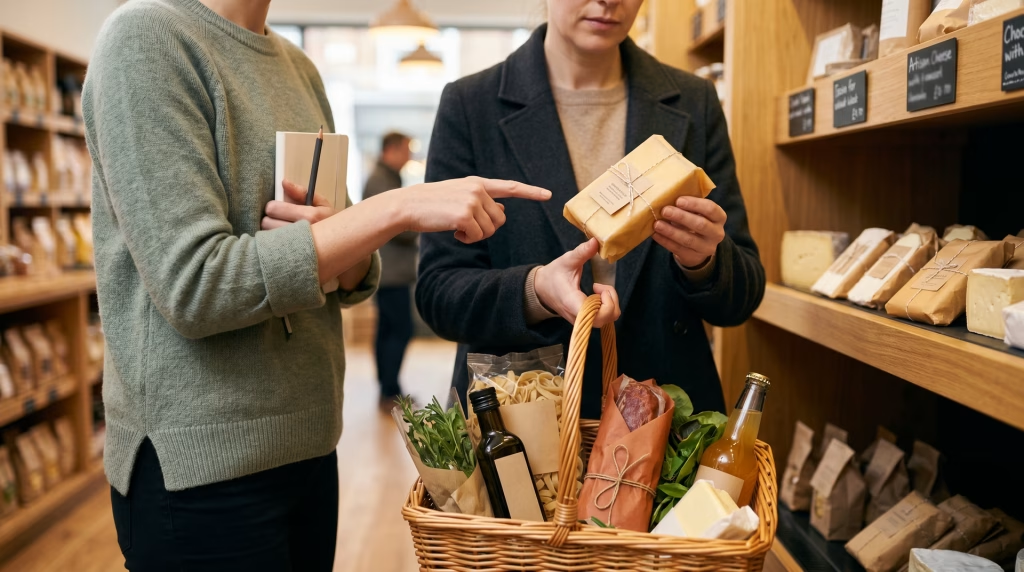
Store observation
Unprompted observation of real shoppers in real stores, with the researcher capturing behaviour without intervening. Watching how shoppers actually navigate the aisle, dwell at the shelf, read or skip pack copy, evaluate against competition, build the basket. The behaviour layer that accompanied shops cannot capture because the shopper knows they are being observed.
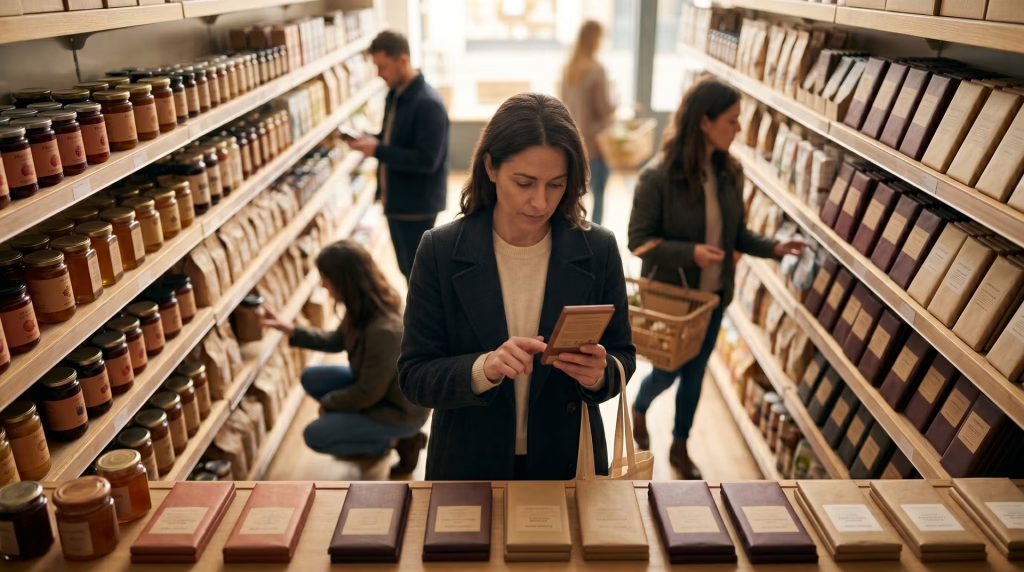
Pre and post-shop interviews and Digital shopper journey
Pre and post-shop interviews
Structured conversations with the same shopper before and after the actual shopping trip. Pre-shop surfaces the intent: what they think they will buy, what they are planning around, what they expect from the trip. Post-shop surfaces the reality: what they actually bought, what changed, what triggered the change. The gap between the two is where the commercial signal lives.
Digital shopper journey
Specialist tracking and observation of digital shopping behaviour across e-commerce platforms, supermarket apps, quick-commerce and click-and-collect. Search behaviour, browse patterns, basket build, drop-off points, post-purchase repeat behaviour. The digital shopping layer that physical observation cannot capture, integrated with the physical work where the brief crosses channels.
Food and drink is all we do
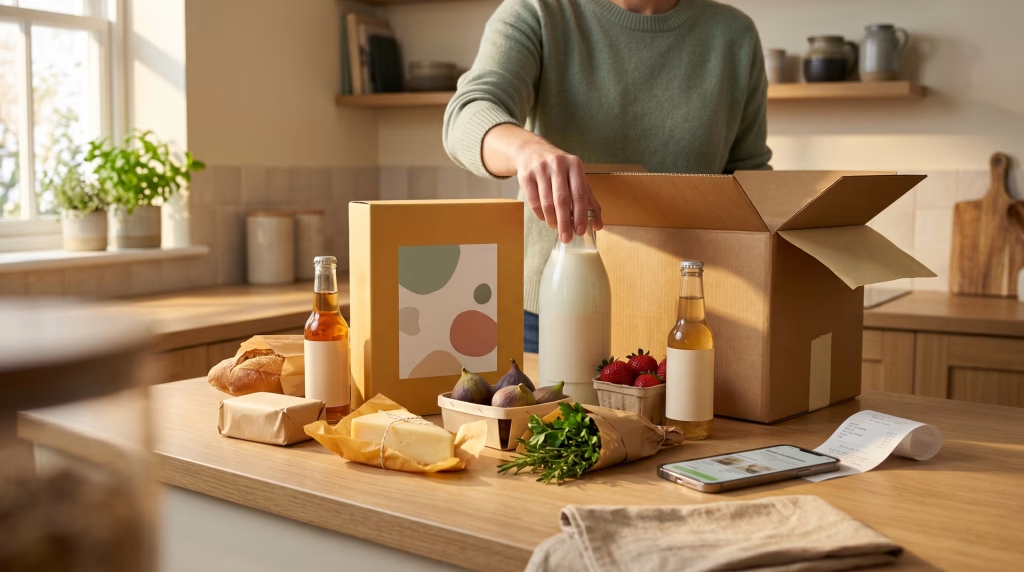
We are not a generalist shopper agency that takes the occasional food brief. Food and drink is the only sector we work in. Our senior researchers know the categories, the channels, the retailers and the shopping realities. The work lands with people who get it on the first read, and the recommendations come back framed for the people who actually have to make the decision (category managers, brand leads, NPD teams, retailer pitch teams, e-commerce leads).
That focus is why we work with 11 of the UK’s top 40 food and drink brands.
Other ways to decode shopper and category behaviour
Shopper explorations is one tool in the broader Decode toolkit. Depending on the brief, one of these might be a better fit, or a stronger partner alongside the shopper work.
-
Ethnography
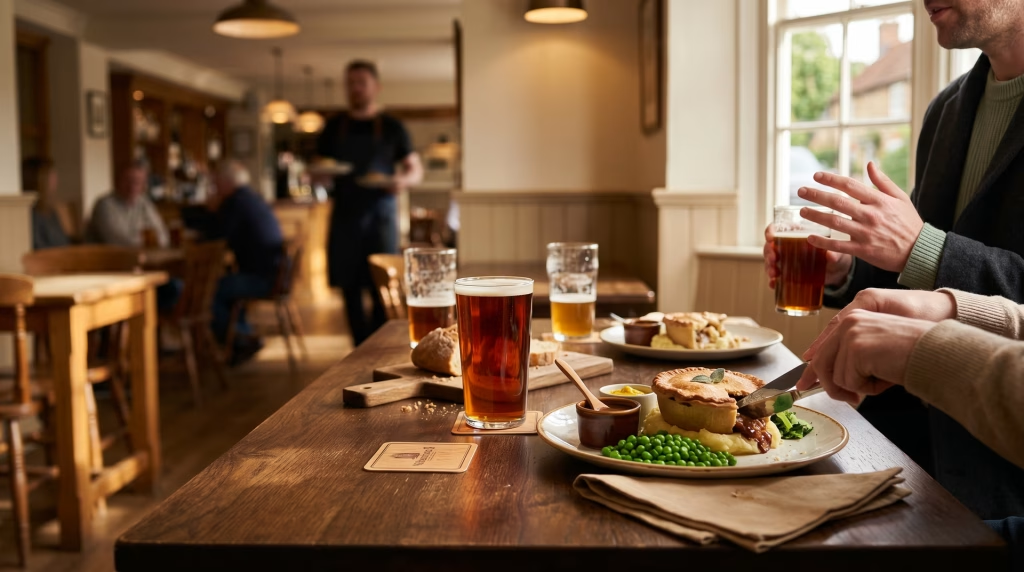
Deep behavioural observation of how food and drink lives in real homes, real kitchens, real eating moments and real social contexts.
-
Usage and Attitude Studies
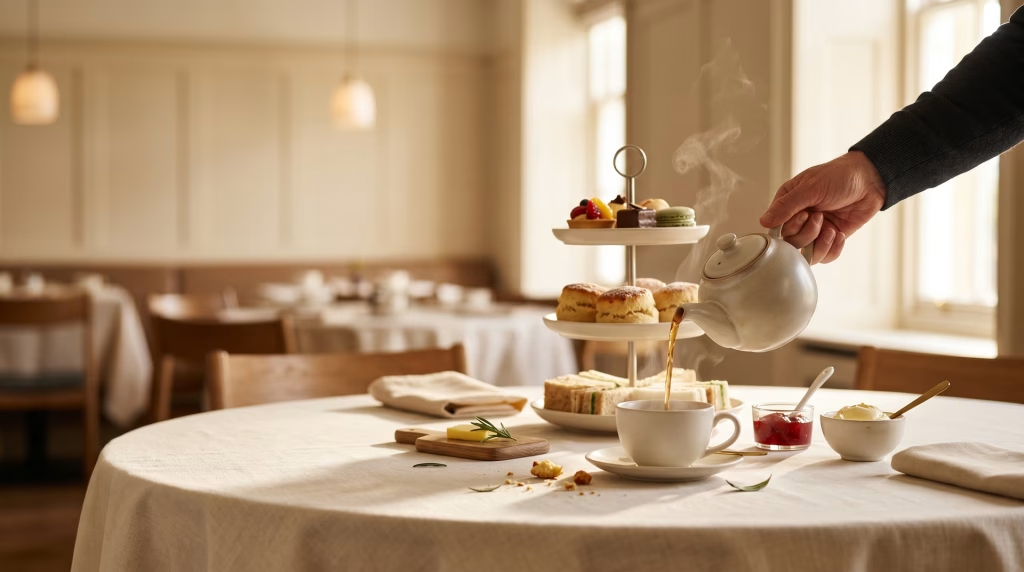
Foundational consumer research that maps category usage, brand awareness, consumer attitudes and the drivers of choice across the audiences that matter.
-
Food Safaris & Competitor Review
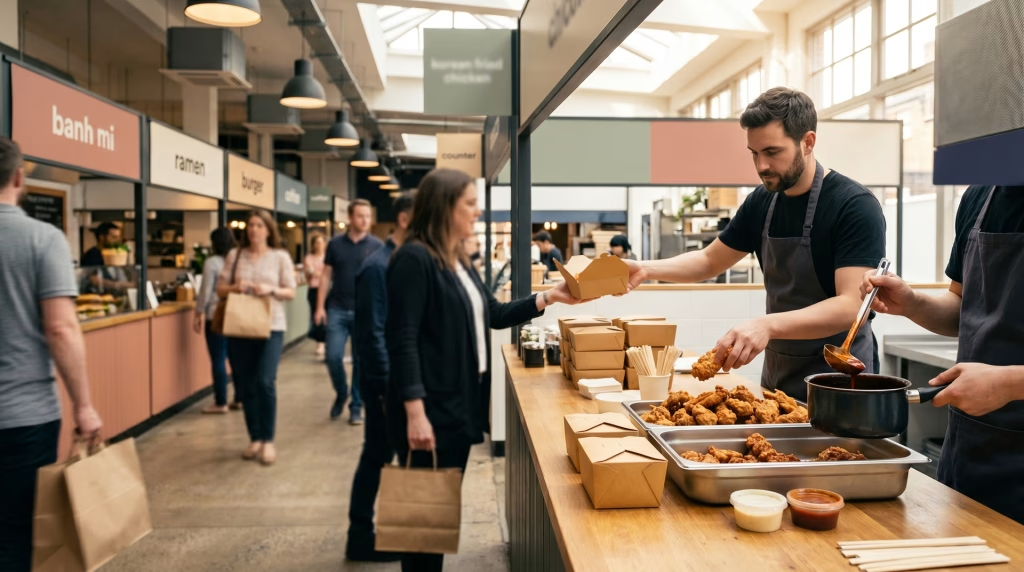
A bespoke exploration of the markets, restaurants, retail aisles and overseas territories that are shaping your category
-
Opportunity Mapping
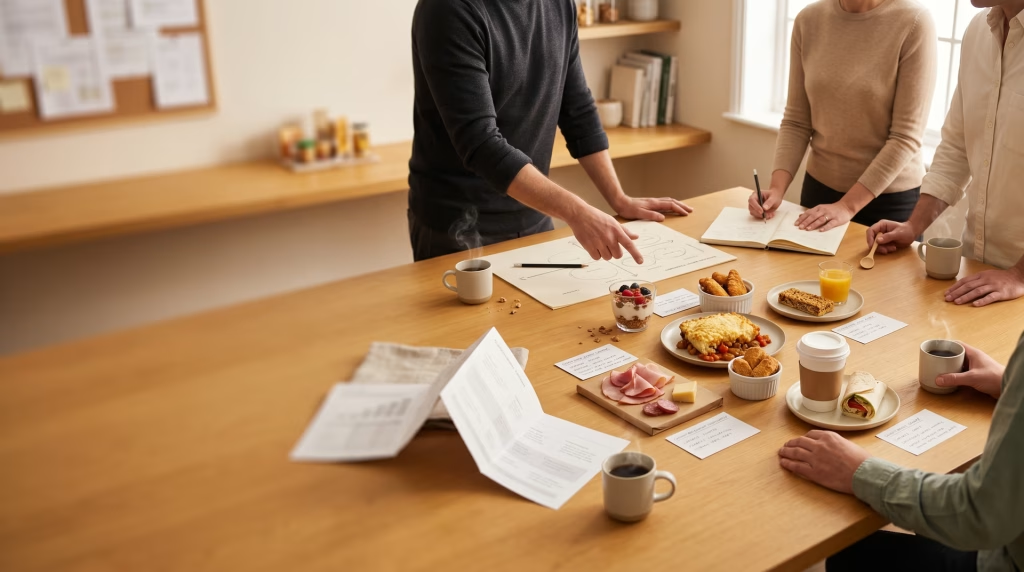
Strategic mapping of where to play in food and drink.

View our case studies
-
Burger King
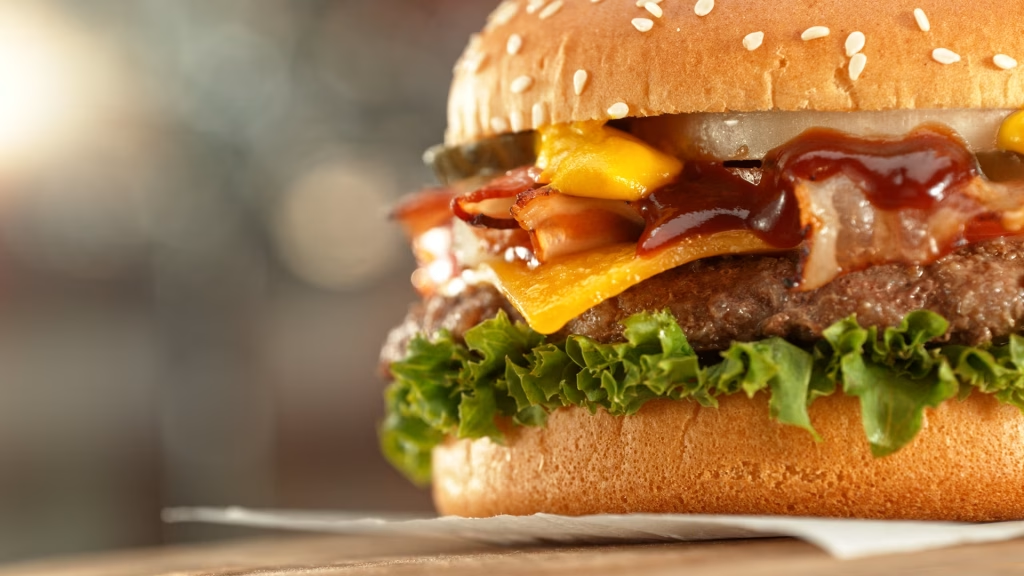
Burger King needed in-depth consumer testing of two new burger builds across multiple variants before launch. FIS Group delivered a real-store central location test with penalty analysis and innovation expert input, providing precise optimisation insight and benchmarks to inform future menu development.
-

Onken
Onken needed a structured one-to-five-year innovation pipeline for the UK yoghurt category. FIS Group combined trend analysis, consumer qualitative research and a facilitated ideation workshop to generate ten big platforms, refined into a prioritised pipeline across four brand opportunities.
-
FAQs
U&A and focus groups capture what shoppers say. Shopper Explorations captures what shoppers do. The work runs in real shopping moments (accompanied shops, store observation, pre and post-shop interviews, digital shopper journey tracking) rather than in survey questionnaires or focus group discussions. The output is different because the behavioural reality is different from the reported behaviour, and food and drink shopping in particular has a wide gap between what consumers say they do and what they actually do at the shelf.
Both methodologies observe rather than just ask, but ethnography is broader (consumer behaviour across life, including but not limited to shopping) and shopper explorations is shopping-specific (the path to purchase, the shelf decision, the basket build, the digital shopper journey). Most ethnography projects do not deliver the depth on shopping specifically that a shopper project does, and most shopper projects do not deliver the broader consumer-life context that ethnography does. The two are complementary tools for different briefs.
Both, and we integrate them where the brief crosses channels. Most food and drink shopping is no longer entirely physical or entirely digital, so the methodology is built to cover the physical store work (accompanied shops, store observation) alongside digital shopper journey research across e-commerce platforms, supermarket apps, quick-commerce and click-and-collect. Some briefs are physical-only or digital-only; most are integrated.
Yes, where the retailer relationship allows it. Most accompanied shops and store observation work runs in standard retail environments without formal retailer involvement. Where the work specifically needs to run inside a retailer partner’s stores or with retailer cooperation (for example, for a category review or a retailer-specific pitch), we will work alongside the retailer relationship rather than around it. The scoping call addresses this directly so the operational reality is clear from the start.
Depends on the brief. A typical accompanied shop project runs across twelve to twenty-four shoppers, with store observation adding further unprompted observation hours, and digital shopper journey work running across a separate sample where applicable. The right number is scoped against the depth the brief needs and the breadth of retail environments or audiences to be covered. We will recommend the right scale at the scoping call.
Eight to twelve weeks from scoping call to working readout is the typical window. Compressed timelines are possible where the recruit is straightforward and the retail environments are accessible. Larger multi-channel projects or projects with significant retailer coordination can extend to twelve to sixteen weeks. We give realistic timelines at proposal stage.
A structured written deliverable, a working readout session, and observational material (video and stills from the fieldwork) where the audience needs it. The format is scoped to the audience: pack designers and creative teams typically want the observational material prominent, retailer pitch teams typically want the commercial case structured around shopper segments and basket dynamics, internal leadership typically wants the strategic implications structured first. Format agreed at the start.
Yes, and it is regularly commissioned specifically for that purpose. The work is built to deliver the shopper evidence base that supports a category pitch to a major retailer: shopper segments, occasion behaviour, in-aisle decision drivers, basket dynamics, growth headroom. The deliverable is formatted for the retailer category review meeting, not as an internal insight document.
Yes. We run shopper exploration projects across the UK, mainland Europe, the US and the UAE, with local recruit, local fieldwork support where the language and retail context need it, and senior FIS Group oversight throughout. International work takes longer than UK-only because of the multi-market retail coordination, but the methodology and quality standards travel.
Project-based, scoped against the touchpoint mix, the number of shoppers and retail environments, the channel coverage and the audience for the deliverable. Single-channel UK accompanied-shop work is the lowest entry point; integrated multi-channel multi-market work with digital shopper journey research is the highest. We give a clear, all-in quote at proposal stage with no hidden extras.
Got a commercial question that needs to be answered in the shopping moment?
Tell us the commercial question, the retail environment in scope, the shopper audience to recruit against, and the timeline. We will tell you whether shopper exploration is the right tool, what touchpoint mix makes sense, what channels should be in scope, and what it will cost. Twenty minutes on a call. No qualifying call before the qualifying call.