What consumer co-creation is actually for
Most consumer research positions consumers as respondents. The internal team frames the question; consumers answer it. The methodology produces the data the team asked for. The output reflects what the team thought to ask about, which means the work is bounded by the team’s existing frame of reference rather than expanded by consumer perspective.
This works for many briefs. It fails for briefs where the question itself needs consumer perspective: where the team’s framing might be missing the point, where the lived consumer reality differs from the internal narrative in ways the team cannot anticipate, where the implications consumers would draw differ from the implications the team would draw from the same evidence. For those briefs, you need consumers shaping the work itself, not just answering it.
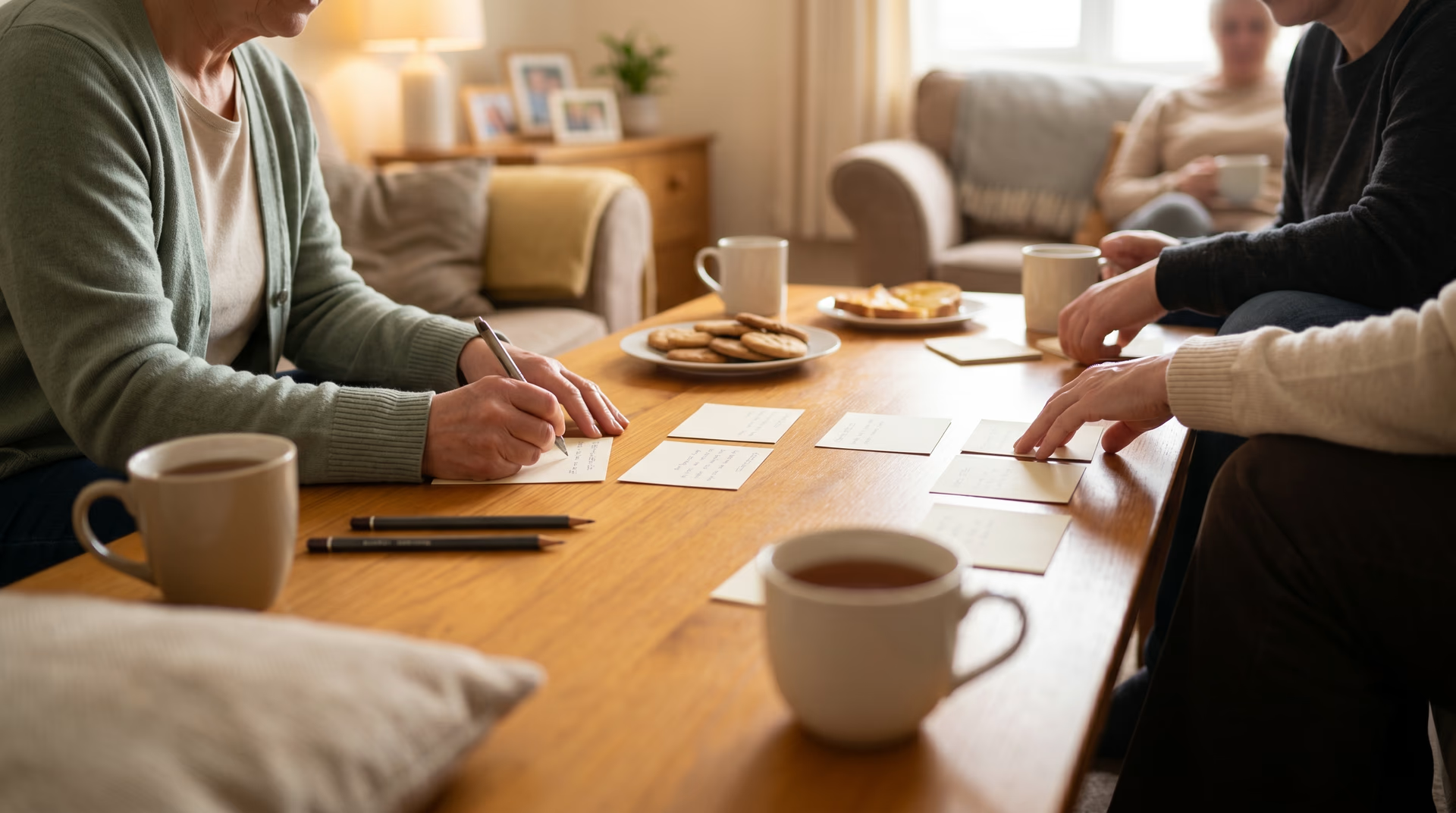
Co-creation is for when you don’t just want to test ideas with consumers – you want to build them together. It sits within our creative innovation work and takes many forms: ideation workshops where consumers generate and build ideas alongside the client team, Dishcovery sessions where we cook, taste and refine concepts live in the room, or hybrid formats designed around the specific brief. What all of them share is direct, live consumer involvement in the creative process. Client teams observe and participate in real time – which matters, because one of the most common blockers in food and drink innovation is a team that has lost sight of how their consumer actually thinks, eats and makes decisions. Co-creation closes that gap fast. The ideas and products that come out of this process tend to be more grounded, more differentiated, and easier to develop with confidence – because the consumer perspective has been built in from the start, not added at the end.
It is not the right tool for every brief. If the brief is collaborative concept ideation with consumers as creative participants, our innovation-side Co-creation service is the right tool (different commercial purpose, ideation output rather than insight output). If the brief is iterative concept development, Concept Labs is more efficient. If the brief is reactive consumer research at scale, focus groups or Concept Screening are simpler and faster. Co-creation (consumers) sits specifically when the brief needs consumer perspective in the framing of the work itself, not just in the responses.
Single-session co-creation
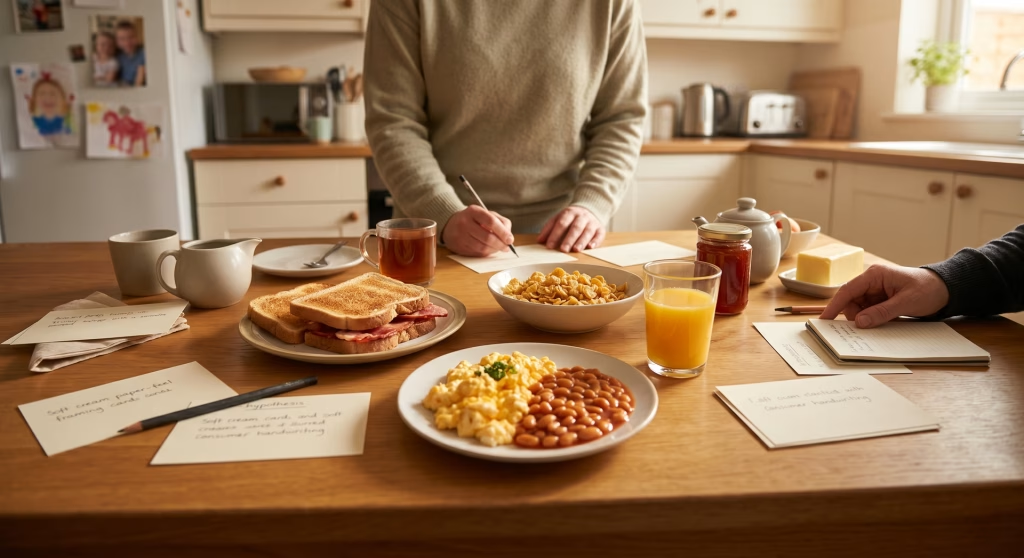
One focused participatory session with a single consumer cohort, typically four to six hours, scoped against a defined insight brief where consumer framing on one specific question is the work. Suited to briefs with a clear insight need that benefits from participatory methodology but does not require sustained engagement. Typically delivers the consumer-grounded insight deliverable within four to six weeks of scoping. The lowest entry point for participatory consumer insight work.
Multi-session participatory programme
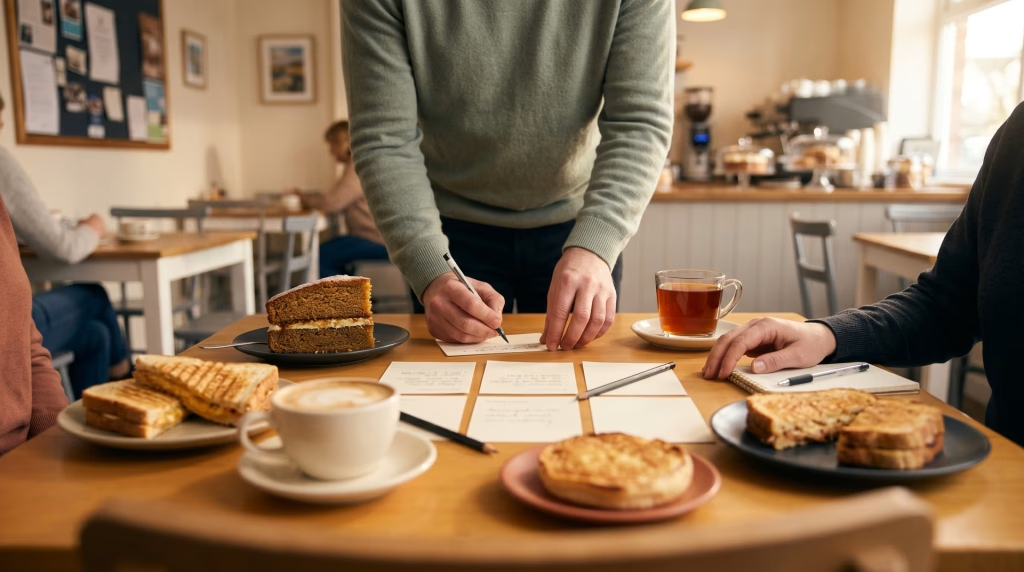
Three to six sessions across four to eight weeks, multiple consumer cohorts, with the participation building across the sessions toward integrated insight. Suited to most major consumer co-creation briefs: deep strategic insight foundation, brand or category exploration, cultural translation work, multi-aspect insight that needs to develop across the programme rather than being captured in a single session. The most common consumer co-creation format.

Embedded consumer programme
Sustained consumer participation across a broader innovation or insight programme, typically running three to six months with ongoing consumer cohorts engaged at multiple points in the work. Suited to major innovation programmes where consumer participation needs to be embedded across the work rather than as a discrete phase: strategic foundation work that flows into pipeline development, brand transformation programmes, multi-year innovation streams with ongoing consumer grounding requirements.
Food and drink is all we do
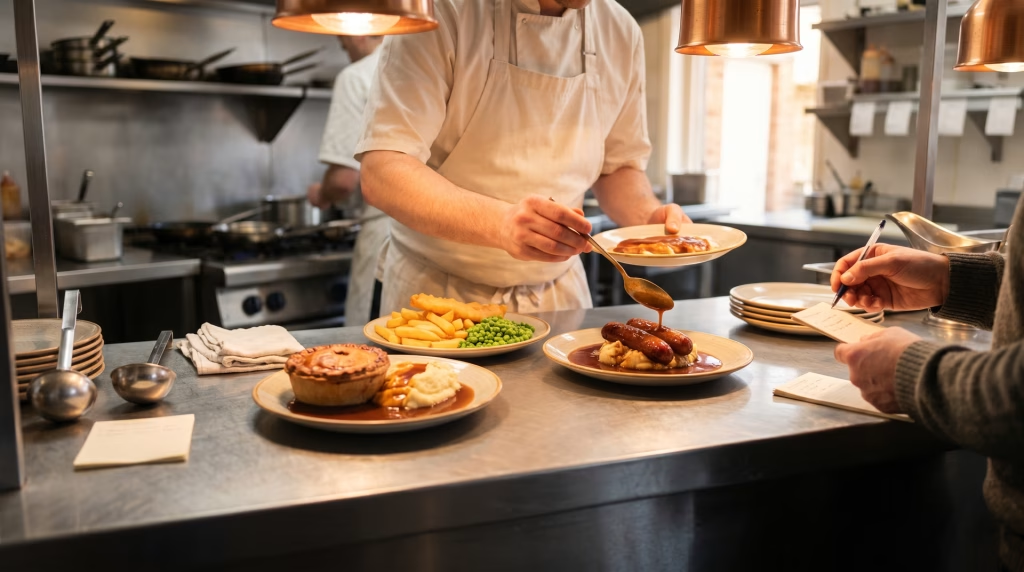
We are not a generalist research agency that takes the occasional food brief. Food and drink is the only sector we work in. Our senior facilitators handle participatory consumer dynamics in food and drink categories specifically, with the sector specialism that turns consumer participation into commercially useful insight rather than into pleasant conversation. The senior interpretive layer that integrates consumer input with food and drink commercial reality is what separates this work from generic consumer engagement methodology.
That focus is why we work with 11 of the UK’s top 40 food and drink brands.
Other ways to create and refine ideas
Co-creation (consumers) is one tool in the broader Create and Refine Ideas toolkit. Depending on the brief, one of these might be a better fit, or a stronger partner alongside the co-creation work.
-

Co-creation (consumers)
The most consumer-centric ideas come from involving consumers in building them. Co-creation puts real people into the ideation process itself – alongside your team, not just in front of them.
-
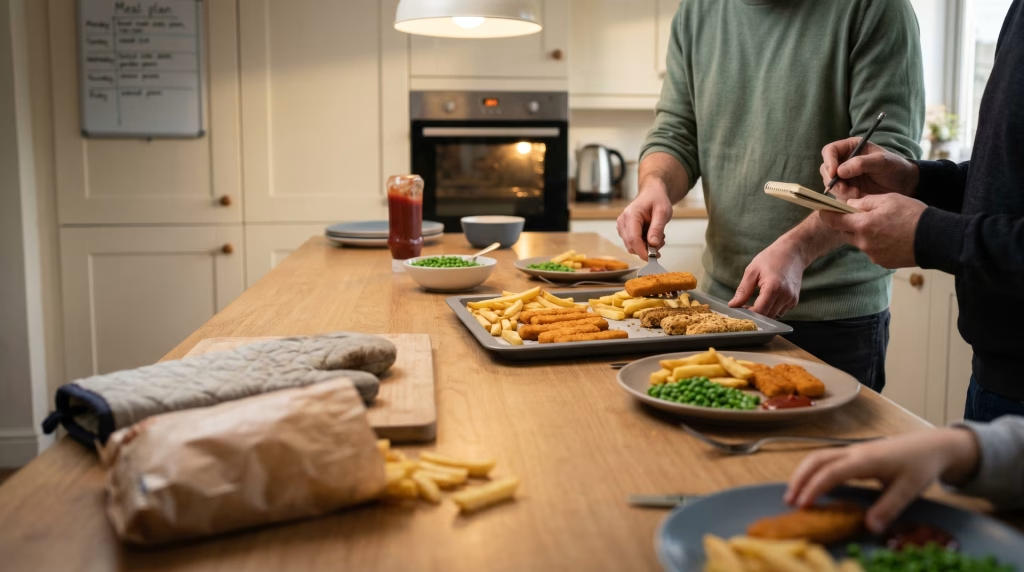
Concept Labs
Iterative concept development with consumers, structured to refine, sharpen and evolve a focused set of five to six priority concepts until they are ready to land as intended.
-
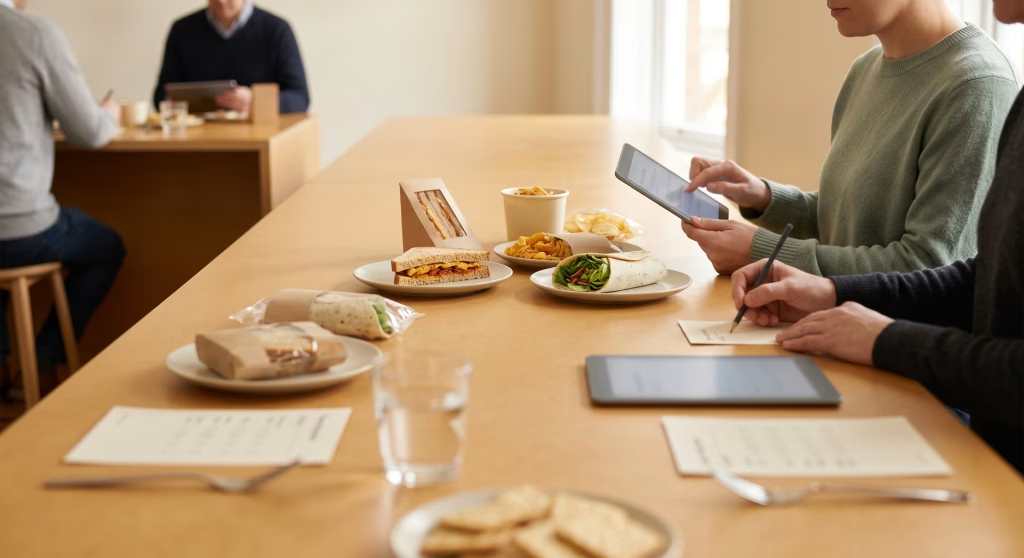
Concept Testing
Bespoke quantitative concept testing for food and drink innovation, designed to prioritise which concepts go forward into NPD investment, brand development or commercial commitment – and to sharpen how they are positioned and communicated.
-
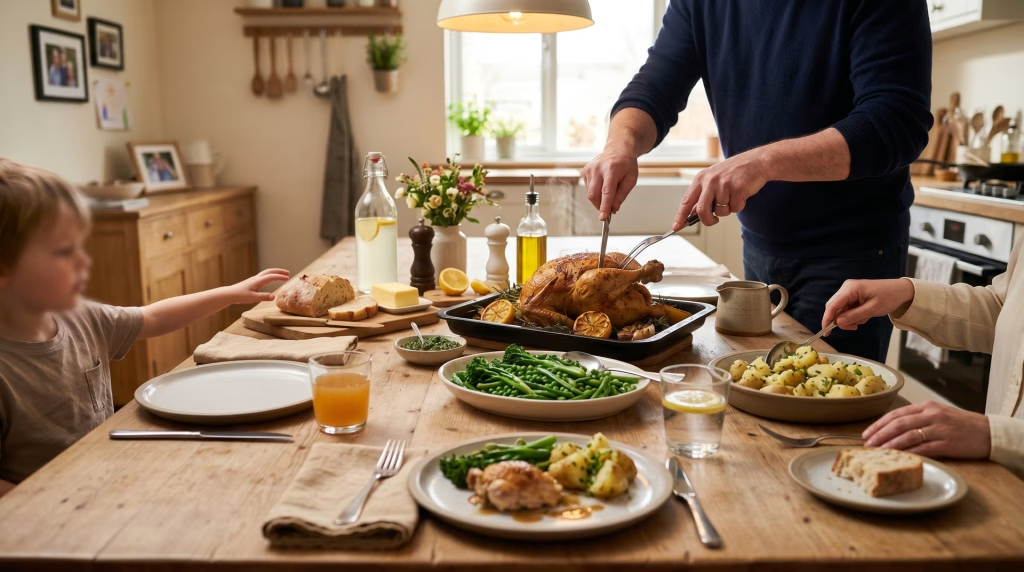
Exploratory Insight
Senior-led discovery work for early-stage briefs where the scope is not yet defined, the question is not yet clear, or the team needs structured hypothesis generation before commissioning more structured work.

View our case studies
-
Mizkan
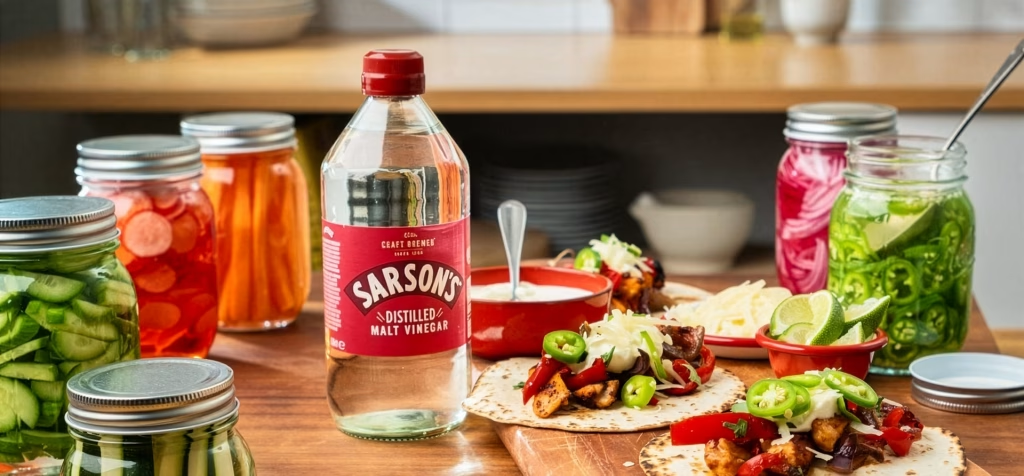
Mizkan needed a growth strategy to attract younger consumers to the vinegar category and expand usage occasions. FIS Group delivered a hybrid process combining trend mapping, consumer research and innovation workshop facilitation, producing high-potential proposition territories with a full activation toolkit for development.
-
Oscar Mayer
Oscar Mayer needed category understanding in convenience and discount channels that could drive retailer conversations. FIS Group delivered a multi-phase programme combining quantitative, qualitative and innovation expertise, turning research into a commercial asset at the negotiating table.
-
Starbucks
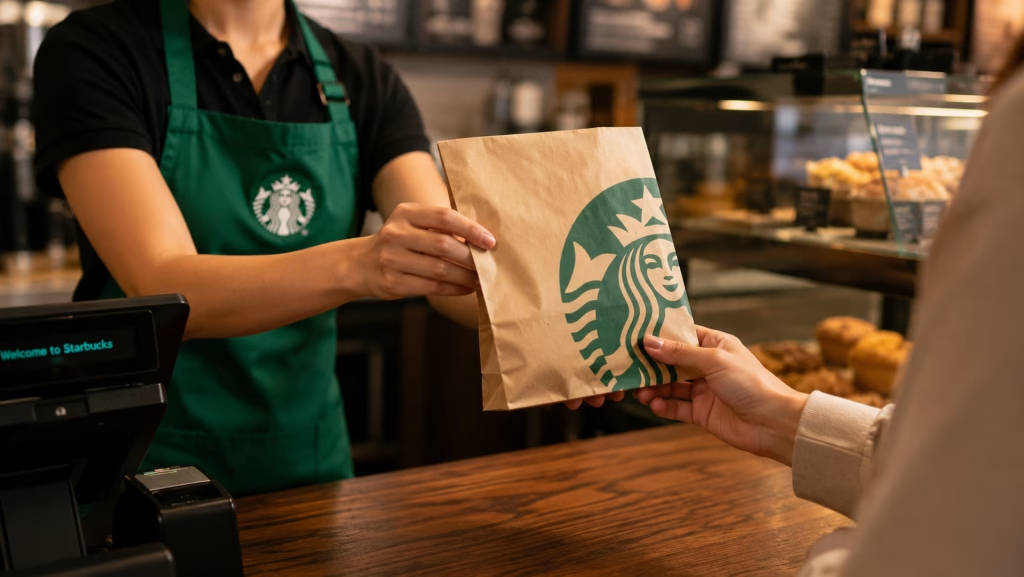
Starbucks needed cross-market ideation around iconic bakery platforms for EMEA, with a focus on winning with Gen Z. FIS Group facilitated a structured innovation workshop with trend-led platforms, generating ten big concepts refined into illustrated, testable briefs now entering NPD pipelines across multiple markets.
FAQs
Purpose and deliverable. The innovation-side Co-creation service is built around collaborative ideation: external stakeholders (buyers, consumers, industry experts) participate in creating new work alongside the internal team, with the output being briefable concepts, validated propositions or trade-informed work. This insight-side Co-creation service is built around participatory consumer insight: consumers participate in shaping the insight work itself, with the output being consumer-grounded understanding that feeds strategic and innovation thinking. Different commercial purposes, different methodologies, different deliverables. Many major programmes commission both for different streams of the same work, but they are not interchangeable.
The role of the consumer. Focus groups position consumers as respondents: the internal team frames the question, consumers answer it, the methodology captures the responses. Consumer co-creation positions consumers as active participants in shaping the work itself: framing the question, generating hypotheses, interpreting findings, shaping implications. The output is structurally different. Focus groups produce response data the team interprets afterwards; consumer co-creation produces consumer-grounded insight that the consumers have helped to shape during the work. Different methodologies for different briefs.
What consumers are participating in. Concept Labs positions consumers as iterative developers of defined concepts: concepts arrive, get refined through consumer participation, leave in sharper form. The work is concept-focused with consumer participation as the development methodology. Consumer co-creation positions consumers as participants in shaping insight work: the work is insight-focused with consumer participation as the framing methodology. Different briefs, different deliverables, different stages of innovation work.
Consumer-grounded insight scoped for the next phase of work. Specifically: the consumer-grounded framing of the brief question (how consumers articulate what the team is exploring), the hypotheses surfaced through participation (what consumers think is worth investigating that the team had not framed), the interpretation of findings (what consumers think the findings mean for their lived reality), the implications shaped through the work (what consumers think should change as a result), and the synthesis that integrates consumer input with sector specialism. Format agreed at the start.
Smaller numbers than reactive research because the depth of participation matters more than the breadth of response. Typical formats: six to twelve consumers per session for single-session work, twelve to twenty-five consumers across a multi-session programme, fifteen to forty consumers for embedded programmes engaged at multiple points across the work. The recruitment is profile-deep rather than sample-broad, because the participation depends on each consumer being able to contribute substantively rather than on statistical scale.
Yes, when the participatory methodology is scoped properly. The structural feature of our consumer co-creation is that the insight output is anchored in the strategic decision the work has to support, not produced as open-ended consumer engagement. The brief is scoped at the start against where consumer participation will add value over reactive research, and the deliverable is structured for the next phase of work. Where the brief is genuinely open-ended (the question itself is unclear), Exploratory Insight is the right precursor; consumer co-creation then deepens the work once the scope is defined.
Four to six weeks for single-session work, six to ten weeks for multi-session programmes, twelve weeks plus for embedded programmes running alongside broader innovation work. Compressed timelines are possible for focused briefs where the participatory design is straightforward; more complex briefs (multi-market, multi-audience, integrated with broader strategic work) typically run longer. Realistic timelines at proposal stage.
Yes. We run consumer co-creation across the UK, mainland Europe, the US and the UAE, with local recruit and local fieldwork support where the cultural and language context requires it. International participatory work is operationally more complex than single-market because the cultural calibration of facilitation matters significantly more in participatory methodology than in reactive research. We will scope international briefs honestly at the scoping call.
Yes, and this is the most common commissioning structure. The natural integration is with broader insight and innovation programmes: Exploratory Insight first (where the scope is open), consumer co-creation for the participatory insight foundation, Concept Labs or Concept Screening for the testing follow-on, then innovation-side Co-creation, Creative Workshops or Hothouse for the ideation work the insight grounds. Some programmes commission consumer co-creation alongside Needs Landscaping or Opportunity Mapping as the deeper consumer-grounded layer behind structured strategic work.
Project-based, scoped against the format (single-session, multi-session, embedded), the number of consumer cohorts, the depth of participatory design, the geographic scope and the integration with broader work. Single-session UK work is the lowest entry point; multi-market embedded programmes are the highest. We give a clear, all-in quote at proposal stage with no hidden extras.
Got a brief where consumer framing of the question matters as much as the answer?
Tell us the brief, where the question is open (which aspects need consumer framing versus which the team already has clear), the strategic context, the next phase the insight has to feed, and the timeline. We will tell you whether consumer co-creation is the right tool, what format makes sense, how participation will be structured and what it will cost. Where reactive research, innovation-side Co-creation or another service would be better, we will recommend that honestly.