What Concept Labs are actually for
Most concept testing fails not because the methodology is wrong but because the concepts are not yet ready to test. They came out of a workshop or hothouse at the right level for ideation but the wrong level for testing. They need consumer-informed development before they can be tested credibly: the language sharpened, the proposition tightened, the executional details refined, the boundaries clarified. Without that development phase, concepts go into formal testing in a form that does not represent the brand’s best work, and they fail (or succeed) for reasons that have more to do with concept maturity than with consumer interest.
The structural problem is that most innovation programmes run ideation and testing as adjacent phases without the developmental step that connects them. Concepts get generated, then tested, with the development happening in internal team rooms (or not happening at all). The consumer perspective enters the work at testing rather than at development, which means the testing reveals whether the internal team’s interpretation of consumer interest was right rather than whether the concept itself was strong.
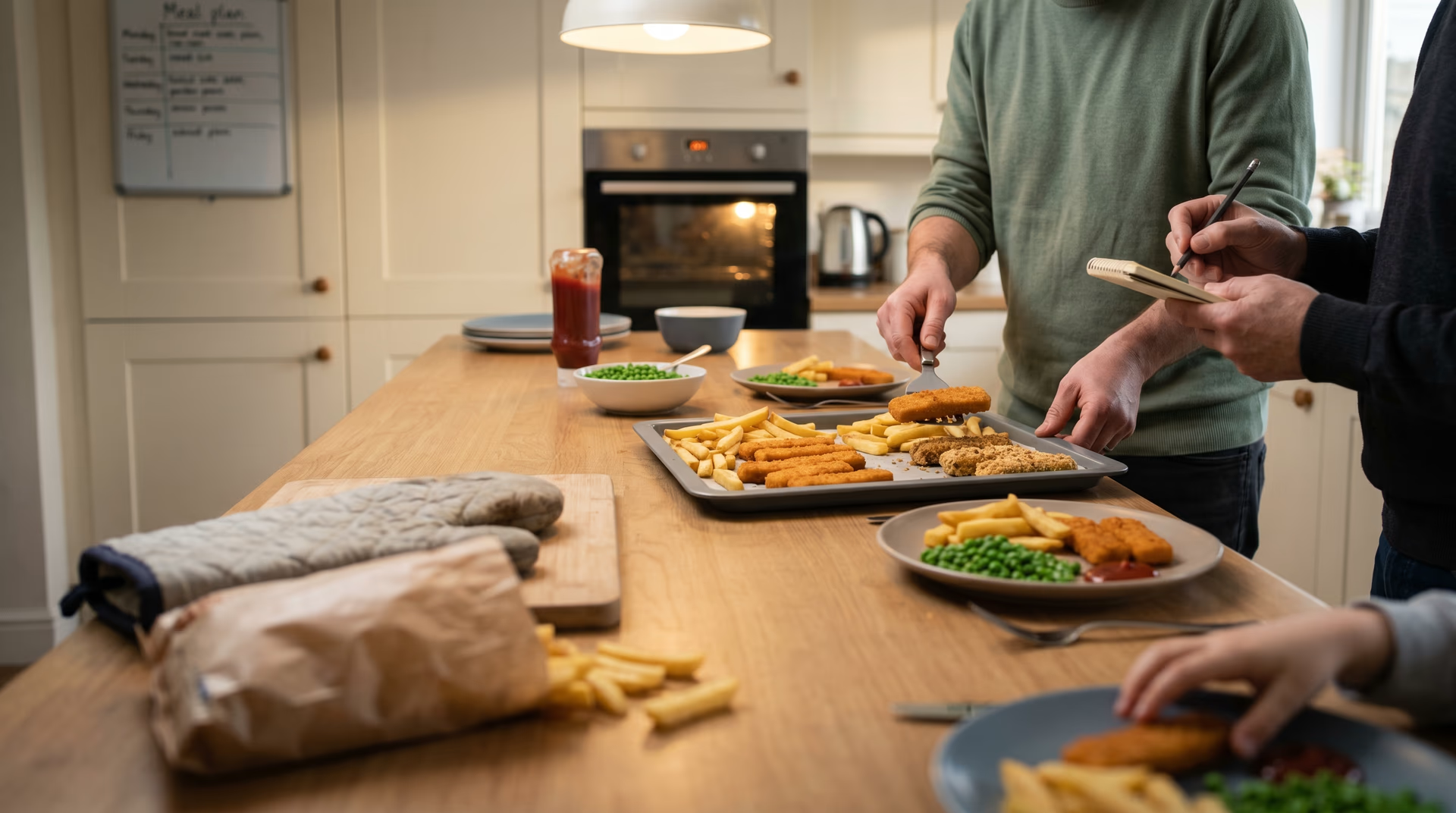
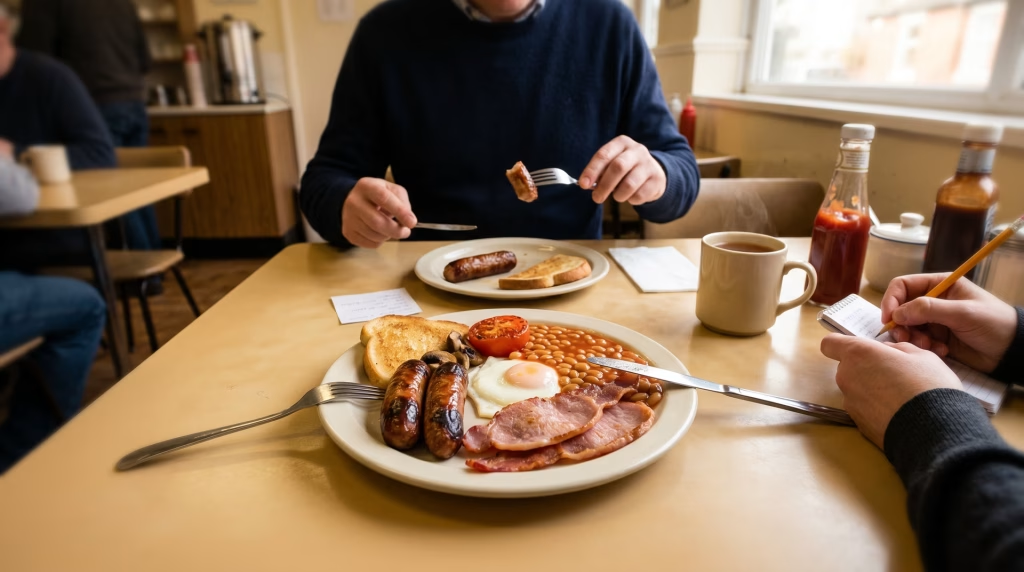
Concept Labs sit after concept testing, when you have a shortlist and need to move fast. Typically run as three back-to-back consumer sessions, they combine live qualitative feedback with real-time client collaboration – concepts are observed, discussed and refined iteratively between sessions, not weeks later in a debrief. Clients are in the room throughout. What they hear directly from consumers in one session shapes what goes back in the next. It’s one of the most efficient ways to close the gap between a promising concept and one that’s ready to develop – and one of the most engaging ways for client teams to experience the consumer directly. Most useful when you have five or six concepts and need both the depth to understand what’s working and the pace to keep development moving.
It is not the right tool for every brief. If the brief is structured testing of defined concepts to prioritise, Concept Screening is more efficient and proportionate. If the brief is competitive comparison of ideas at scale, Idea Testing is structurally different. If the brief is generating new ideas rather than developing existing ones, Creative Workshops or Hothouse go further. Concept Labs sits specifically when the concepts exist but need development before they can be tested or built.
What we do differently
-
Iterative development, not snapshot reaction
The structural difference between Concept Labs and most concept research. Concept Labs sessions are designed for concepts to evolve through the session itself. Concepts arrive at the start, get tested against initial consumer reaction, get reworked live, get retested, get refined. The work is developmental rather than reactive. Most concept research captures a snapshot reaction; Labs capture a development arc. The arc is what produces concepts that are sharper at the end than at the start.
-
Output is sharper concepts, not just consumer reactions
The deliverable is the developed concept set, not a research report on consumer reactions. Concepts arrive at the start of the work in their initial form; they leave at the end in a sharper form, with the development tracked across the session and the rationale for each change documented. The output is ready to go into formal testing or development rather than requiring a translation step. The work pays for itself in the concept improvement, not just in the consumer evidence.
-
Designed to integrate with the broader innovation toolkit
Concept Labs sit between ideation (Creative Workshops, Hothouse, Co-creation) and validation (Concept Screening, Idea Testing). The methodology is designed for this bridge position: concepts arrive from the ideation phase, leave for the validation phase, with the Labs work doing the development that the ideation phase did not finish and the validation phase cannot do. The integration is what makes Labs efficient in a programme rather than a standalone exercise.
Single-session Concept Lab
One focused session with a single consumer cohort, typically four to six hours, developing a defined set of concepts (typically six to twelve). Suited to focused briefs where the concept set is contained, the development needs are specific, and the next phase of work is well-defined. Typically delivers the developed concept set within three to four weeks of scoping. The lowest entry point for Concept Labs work.
Multi-session Concept Lab
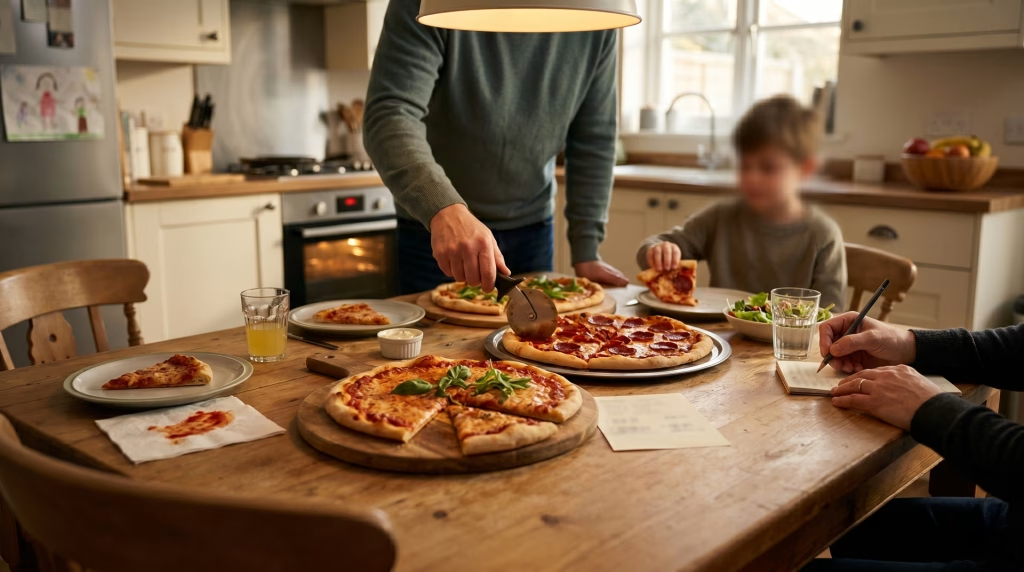
Three to six sessions across two to four weeks, multiple consumer cohorts, with development happening iteratively across the sessions. Suited to most major Concept Labs briefs: workshop or hothouse output that needs development at scale, brand and campaign concept refinement, range development, proposition development for major launches. Typically delivers fifteen to thirty developed concepts (or a smaller set of deeply developed propositions/territories). The most common Concept Labs format.
Concept Lab programme
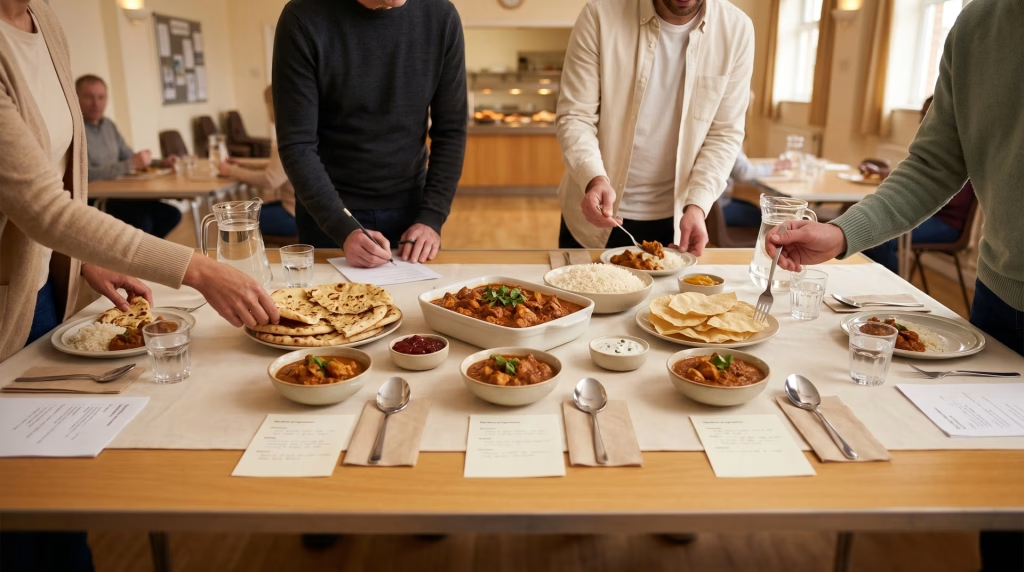
Sustained Concept Lab work integrated across a broader innovation programme, typically running six to twelve weeks with multiple session waves and concept development streams. Suited to major innovation programmes where Concept Labs work runs alongside ideation, testing and NPD development in a continuous flow. Typically delivers a structured pipeline of developed concepts across multiple platforms or territories, with the development integrated into the broader programme rhythm rather than as a standalone phase.
Food and drink is all we do
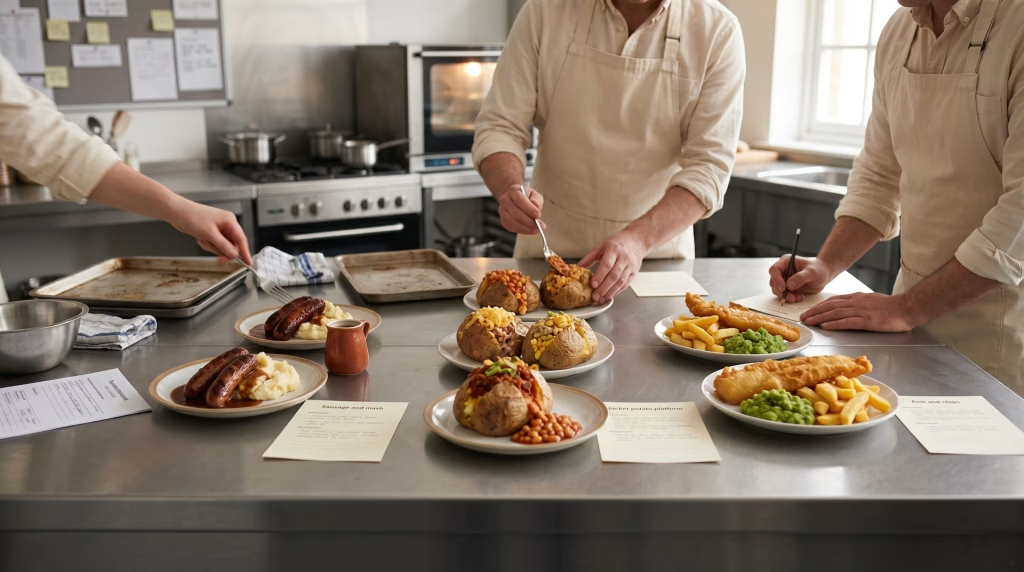
We are not a generalist concept research agency that takes the occasional food brief. Food and drink is the only sector we work in. Our senior team knows the categories, the consumers, the occasions and the commercial realities of food and drink specifically, which means the developmental interpretation that happens live in the Lab sessions is anchored in what actually matters for the concept commercially. Generic concept research can capture consumer reaction; sector specialists can read what the reaction means for development specifically.
That focus is why we work with 11 of the UK’s top 40 food and drink brands.
View our case studies
-
Concept Testing
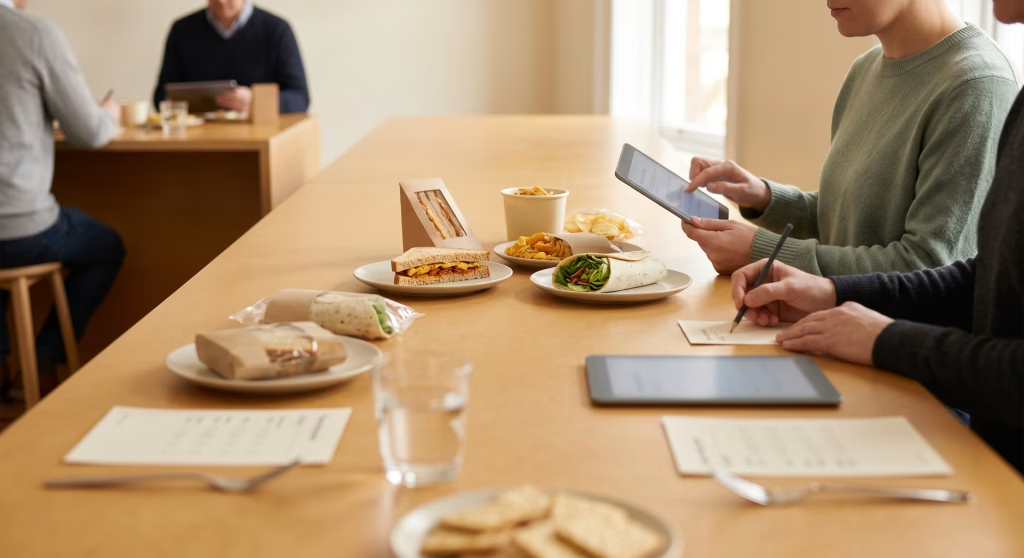
Bespoke quantitative concept testing for food and drink innovation, designed to prioritise which concepts go forward into NPD investment, brand development or commercial commitment – and to sharpen how they are positioned and communicated.
-

Idea Testing (Idea Arena)
Tournament-style testing that pits your ideas against each other to surface the highest potential concepts before full development begins. Built around pairwise comparison rather than isolated scoring, the methodology reflects how consumers actually make choices – and produces a prioritised list of genuinely differentiated ideas worth investing in, not a homogenous set that all scored similarly.
-
Creative Workshops
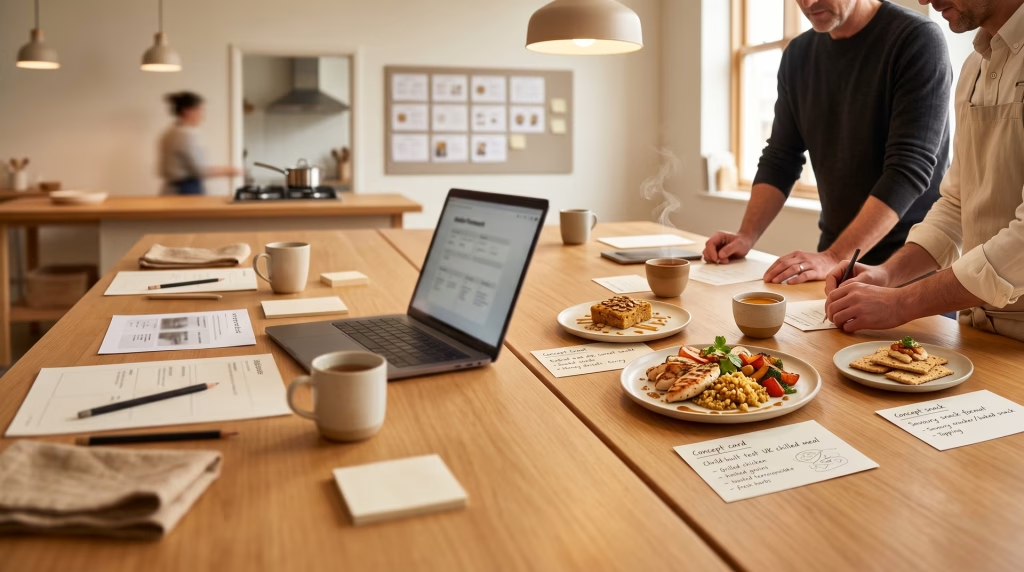
Expert-facilitated ideation workshop to unlock innovation.
-
Hothouse
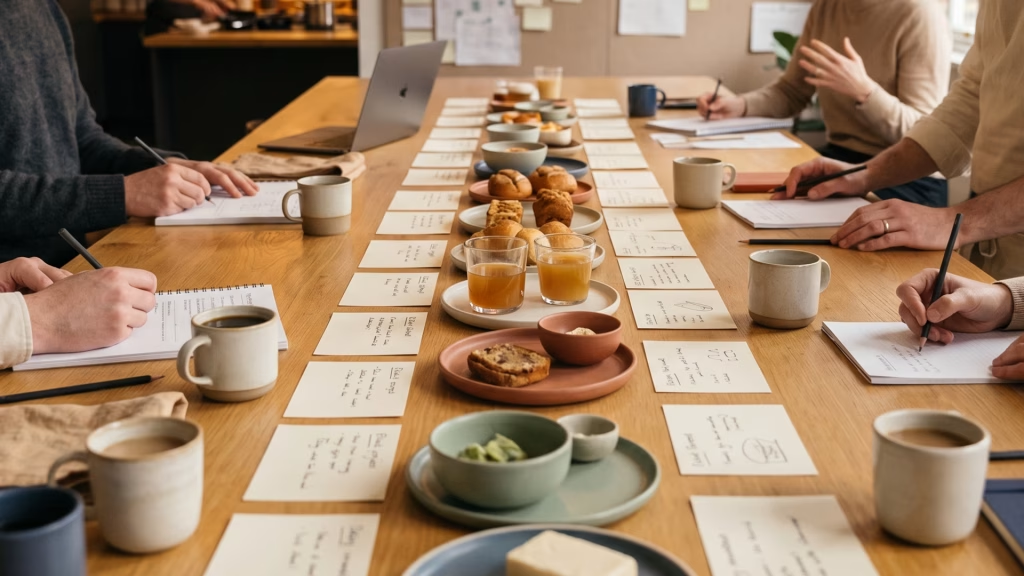
For when you need an urgent burst of creativity, clarity & objectivity. Let our experts take the brief off your hands, build the right stim & develop finished concepts.

Concept Labs that sharpened concepts before testing
Three real Concept Labs projects across different categories and different briefs.
-

Domino's
Domino's needed a long-term research partner to support continuous product validation, supplier benchmarking and innovation pipeline development. FIS Group has delivered years of rigorous consumer testing and strategic insight, acting as an extension of the Domino's team across every stage of menu development.
-

Life Health Foods
A food business with limited insight history needed a robust foundation to inform category strategy, retail partnerships and brand vision. FIS Group delivered an end-to-end programme from stakeholder workshops to quantitative validation, creating a living strategic resource the whole business now builds from.
-
Starbucks
Starbucks needed cross-market ideation around iconic bakery platforms for EMEA, with a focus on winning with Gen Z. FIS Group facilitated a structured innovation workshop with trend-led platforms, generating ten big concepts refined into illustrated, testable briefs now entering NPD pipelines across multiple markets.
FAQs
Intent and methodology. Concept Screening is structured testing of defined concepts to prioritise which ones go forward: which concept has the strongest consumer appeal, which has the best fit with the target audience, which generates purchase intent. The concepts are fixed; the methodology is comparative. Concept Labs is iterative development: concepts arrive in their initial form, get reworked across the session, leave in a sharper form. The concepts are variable; the methodology is developmental. The two are complementary tools at different stages of the same innovation flow. Labs develop concepts to be test-ready; Screening tests them.
The intent and the senior interpretation. Focus groups capture consumer reaction to stimulus: what consumers think, how they react, what they say. Concept Labs use consumer reaction as input into iterative concept development: the consumer feedback feeds a development process happening live in the session, with senior food and drink specialists interpreting what the feedback actually means for the concept rather than taking it at face value. Generic focus groups can be useful for some briefs; Concept Labs are designed for development specifically.
Concepts have to be Lab-ready before they are Screening-ready. If concepts are fresh out of ideation (rough, in concept-titles language, with executional detail still open) they need Labs development before they can be screened credibly. If concepts are already developed (sharpened, in consumer language, with executional detail closed) they are Screening-ready and Labs would add cost without value. The decision is about concept maturity, not about preference. We will tell you straight at scoping which is right for your concept set, including recommending that you skip Labs and go straight to Screening if the concepts are already developed.
Depends on the format and the development depth. Single-session Labs typically work credibly with six to twelve concepts; multi-session Labs with fifteen to thirty; programmes with structured pipelines across multiple platforms. The capacity is determined by the consumer cognitive load (concepts must be developable, not just reactable to), the time available in the session, and the depth of development required (sharpening language is faster than reworking propositions). We will tell you at scoping what realistic capacity the brief implies at the development depth you need.
It happens occasionally, and the methodology is designed to recognise it rather than to deny it. Some concepts strengthen through development; some plateau; some surface fundamental issues that make further investment commercially unwise. The Lab work captures the development arc for each concept honestly, including the ones that did not strengthen. The deliverable surfaces concepts that improved alongside concepts that should be stripped out, which is more useful commercially than a flat list of “developed concepts” that all read the same way. The honest output is part of what makes the work commercially credible.
The developed concept set, scoped for the next phase of work. Specifically: each concept in its sharpened form (consumer language, refined proposition, defined executional direction), the development rationale (what changed and why, what consumer feedback drove the change), the concepts that strengthened during the work and the ones that did not, and recommendations for the next phase. The format depends on where the work is going (Concept Screening brief, NPD briefing, creative agency brief, internal commercial casing) and is agreed at the start.
Four to six weeks from scoping call to final deliverable for single-session Labs. Multi-session Labs typically run six to ten weeks depending on the number of sessions and consumer cohorts. Lab programmes run across the broader innovation programme timeline (typically six to twelve weeks) with the Lab work integrated into the programme rhythm rather than as a discrete phase.
Yes. We run Concept Labs across the UK, mainland Europe, the US and the UAE, with local recruit and local fieldwork support where the cultural and language context requires it. International Lab work is operationally more complex than single-market because the concept stimulus often needs adaptation per market, and the senior interpretation has to handle cultural variability without losing the development arc. We will scope international briefs honestly at the scoping call.
Yes, and this is the most common commissioning structure. The natural sequence in a major innovation programme is ideation first (Creative Workshops, Hothouse or Co-creation), Concept Labs second (developing the ideation output with consumers), Concept Screening third (testing the developed concepts at scale to prioritise). Some programmes commission all three as one integrated engagement; others sequence them. We will scope the right combination at the scoping call.
Project-based, scoped against the format (single-session, multi-session, programme), the number of consumer cohorts, the depth of development work and the depth of synthesis required. Single-session UK Labs are the lowest entry point; multi-market Lab programmes are the highest. We give a clear, all-in quote at proposal stage with no hidden extras, and we will tell you straight if your budget would buy better outcomes invested in a different combination of services.
Got concepts that need development with consumers before they go to formal testing?
Tell us the concepts, where they came from, the strategic context, the next phase of work they need to be ready for, and the timeline. We will tell you whether Concept Labs are the right tool, what format makes sense, how many concepts can be developed credibly, and what it will cost. Where the concepts would be better served by going directly to Concept Screening or by another approach, we will recommend that honestly.