
Where the idea becomes the product
From a crowded idea list to a product your sales team can get behind
Most innovation pipelines don’t fail at the idea stage. They fail in the gap between having an idea and knowing which one is worth building. Ideation typically produces more concepts than any business can realistically develop. FIS Group brings structure to that list – shortlisting the ideas with the most potential, shaping them into testable concepts, and screening them with real consumers before a development brief is ever written.
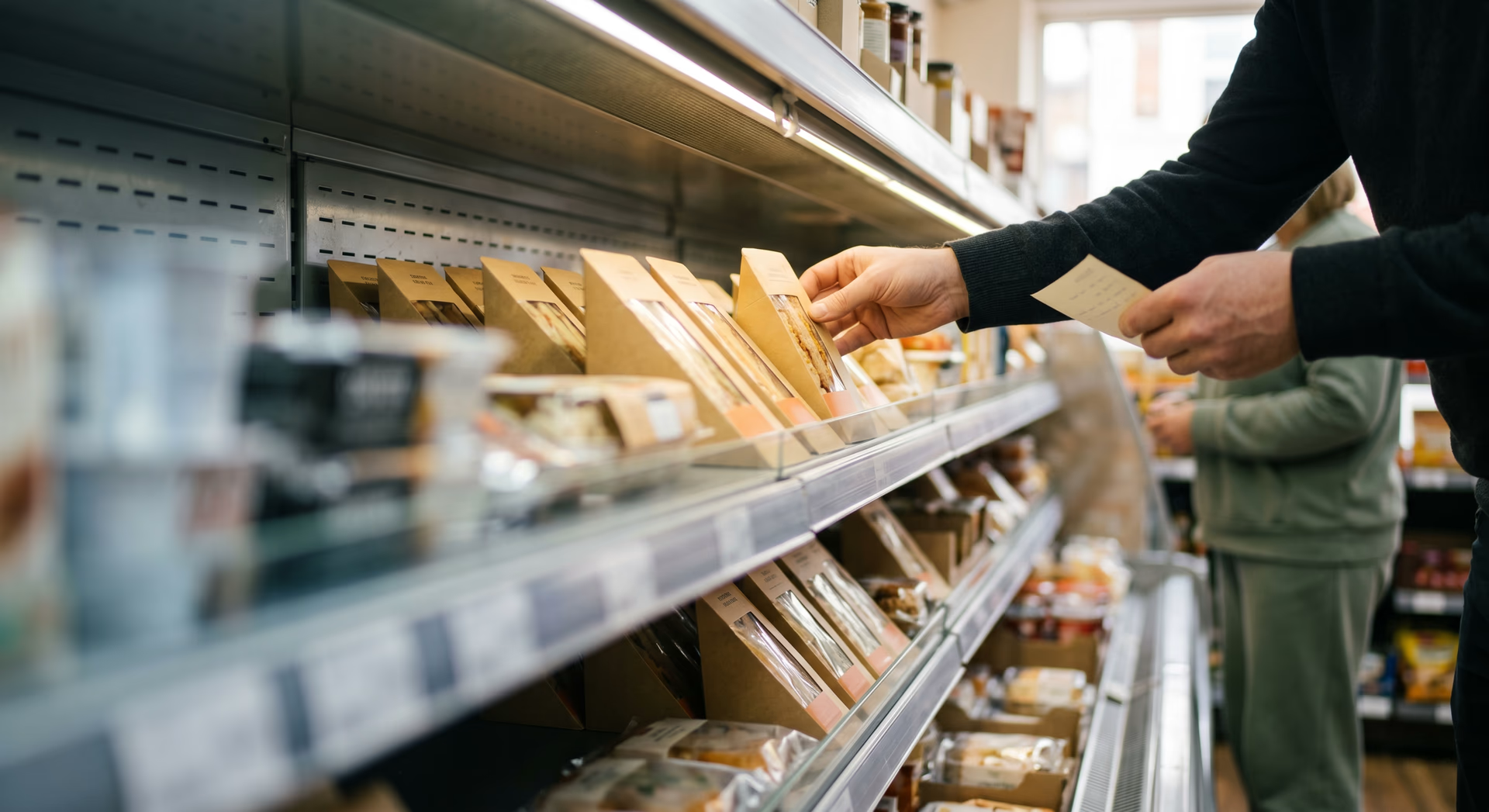
Once a product is developed, we test it in the conditions it will actually live in – facilities, home placement or restaurant environments. Testing isn’t just about beating the competition. Our FoodFax database, built over 30 years of category data, gives your results the context they need – category norms, benchmarks and performance expectations that a one-off test simply can’t provide. For brands approaching launch, our innovation team can support the path to commercialisation making sure what tested well also works at scale. What lands at the end of this work is a validated, refined product. Not a deck of preference scores. Not a topline that says “test passed.” A product that has been through the right testing, in the right conditions, to give you and your sales team the confidence to go to market.
Two toolkits. One loop. Build, test, refine, repeat.
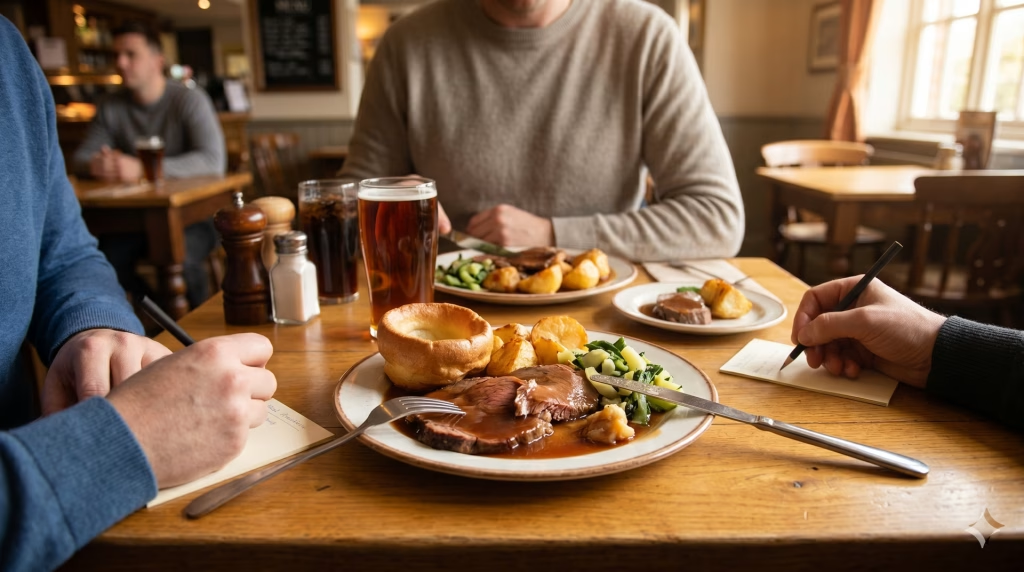
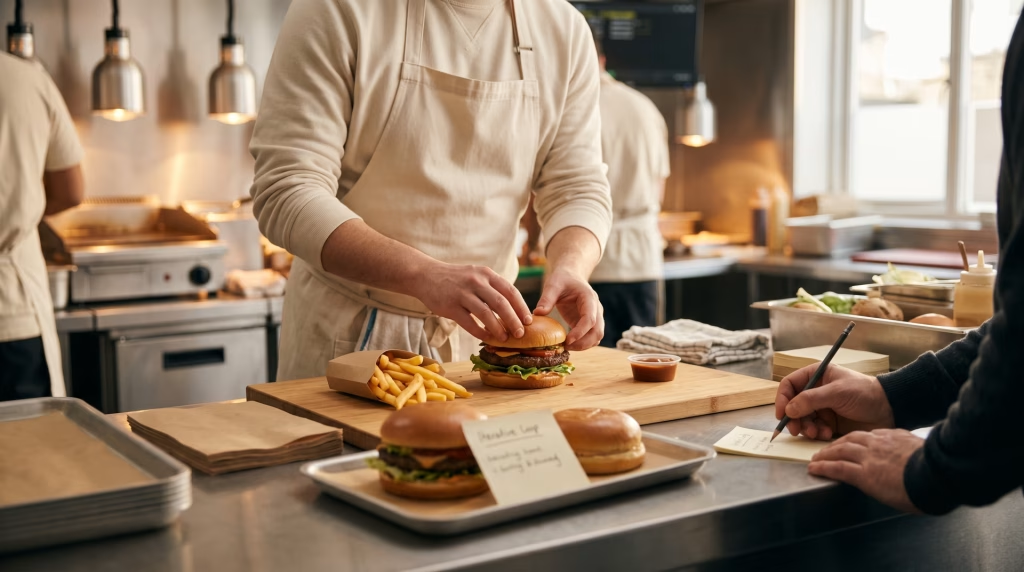
Innovation tools sit inside our Innovation and Optimisation capability and are the building side of the work: R&D sprints that compress prototype development into weeks, menu development for QSR and high street operators, and application showcases that bring a product to life across multiple uses. Insight tools sit inside our Strategic Insight and Product Insight capabilities and are the validation side: in-home, central location and in-restaurant product testing, qualitative product testing, and menu testing in real foodservice conditions. The two work well as a single iterative loop, but you can also dip into just the services you need.
Innovation tools
To move concepts into MVPs & fully development menu items or retail ready products.
-
R&D Sprints
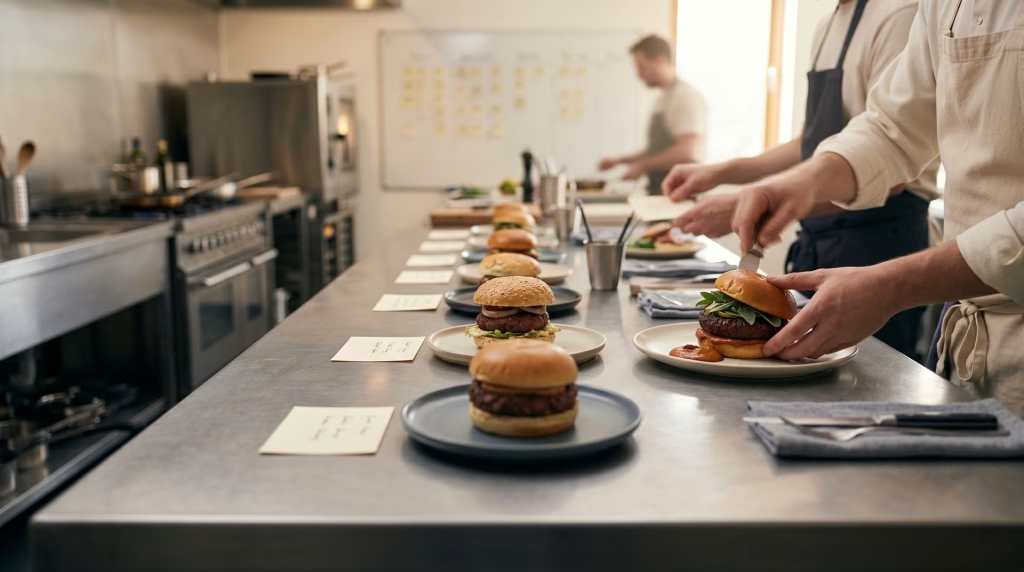
A compressed R&D methodology designed for food and drink innovation work where speed matters as much as quality.
-
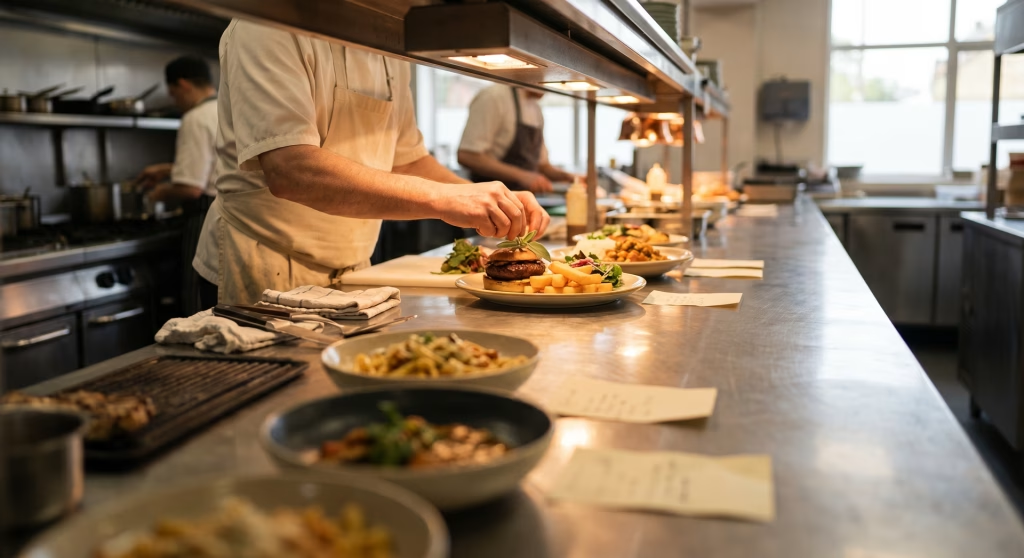
Menu Development
Specialist menu development for foodservice, QSR, restaurants, hospitality and contract catering.
-
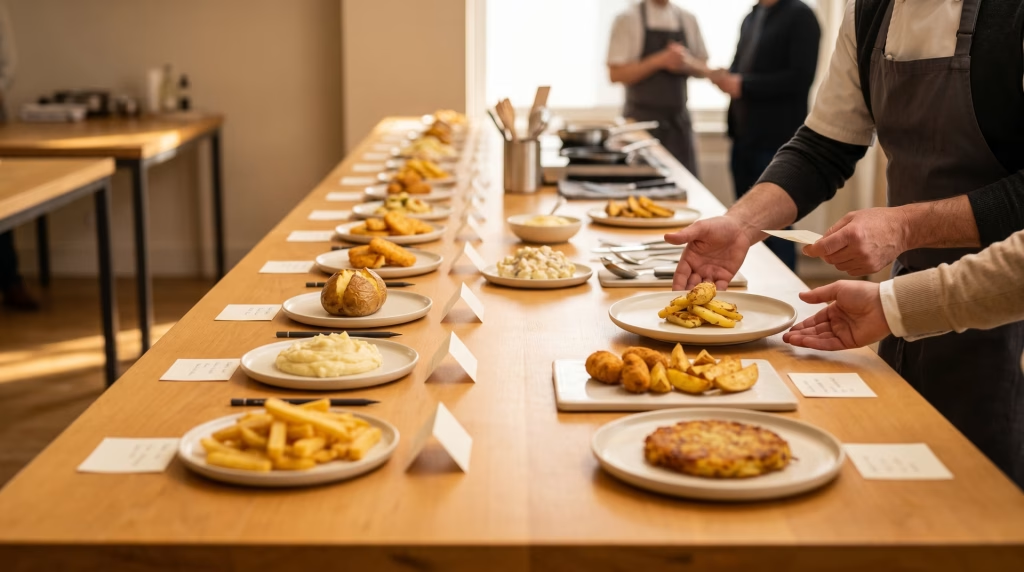
Application Showcases
Specialist food and drink showcase work that demonstrates capability, ingredient possibility or innovation direction to the audiences that need to see it.


Insight tools
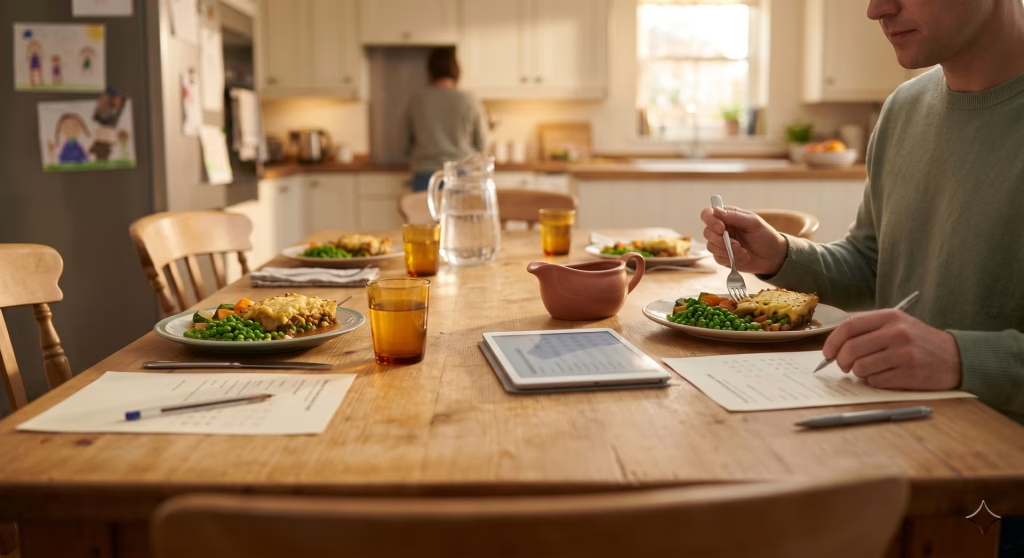
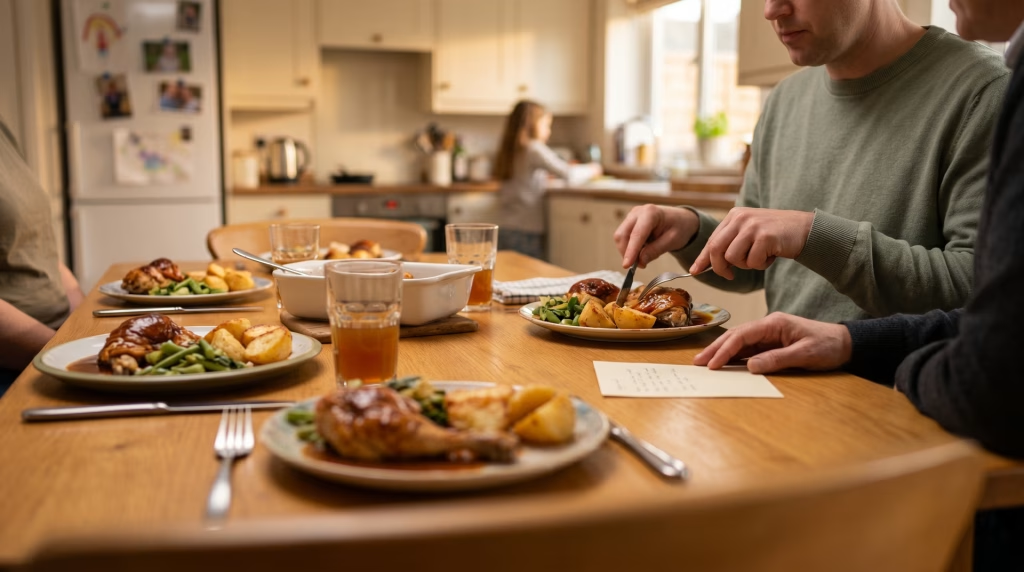
The validation side. Used when the prototype, product or menu needs to be tested in the conditions it will actually be sold in, with the audiences who will actually buy it.


If your brief sounds like one of these, you are in the right place
- We have a shortlist of concepts signed off and the development clock is ticking.
- We have a prototype and we need to know whether it works for the consumer who will actually buy it.
- We need to benchmark a finished product against the competition before the next category review and retailer pitch.
- We are launching a new menu, a refreshed range or a seasonal proposition and we need to validate it in real foodservice conditions.
- Our R&D team is at capacity and we need an expert-led sprint to compress development into weeks.
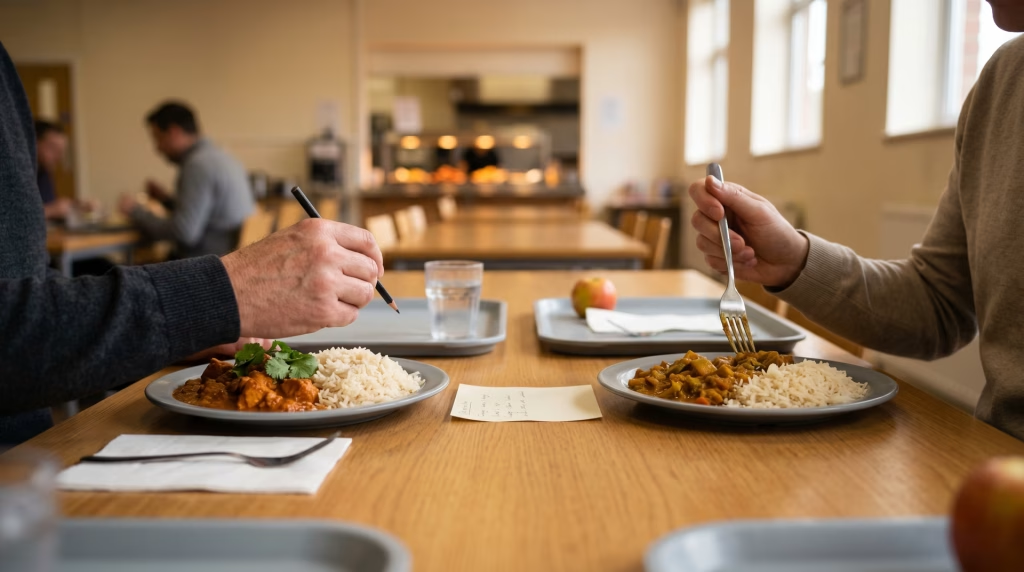
Product validated. What comes next?
Build, test and refine closes with a validated product. Most clients move into one of three places from here, depending on what the testing has surfaced and where the brief sits in the broader programme.
-
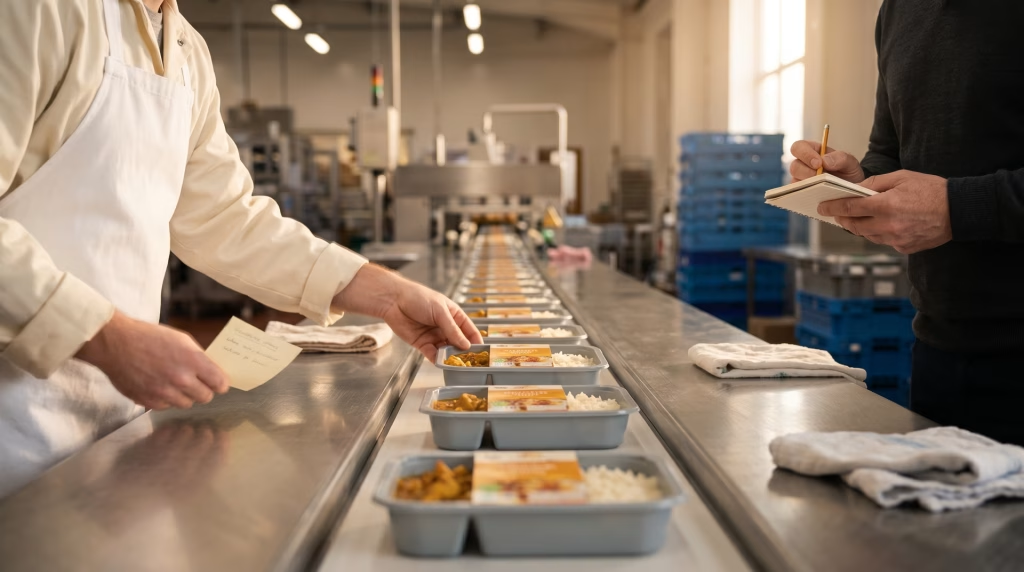
Launch and Scale Innovation Successfully
The product works, the testing is clean, and the brief now needs the commercial route to market. Retailer pitch support, briefing pack creation, manufacturing solutions, volumetric forecasting and revenue modelling. The work that takes a validated product and turns it into a launched and scaled commercial proposition.
-
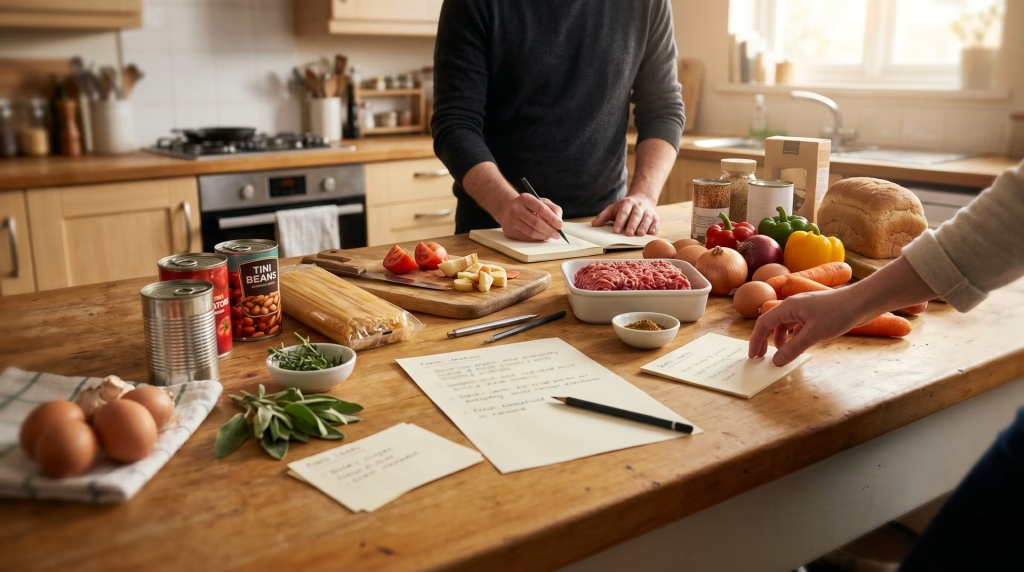
Ideation & Concept Development
Sometimes testing surfaces that the concept set itself is the weakness, not the execution of any individual product. When that happens, the strongest move is to step back into ideation and refinement, generate a sharper set, and then come back into the build and test phase with stronger raw material. We will tell you on the readout if that is what the work is telling us
-
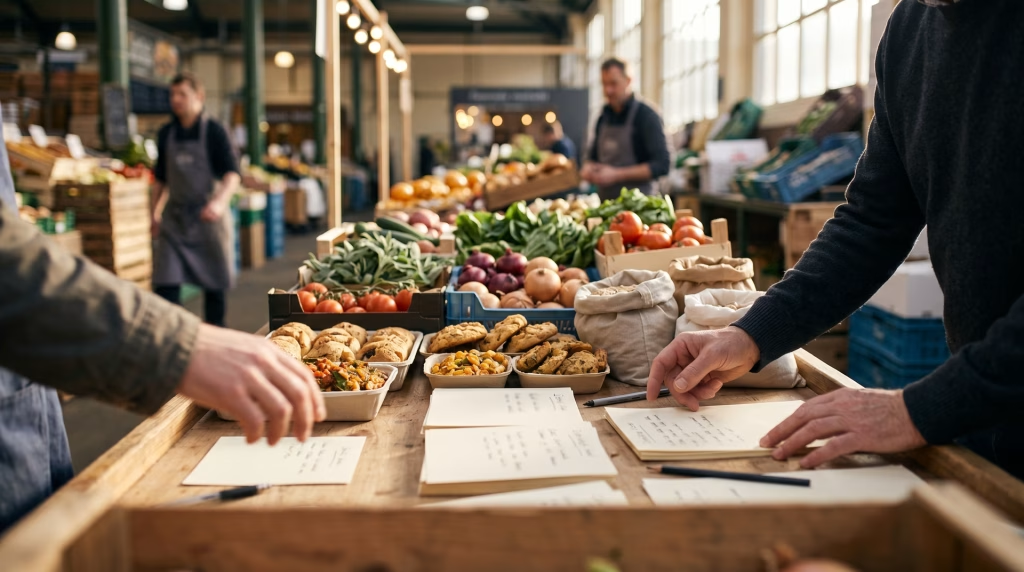
Understand People, Categories and Emerging Trends
Occasionally a product tests flat not because the product is wrong, but because the brief was built on an outdated read of the category, the consumer or the trends shaping both. When the testing is telling us that the issue is foundational rather than executional, a focused piece of decoding work resets the brief before the next development cycle.

Built for every sector in food and drink
-
FMCG and branded manufacturers -
Grocery, retail and own label -
Food service -
QSR and high street -
Hospitality
View our case studies
-
Biotiful Gut Health
Biotiful Gut Health needed three potential ambient territories validated before committing development resource. FIS Group investigated and defined each territory, developed concept iterations, ran quantitative consumer testing and built a DVF prioritisation model – giving Biotiful a clear, evidence-based view of where to focus first.
-

HelloFresh
HelloFresh needed a clear, consumer-evidenced view of where their next stage of growth could come from. FIS Group combined international qualitative research, data mining and a two-day innovation workshop to produce a prioritised pipeline across three platform roadmaps, grounded in both fresh insight and the company's own knowledge base.
-

Valeo Foods
Valeo Foods needed to unlock new category opportunities through genuine retailer collaboration rather than conventional supplier presentations. FIS Group facilitated co-creation workshops with Sainsbury's, M&S and Tesco, generating a pipeline of sweet and snacking concepts built inside Valeo's development framework and ready for prototype presentation within months.

FAQs
IHUT (in-home usage testing) puts the product in the consumer’s own home, where they prepare it, eat it and live with it across multiple usage occasions. CLT (central location testing) brings consumers into a controlled environment where direct head-to-head comparison or repeat-exposure testing is the priority. In-restaurant testing places the product in a real or simulated foodservice environment, capturing the kitchen, the service moment and the eating context together. We choose the format around the product and the decision behind it, not as a default.
Both, depending on the brief. Real foodservice environments give the most authentic read on how the product performs in service, but are harder to control. Test kitchens give a cleaner read on the product itself, with controlled variables. Many menu and foodservice projects use both: kitchen-based development and refinement first, then a real-environment test before commitment.
Menu development is the building side: we design the menu, the dishes and the operational specification. It sits inside our Innovation and Optimisation capability. Menu testing is the validation side: we test a menu that exists (whether built by us or by your internal team) in real or controlled conditions to confirm what works and what needs refining before roll-out. The two often run together but they are distinct tools.
When the quant has surfaced a question the numbers cannot answer. Common moments: a product is over-delivering on one occasion and under-delivering on another, the preference score is strong but the verbatim is hesitant, or two products are scoring similarly but you need to know which one to take forward and why. Qualitative product testing reads the why behind the preference and gives the basis for refinement rather than just reporting.
Yes. Central location testing is the most direct format for head-to-head benchmarking because it controls for variables (preparation, temperature, presentation, order of evaluation). In-home and in-restaurant formats can also include competitor benchmarking, with the trade-off being more authentic conditions versus more controlled comparison. We will recommend the right format on the scoping call.
A CLT can run in three to five weeks from brief to readout. A standard IHUT typically runs in five to eight weeks including recruitment, in-home placement and consumer feedback. In-restaurant testing depends on the operator and the live testing window, but typically runs four to eight weeks. R&D Sprints compress prototype development into a focused three to six week window. We will give you a realistic timeline at proposal stage.
Either. Prototype testing is common at early stages and is often paired with R&D Sprints, where the prototype is iterated based on the test result and tested again. Finished product testing is the right format for pre-launch validation, claims testing and competitive benchmarking. We will scope around the maturity of what is being tested rather than against a template.
Three ways. The testing environment is chosen to match the product (in-home for retail, in-restaurant for foodservice, controlled location for comparison). The audience is recruited to match the actual consumer profile, not a generic panel. And the methodology is built around real usage occasions, not abstract scenarios. The senior team has worked client-side, which means we already know what gate review questions a retailer or operator will ask and we build the test to answer them.
Need to prove the product works before you commit?
Tell us where the product is in the development cycle and what the next gate review needs to look like. We will tell you which combination of build and test tools will get you to a defendable position, what the timeline looks like, what it will cost, and who will run it. Twenty minutes on a scoping call with a senior product specialist.