

Three formats, scoped to the challenge you have and the product you make.
Not every product should be tested the same way. The format that generates the most useful evidence depends on what you make, what you need to know, and what decision the results need to support. FIS Group works across three core product testing methodologies, each suited to different product types, different consumer interactions, and different objectives. The right format is selected based on your brief, not applied as a default. Below is an overview of each approach and where it works hardest.
Central Location Testing (CLT)
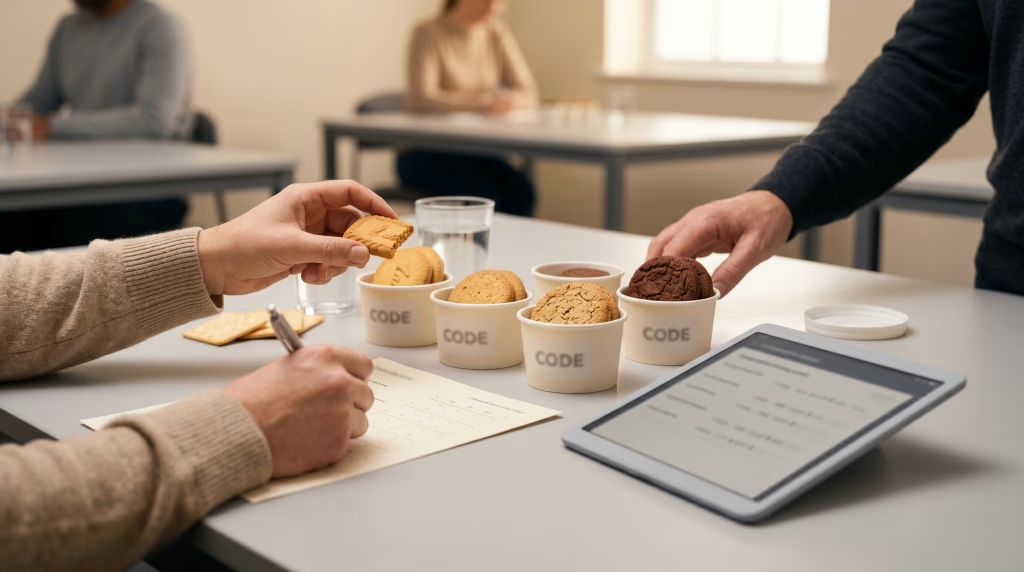
Controlled, comparable and consistent. CLT brings target consumers together in a managed environment to evaluate your product under standardised conditions – ideal when you need clean, reliable data that holds up to scrutiny.
In-Home Use Testing (IHUT)
Some products can only be properly judged at home. IHUT places your product in the hands of real consumers in their own environment, capturing the full preparation and full eating experience the moments that a facility test simply cannot replicate.

In-restaurant Testing
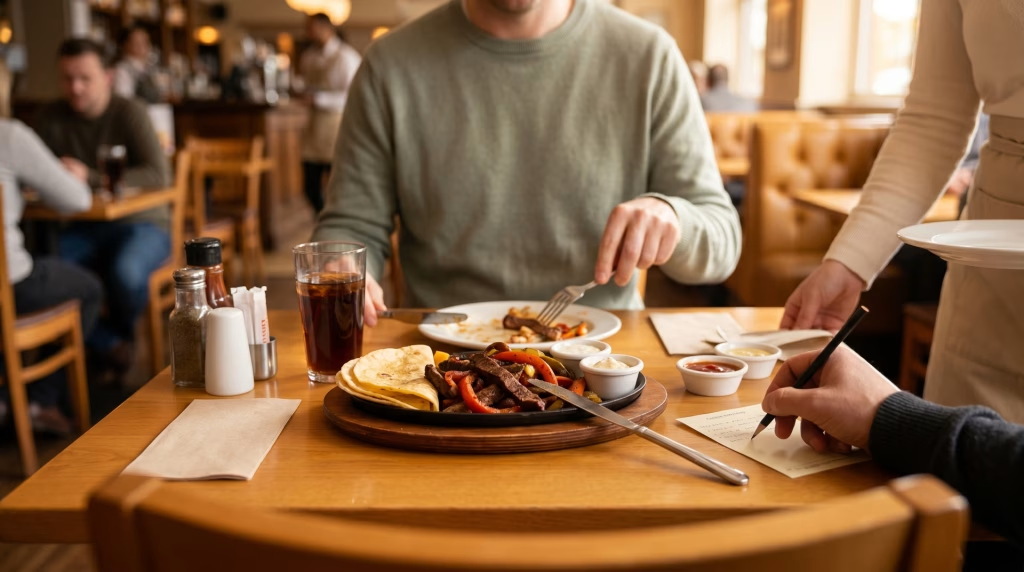
For foodservice and menu development, context is everything. We test in real restaurant environments, with real operational set-ups, so the results reflect how a dish or drink actually performs when it reaches the customer.
What we use Product Testing for
Pre-launch product validation for FMCG launches
You have developed FMCG products (typically from R&D Sprints or internal NPD work) that need consumer validation before commercial launch. IHUT methodology evaluates the products in real home-consumption context across multiple uses, with sample sizes scoped against board and investment committee scrutiny. Output is launch-ready evidence base, with the prioritisation logic transparent and the product performance defensible against retailer or commercial committee scrutiny.
Menu item validation in real foodservice context
You have developed menu items (typically from Menu Development) that need consumer evaluation in real foodservice context rather than just in development kitchens or controlled testing. In-restaurant testing evaluates the integrated dining experience: the menu item alongside the service, the operational reality, the actual consumption context. Output is operational-pilot-ready validation, with the menu item performance grounded in real foodservice rather than in controlled conditions.
Comparative testing for product range decisions
You have multiple product options (range alternatives, reformulation options, variant choices) and need comparative consumer evidence to decide which goes to launch. CLT methodology runs the comparative tasting in controlled conditions, with the methodology scoped to surface the comparative consumer preference reliably. Output supports range decisions defensibly when the inevitable “why did we choose this option” question gets asked.
Reformulation validation before scale rollout
You are reformulating an existing product (cost reduction, recipe simplification, ingredient change, dietary positioning) and need consumer validation that the reformulation does not compromise the consumer experience. Product Testing methodology evaluates the reformulation against the current product, with the methodology scoped to surface any consumer detection or preference shift reliably. Critical for cost-reduction reformulation where consumer detection would undermine the commercial case.
Testing in order to make marketing claims.
You have a product that you want to make a specific marketing claim about. CLTs are often used to build the evidence base behind the claims you make when you go to market. From preference and superiority claims to taste descriptors and consumer endorsements, well-designed testing turns subjective product qualities into substantiated, defensible statements that stand up to retailer scrutiny, advertising standards and consumer expectation.
Pre-launch testing for retailer presentation evidence
You are presenting products to retailers and need pre-launch consumer testing evidence to support the listing case. Product Testing provides retailer-ready evidence: defensible methodology, decision-grade samples, food and drink-specific metrics, output structured for retailer commercial conversations. Often commissioned alongside the broader Challenge 05 launch services (Retailer Pitch Support, Briefing Pack Creation) as part of the integrated retailer presentation work.
Other ways to build, test and refine what wins
Product Testing is one tool in the broader Build, Test & Refine What Wins toolkit. Depending on the brief, one of these might be a better fit, or a stronger partner alongside the Product Testing work.
-
R&D Sprints
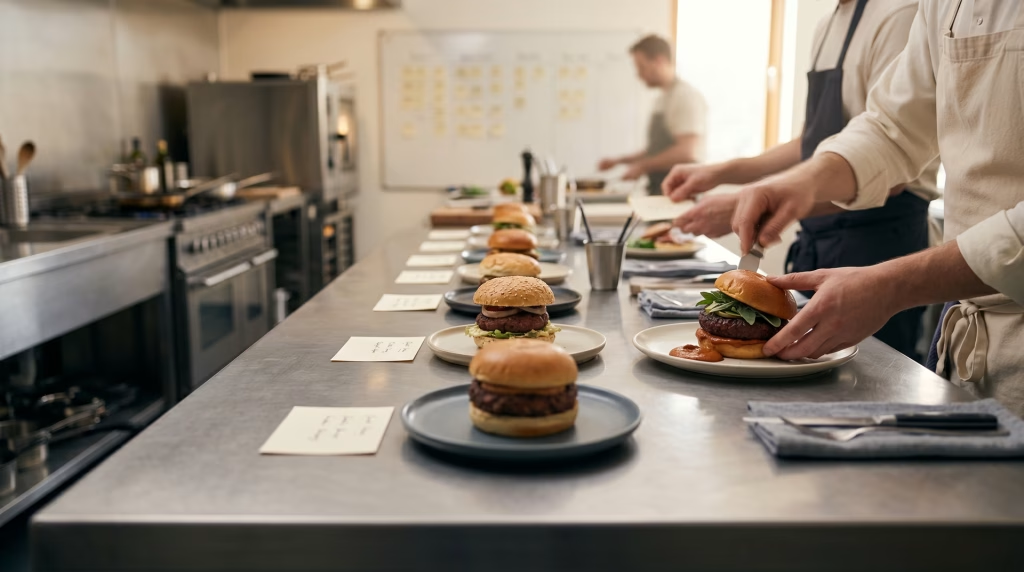
A compressed R&D methodology designed for food and drink innovation work where speed matters as much as quality.
-
Menu Development
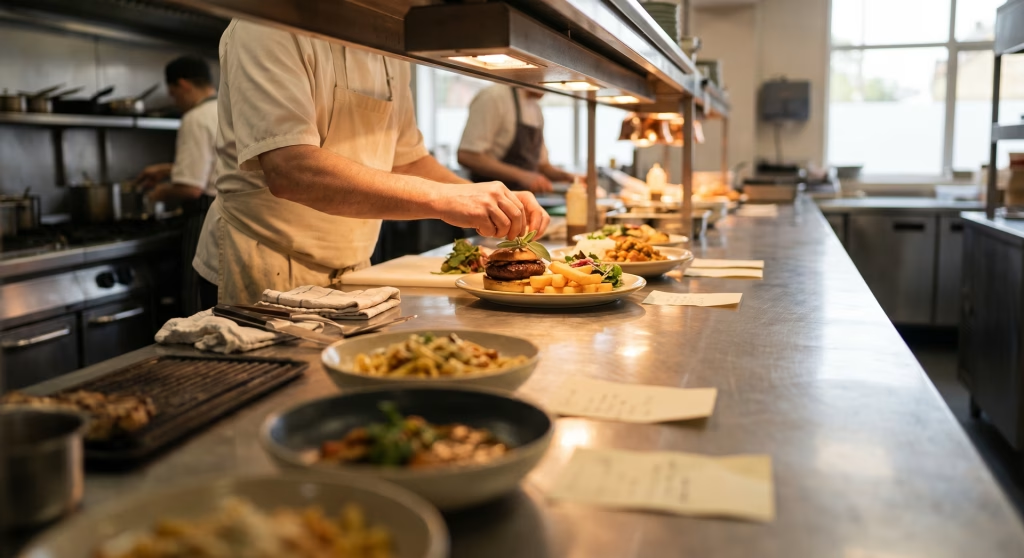
Specialist menu development for foodservice, QSR, restaurants, hospitality and contract catering.
-
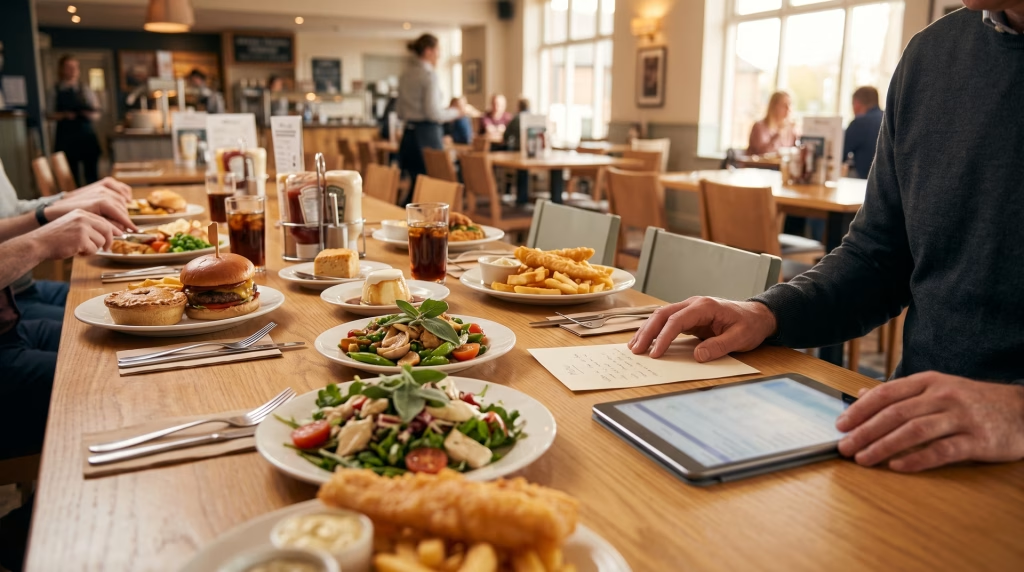
Menu Testing
Specialist menu-level testing for foodservice, QSR, restaurants, hospitality and contract catering.

View our case studies
-

Biotiful Gut Health
Biotiful Gut Health needed three potential ambient territories validated before committing development resource. FIS Group investigated and defined each territory, developed concept iterations, ran quantitative consumer testing and built a DVF prioritisation model – giving Biotiful a clear, evidence-based view of where to focus first.
-
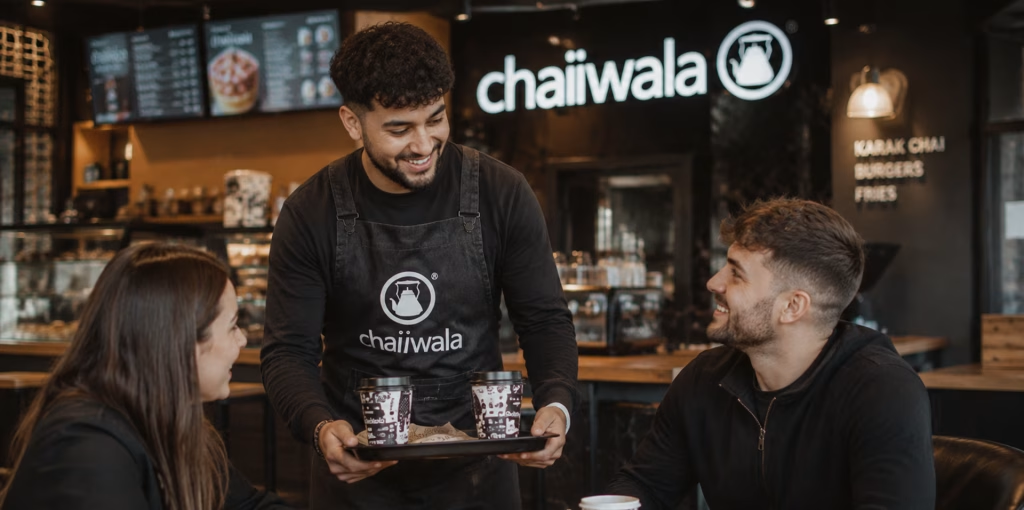
Chaiiwala
Chaiiwala needed to professionalise their product development process and rebuild their menu architecture to support a scaling QSR estate. FIS Group delivered a full operational audit, menu architecture rebuild, repositioned core items and a year-long LTO programme, through to launch day training with the senior operations team.
-

Oscar Mayer
Oscar Mayer needed category understanding in convenience and discount channels that could drive retailer conversations. FIS Group delivered a multi-phase programme combining quantitative, qualitative and innovation expertise, turning research into a commercial asset at the negotiating table.
FAQs
What is being tested. Concept Testing tests concepts (descriptions, propositions, ideas) at a stage when the actual product does not yet exist. The methodology evaluates whether the concept appeals, whether it would generate purchase intent, whether it owns a distinctive space. Product Testing tests the actual developed product as consumers will use it. The methodology evaluates whether the product delivers on the concept proposition, whether it performs in real consumption context, whether issues exist at consumer reality level that concept evidence cannot capture. The two are complementary at different stages of the innovation flow.
Methodology depth and decision-grade orientation. Qualitative Product Testing goes deeper per consumer with smaller samples, designed for surfacing issues, understanding consumer experience in depth, and identifying what needs addressing before launch. Product Testing runs robust quantitative methodology with larger samples, designed for statistical decision support and launch evidence build.
Yes, when the methodology is scoped, designed and run properly. Product Testing with robust sample sizes, target recruitment and correct protocols and experienced delivery is designed for retailer pitches, board approval, investment committee, NPD teams and brand managers scrutiny. The output includes transparent methodology, defensible rationale, advanced analysis, and clear flagging of limitations and recommendations for next steps supported by our inhouse culinary team.
Three to Six weeks typically, from scoping call to decision-ready debrief depending on the format. Compressed timelines are possible for focused briefs; more complex testing (international, multi-format, large sub-cut analysis) typically runs longer. Realistic timelines are outlined at proposal stage.
Yes. We run Product Testing across the UK, Ireland, mainland Europe, the US and the UAE. International testing has higher operational complexity than single-market work because the methodology has to handle cross-market comparability (for global launch decisions) or market-specific calibration (for local decisions). In-restaurant testing internationally is operationally most complex because of the venue partnerships required; we will scope international in-restaurant capability honestly based on the specific markets.
Yes, and this is the most common commissioning structure for major launch work. We will scope the right multi-product methodology at the scoping call based on the brief and the comparative analysis required.