

Three formats. Scoped to the consumer reality your product faces, mirroring the Product Testing structure with qualitative methodology applied.
Different products face different consumer realities and need different qualitative methodologies. The three formats below are the qualitative equivalents of the Product Testing formats, with depth methodology applied to each. Some briefs use a single format; others combine two for multi-context depth understanding.
In-home qualitative
In-home qualitative testing places your product with real consumers in their own environment. Consumers are observed and take part in individual interviews in their own homes. The will capture how it is actually prepared, served and experienced as part of everyday life. It uncovers the moments of friction, delight and habit that a facility setting simply cannot replicate. Ideal for products where the full preparation and consumption experience is central to how they will be judged at launch.

Central location qualitative
When you need controlled, comparable responses across a defined consumer group, central location qualitative brings participants together in a managed environment for structured tasting and sensory exploration. It allows for direct product comparison, and moderator-led depth. Discussion groups are often held with consumers post a quantitative test making it the right format when you need clarity and rigour alongside the richness of qualitative discussion.

In-restaurant qualitative
For foodservice and menu development, the environment is inseparable from the experience. In-restaurant qualitative testing evaluates dishes and drinks in a real operational and experiential setting with genuine service, kitchen conditions and the full context of the dining occasion. It surfaces how a product performs when it reaches the customer in the way it was intended to be delivered, giving operators and brand teams the confidence that what works in development will work on the menu.

Food and drink is all we do
We are not a generalist qualitative agency that takes the occasional food brief. Food and drink is the only sector we work in, and our senior team runs qualitative product work continuously rather than dipping in from other sectors. The interpretation that translates consumer language and behaviour into commercial direction depends on sector specialism: knowing what sensory language signals in food and drink commercial reality, knowing which use behaviours predict commercial performance, knowing how to translate consumer evidence into actionable development and commercial direction. Generic qualitative research can capture consumer voice; sector specialists can read what the voice means commercially.
That focus is why we work with 11 of the UK’s top 40 food and drink brands.
Other ways to build, test and refine what wins
Qualitative Product Testing is one tool in the broader Build, Test & Refine What Wins toolkit. Depending on the brief, one of these might be a better fit, or a stronger partner alongside the qualitative work.
-

Product Testing (IHUT, CLTs, in-restaurant)
Specialist consumer product testing for food and drink innovation.
-

R&D Sprints
A compressed R&D methodology designed for food and drink innovation work where speed matters as much as quality.
-

Menu Development
Specialist menu development for foodservice, QSR, restaurants, hospitality and contract catering.
-
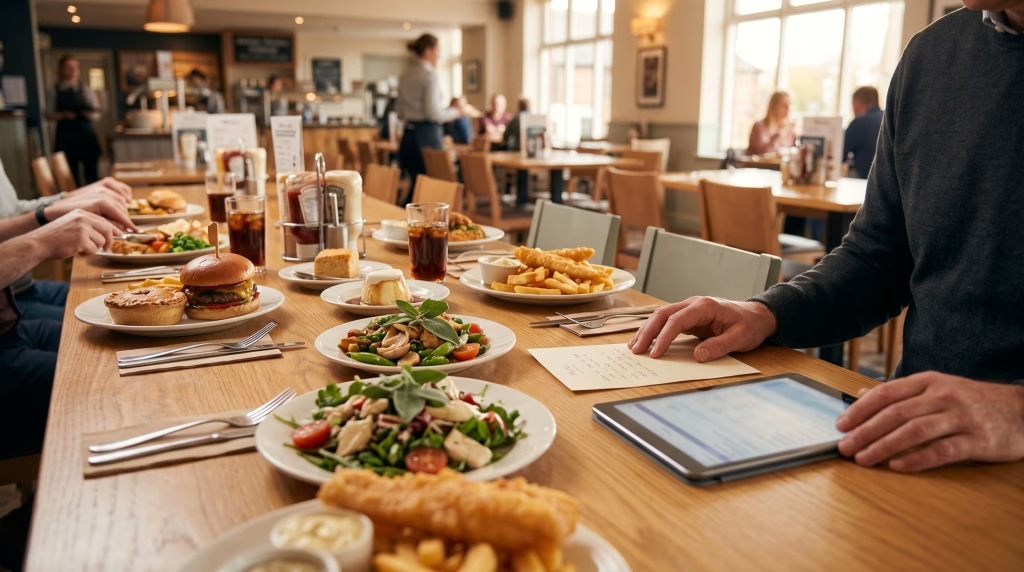
Menu Testing
Specialist menu-level testing for foodservice, QSR, restaurants, hospitality and contract catering.

View our case studies
-

Mars
Mars needed a true research partner to decode consumer meal behaviour across three markets. FIS Group delivered a bespoke Meal Moments programme combining in-the-moment diary capture, qualitative exploration and strategic workshop facilitation – turning occasion-level data into immediate commercial direction.
-
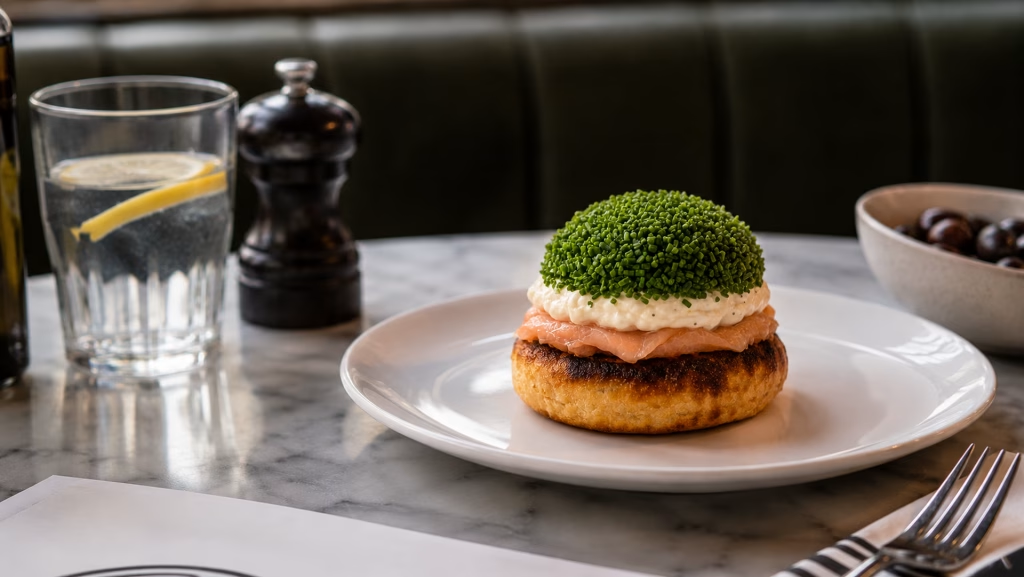
Pizza Express
Pizza Express needed trend-led hero dishes for their Christmas 2024 and September seasonal launches. FIS Group delivered a two-phase innovation sprint from concept ideation through kitchen development to full supplier briefing specifications, with all menu items reaching restaurants nationwide on schedule.
-
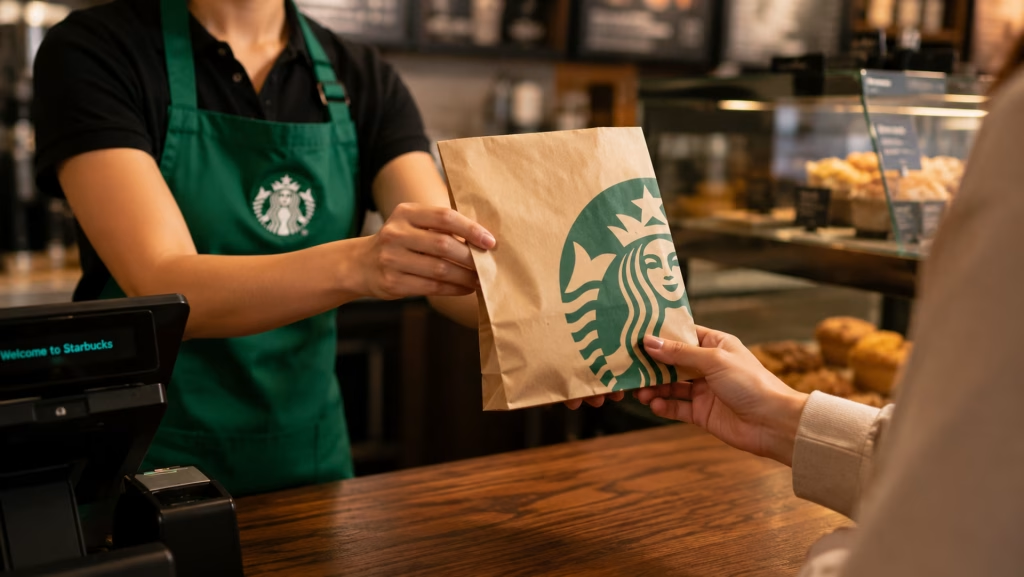
Starbucks
Starbucks needed cross-market ideation around iconic bakery platforms for EMEA, with a focus on winning with Gen Z. FIS Group facilitated a structured innovation workshop with trend-led platforms, generating ten big concepts refined into illustrated, testable briefs now entering NPD pipelines across multiple markets.
FAQs
Methodology depth and commercial purpose. Product Testing runs decision-grade quantitative methodology with larger samples (typically two hundred to one thousand consumers per format) designed for statistical decision support and launch evidence build. The output is statistical performance assessment scoped for board, investment committee and brand leadership scrutiny. Qualitative Product Testing runs depth methodology with smaller samples (typically twenty to forty consumers per brief) designed for surfacing issues and understanding consumer experience. The output is actionable depth understanding scoped for development teams and commercial direction. Different commercial questions: Product Testing answers “should we launch”; Qualitative Product Testing answers “what specifically needs addressing.” The two services run together in most major launch programmes for full evidence.
Methodology design and depth. Generic focus groups are typically group sessions of one and a half to two hours with consumers reacting to stimulus. Qualitative Product Testing is built around extended consumer engagement with the actual product: real use over time for in-home work, sensory exploration in depth for central location work, integrated foodservice experience for in-restaurant work. The methodology is designed for depth understanding through extended product engagement rather than for snapshot reaction in a single session. Different methodologies for different briefs; generic focus groups suit some briefs but not those that depend on depth understanding through extended product engagement.
What is being tested. Concept Labs evaluates concepts (propositions, descriptions, ideas) qualitatively at the development gate to inform which concepts go forward into product development. Qualitative Product Testing evaluates actual developed products qualitatively at the launch gate (or pre-launch development gate) to inform what needs addressing before commercial commitment. Different stages of the innovation flow, different methodologies calibrated for different objects of evaluation. Concept Labs methodology cannot evaluate the actual product experience (the product does not exist yet); Qualitative Product Testing methodology cannot evaluate the concept proposition (it requires the developed product). Complementary at different stages.
Yes, and this is the most common commissioning structure for major launch programmes. Two common sequences: qualitative first (issue diagnostic before quantitative validation) so issues are addressed before the launch decision evidence build; qualitative after quantitative (depth understanding behind the scores) so the launch decision can be made with full evidence rather than scores alone. Some programmes commission both formats as one integrated engagement scoped at the start; others sequence them based on the development timeline. We will recommend the right combination at scoping.
Yes. We run Qualitative Product Testing across the UK, mainland Europe, the US and the UAE, with local recruit and local fieldwork support. International qualitative work is operationally more complex than single-market because cultural calibration of facilitation matters significantly in qualitative methodology (the interpretation of consumer language and behaviour requires cultural specialism). In-restaurant qualitative internationally has the highest operational complexity because of the foodservice venue partnerships required.