
Three formats. Scoped to where your menu sits in its lifecycle.
Different stages of the menu lifecycle need different testing methodologies. The three formats below are scoped against the lifecycle stage: pre-launch before the menu goes live; operational pilot during the pilot phase; live optimisation for menus already in operation. Some major menu programmes commission across multiple lifecycle stages (pre-launch followed by operational pilot followed by ongoing live optimisation) as an integrated menu evidence programme.
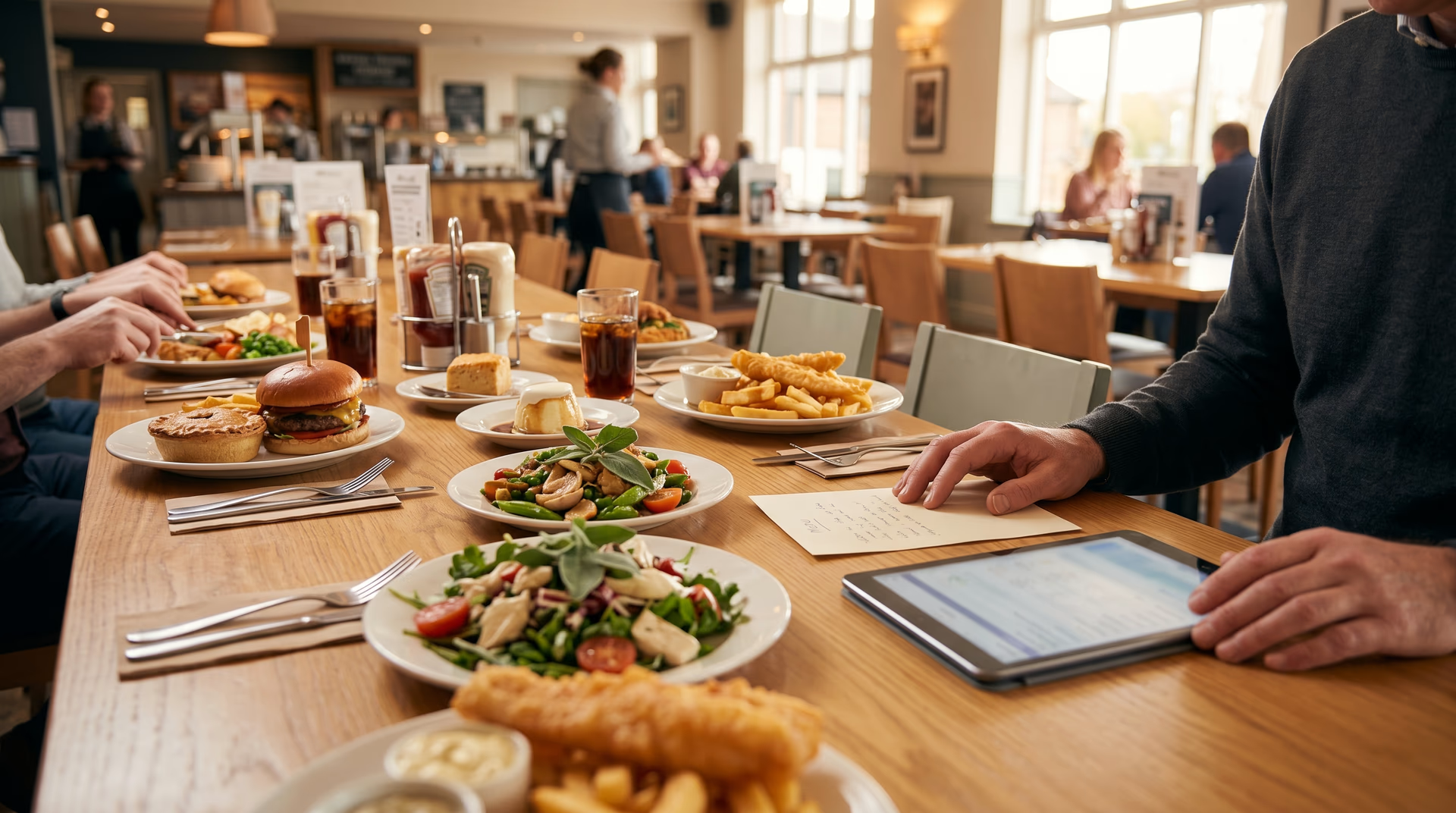
Pre-launch menu testing
Menu-level testing before the menu goes live in operation. Methodology combines controlled-condition consumer behaviour research (how consumers navigate the menu, what choice patterns emerge, where the range balance reads) with select operational reality checks (kitchen workflow modelling, prep complexity assessment, commercial mix projection). Used when a developed menu needs menu-level validation before launch commitment, typically following Menu Development work. Typically delivers within six to ten weeks.
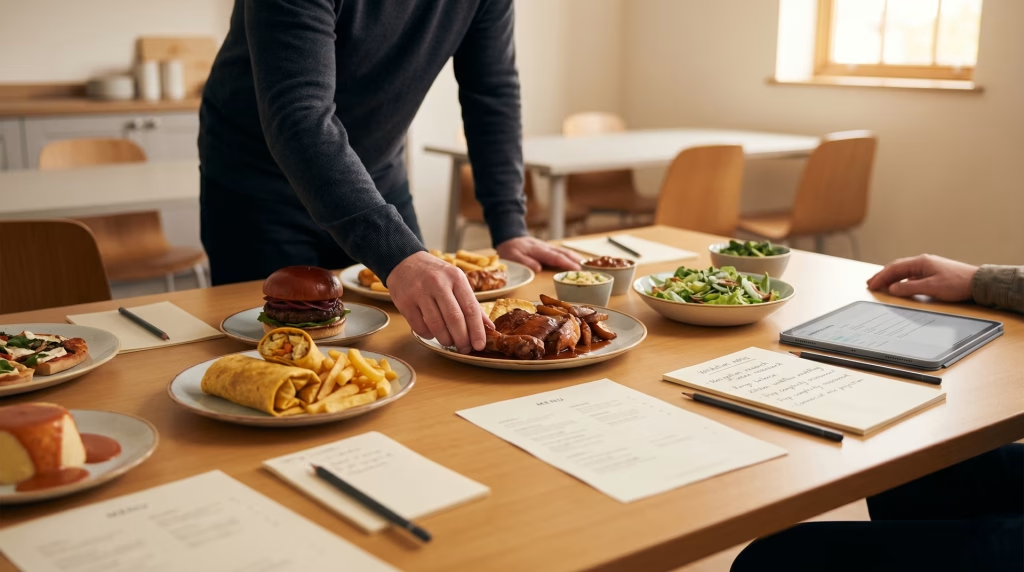
Operational pilot evaluation
Menu-level testing during the operational pilot phase, with consumer behaviour and operational data captured in real pilot venues. Methodology integrates real consumer ordering patterns, in-venue observation, exit interviews and operational performance data from the pilot operation. Used when the menu is in pilot phase and the team needs decision-grade evidence about whether the menu is ready for scale rollout. Typically delivers within eight to twelve weeks alongside the pilot duration.
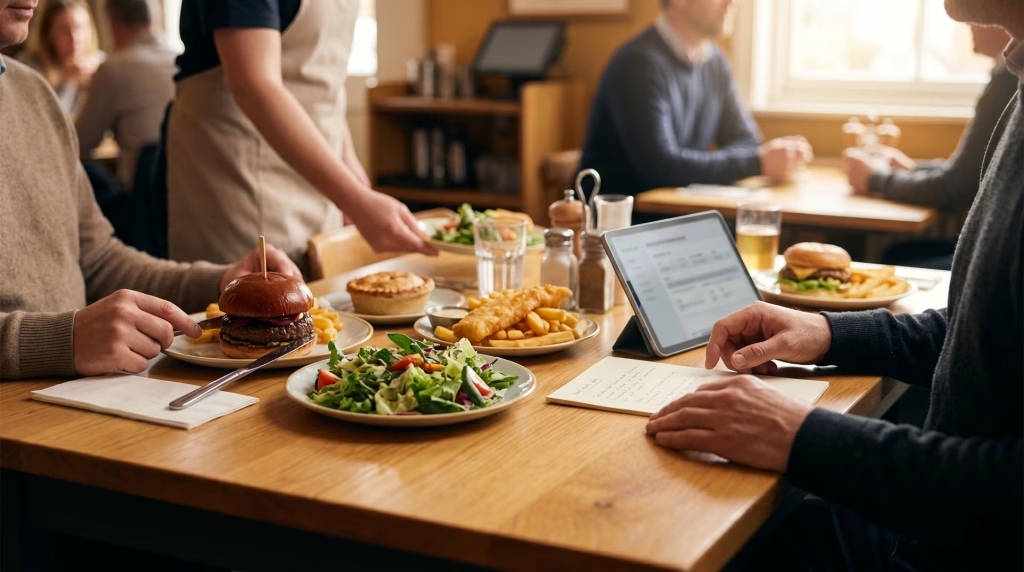
Live menu performance optimisation
Menu-level testing for menus already in full operation, designed for ongoing optimisation rather than one-off evaluation. Methodology integrates sales data analysis, in-venue consumer behaviour research, operational performance data and senior interpretation. Used when a live menu needs ongoing optimisation evidence: range rationalisation decisions, daypart strategy refinement, item-level performance interpretation in menu context. Typically delivers in waves across an ongoing programme rather than as a single project.
What we use Menu Testing for
Pre-launch validation of new menu architecture
You have developed a new menu (typically from Menu Development work) and need menu-level testing before launch commitment. Pre-launch Menu Testing evaluates the menu architecture, choice patterns, range balance and consumer engagement before the menu goes live, surfacing menu-level issues that item-level testing could not capture. Output is launch-ready menu evidence base, with the menu architecture decisions defensible against operator, franchisee or board scrutiny.
Operational pilot menu evaluation
You are running the operational pilot phase for a new menu and need decision-grade evidence about whether the menu is ready for scale rollout. Operational pilot Menu Testing combines consumer behaviour data from real pilot venues with operational performance data and senior interpretation, scoped to deliver the scale rollout decision evidence the leadership team needs. The integrated methodology captures what consumer-only or operational-only evaluation cannot.
Live menu performance optimisation
You have a menu in operation and need ongoing performance optimisation evidence: which items earn their place, which are underperforming structurally, where the range gaps sit, how the daypart logic is working in real operation. Live menu testing provides the ongoing evidence base for continuous menu optimisation rather than as a one-off project, with the methodology designed for repeated waves rather than just single evaluation.
Range rationalisation testing
You are rationalising the menu (cutting items, tightening the range) and need evidence to inform which items go and which stay. Menu Testing scopes the rationalisation against consumer choice patterns, range balance impact, operational complexity reduction and commercial implications, with the rationale defensible against operator, franchisee or board scrutiny when the inevitable “why are we cutting these” question gets asked.
Daypart menu strategy testing
You are developing or refining daypart strategy (breakfast, lunch, dinner, late-night, all-day) and need menu testing scoped specifically against daypart performance. The methodology evaluates how the menu works across the dayparts, where the daypart-specific opportunities sit, how the menu logic should flex by daypart, and which items belong in which daypart context.
Menu refresh impact assessment
You have just launched a major menu refresh and need post-launch evidence about whether the refresh has delivered the commercial outcomes. Menu Testing measures the impact: which changes have driven performance, which have not, where the refresh has hit or missed the brief, what further iterations should follow. Designed to inform the next phase of menu work rather than as a retrospective report.
Food and drink is all we do
We are not a generalist research agency that takes the occasional foodservice brief or an operational consultancy that adds consumer research on the side. Food and drink is the only sector we work in, and the foodservice channel is one of the contexts our senior team works in continuously. Our menu testing methodology is built around foodservice commercial reality (range balance, daypart logic, commercial mix, operational workflow) rather than imported from FMCG or generic research. The integration of consumer behaviour with operational data is what makes the output decision-grade for the menu decisions that matter rather than analytically interesting but commercially partial.
That focus is why we work with 11 of the UK’s top 40 food and drink brands.
Other ways to build, test and refine what wins
Menu Testing is one tool in the broader Build, Test & Refine What Wins toolkit. Depending on the brief, one of these might be a better fit, or a stronger partner alongside the Menu Testing work.
-
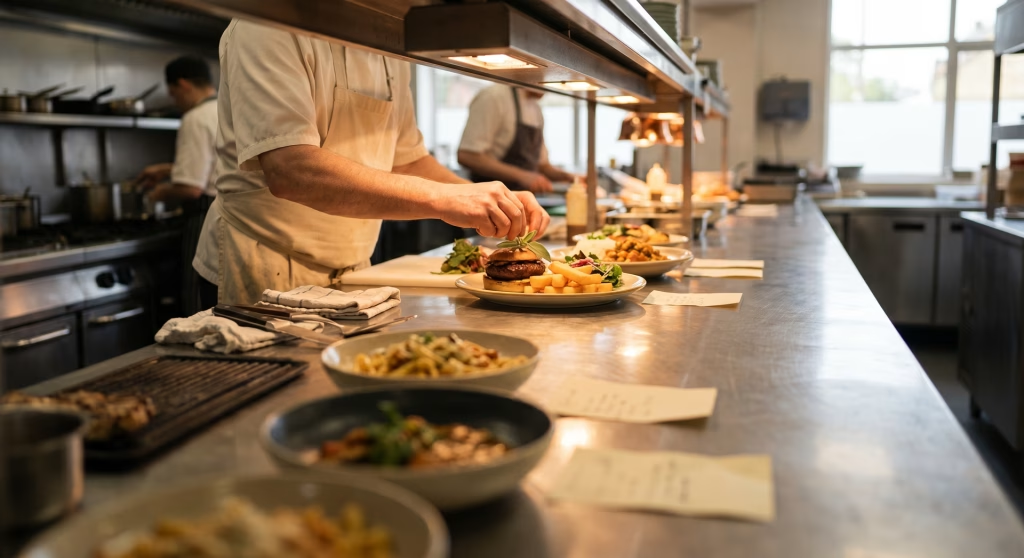
Menu Development
Specialist menu development for foodservice, QSR, restaurants, hospitality and contract catering.
-

Product Testing (IHUT, CLTs, in-restaurant)
Specialist consumer product testing for food and drink innovation.
-
Qualitative Product Testing
Specialist qualitative consumer evaluation of food and drink products.

View our case studies
-
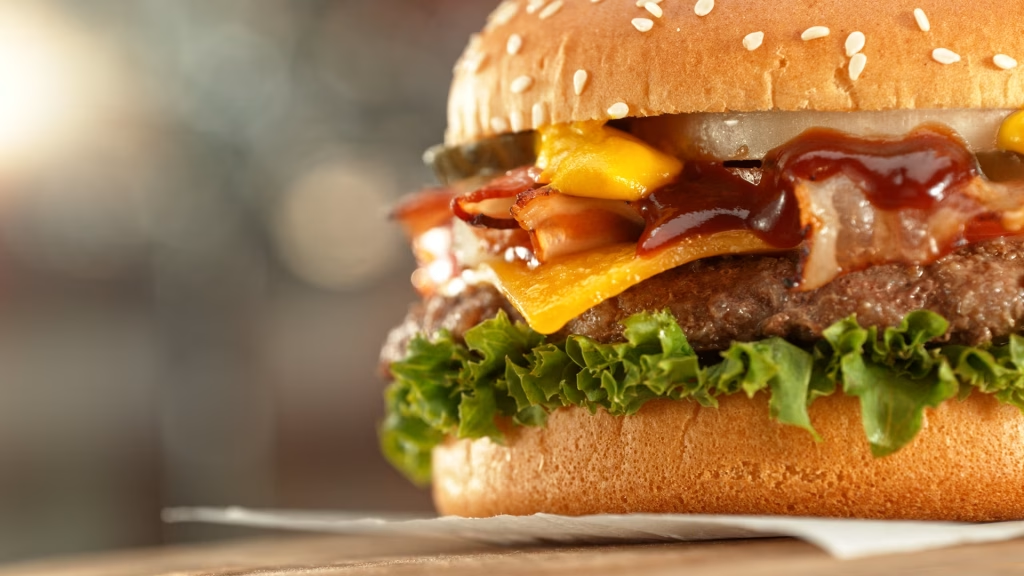
Burger King
Burger King needed in-depth consumer testing of two new burger builds across multiple variants before launch. FIS Group delivered a real-store central location test with penalty analysis and innovation expert input, providing precise optimisation insight and benchmarks to inform future menu development.
-

Oscar Mayer
Oscar Mayer needed category understanding in convenience and discount channels that could drive retailer conversations. FIS Group delivered a multi-phase programme combining quantitative, qualitative and innovation expertise, turning research into a commercial asset at the negotiating table.
-

Superkeen
Superkeen needed rapid development of allergen-free products to support their expansion beyond cereals. FIS Group delivered a fast-paced sprint across two categories – nut butter concepts and tigernut cereal bars – producing signed-off gate zero samples meeting strict AIP requirements, ready for manufacturing briefs.
FAQs
Scope of analysis. Product Testing’s in-restaurant format evaluates specific menu items individually: does this item perform on the food and drink-specific metrics, would it work commercially, how does it score against decision-grade quantitative methodology. Menu Testing evaluates the menu as an integrated system: range balance, navigation patterns, choice dynamics, daypart performance, cross-item substitution. Items can score well individually in Product Testing and the menu can underperform structurally in Menu Testing because the menu-level dynamics are different from the item-level performance. The two services answer different questions and are often commissioned together for major menu launches.
The integration of consumer behaviour with operational data. Generic menu engineering focuses on operational data (sales mix, contribution margin, item profitability) and produces engineering decisions from that data alone. Operational consultancy focuses on workflow optimisation and produces operational decisions from operational evidence. Our Menu Testing integrates consumer behaviour evidence (how consumers navigate, choose and engage with the menu) with operational data, and adds senior food and drink interpretation throughout. The integrated approach is what makes the output decision-grade for the menu decisions that matter rather than analytically partial.
Menu-level metrics scoped against the brief. Standard menu-level dimensions: choice patterns (what consumers order across the menu, where the popularity sits, where the gaps are), navigation and engagement (how consumers move through the menu, where they pause, what they consider), range balance (whether the menu sections are balanced commercially and culinarily, where the dead zones are), daypart performance (how the menu works across breakfast, lunch, dinner where relevant), cross-item dynamics (substitution between items, complementary ordering, missed-sale opportunities), operational integration (kitchen complexity per item, service workflow implications, commercial mix and margin). Custom metrics added where the brief requires.
Yes, and this is the most useful commissioning structure. Where the client team can share sales data, operational performance data, ordering pattern data or commercial mix data, our methodology integrates this directly with the consumer behaviour evidence we capture, producing decision-grade integrated evidence. The integration is structurally critical for live menu performance optimisation (where the live order data is the foundation evidence) and significantly strengthens operational pilot evaluation. Pre-launch testing typically relies less on internal operational data because the menu is not yet generating it.
Menu-level performance assessment scoped for the decision audience. Specifically: menu architecture assessment (range balance, daypart logic, navigation patterns at integrated level), item performance interpreted in menu context (which items earn their place, which are underperforming structurally, which represent opportunities), optimisation recommendations (range rationalisation candidates, daypart strategy adjustments, menu architecture refinements), commercial and operational implications of the recommendations, prioritised next steps. Format agreed at the start so the work feeds the next phase of menu work rather than reading as a research report.
Yes, with careful scoping. International menu testing is operationally more complex than single-market work because the operational reality (kitchen equipment, staff capability, supply chain, consumer expectations, channel norms) varies materially between markets. We run Menu Testing across the UK and Europe with established channel relationships, and selectively in the US and UAE for specific channel briefs. We will scope international capability honestly at the scoping call based on the specific markets and operational context.