When the consumer-needs evidence has to do strategic work, not just describe
Most consumer-needs work fails at the same point. The needs are described clearly. The mapping is comprehensive. The methodology is sound. And then the work does not translate into commercial decisions because the needs are either too generic to act on (consumers want healthy food, convenience matters, indulgence is rising) or too abstract to translate into product development (high-level emotional needs without the behavioural detail NPD needs to brief against). The team reads the needs map, agrees with the broad strokes, files it, and returns to the same strategic question they started with.
The structural problem is that most needs work is built as description rather than as decision-support. The needs taxonomy is generic (functional, emotional, social – the standard frameworks). The mapping is comprehensive but un-prioritised. The link between need and commercial opportunity is left to the client team. The hardest part of the work (translating needs into actionable innovation or strategic direction) is pushed back to the buyer.
Our work is structured around the opposite problem. Needs Landscaping is built backwards from the commercial decision the needs evidence has to support. The needs taxonomy is food and drink-specific (occasion-led, moment-led, household-led, ritual-led). The mapping prioritises the needs with genuine commercial opportunity (unmet, under-served, emerging) rather than describing the full universe at the same level. The link between need and opportunity is built into the work, not pushed back to the buyer.
It is not the right tool for every brief. If the question is about clustering audiences rather than mapping needs, Segmentation is the right tool. If the question is about category usage and attitudes at scale, U&A delivers that quantitative baseline. If the question is about strategic mapping of where to play, Opportunity Mapping uses needs evidence as one input rather than as the primary deliverable. Needs Landscaping sits specifically when the brief is about the structured consumer-needs foundation behind innovation, brand or strategic work.

What we do differently
-
Built around food and drink-specific need structures, not generic taxonomies
Most needs work uses generic need taxonomies (functional, emotional, social; Maslow-derived hierarchies; jobs-to-be-done frameworks) lifted from broader consumer research practice. They work for some sectors. They miss what makes food and drink need distinct: the occasion as the unit of need, the meal as the social and ritual moment, the household as the unit of decision, the routine as the structural shape of behaviour. Our taxonomy is built specifically around food and drink need structures, which is why the needs we surface translate cleanly into innovation, brand and strategic work in this sector.
-
Prioritised for commercial decision, not described comprehensively
Most needs work describes the full universe of needs at the same level of detail. Ours prioritises the needs with genuine commercial opportunity: unmet needs (where current offers fail), under-served needs (where current offers are partial), emerging needs (where behaviour is shifting and current offers will fall behind). The prioritisation is built into the methodology rather than left to the client team, which means the output is a decision-ready needs map rather than a descriptive one.
-
Senior interpretation throughout, not delegated to junior researchers
Needs work depends on credible interpretation of what consumers actually mean versus what they say. Consumers often cannot articulate their own needs accurately, particularly the emerging or under-served ones. Senior food and drink specialists interpret what the research surfaces against the real commercial reality of the sector, which is the layer of value that separates a useful needs map from an academic exercise. We do not delegate the interpretive layer to junior researchers who have not lived the categories.
-
Designed to feed forward into innovation and strategy work, not to sit alongside them
Every needs landscape closes with deliverables scoped for the next phase of work. Needs are described in a form NPD can brief against. The prioritisation is built in a form innovation leadership can sequence against. The needs evidence is structured to feed directly into Opportunity Mapping, Future Food Pipeline Builder, Platform and Territory Building or other Challenge 02 strategic mapping work, rather than as a standalone descriptive output that someone else then has to translate into commercial direction.
Six commercial use cases, written as scenarios a buyer will recognise from their own brief. The aim is for the reader to see their question on this list and self-select.
Foundational needs evidence for innovation pipeline work
You are building (or rebuilding) an innovation pipeline and need a structured needs foundation the pipeline can be built against. The work delivers the priority needs map that feeds into Opportunity Mapping, Future Food Pipeline Builder and Platform and Territory Building, with the needs evidence structured specifically for innovation use rather than as a standalone consumer report.
Brand strategy refresh requiring needs-led positioning
You are setting or resetting brand strategy and need a structured needs foundation for positioning the brand against specific consumer needs rather than against generic category propositions. The work delivers the needs map and the prioritised needs the brand should own, in a form brand strategy teams can build positioning around.
Category entry requiring structured needs understanding
You are considering entry into a new category or sub-category and need a structured map of consumer needs in that space before the entry decision is taken. The work delivers the needs landscape for the new space, with the unmet, under-served and emerging needs prioritised against entry opportunity and operational reality.
NPD scoping for specific occasions or audiences
Your NPD pipeline is being scoped against specific occasions, audiences or eating moments and you need a structured needs map for that scope rather than for the whole category. The work delivers the focused needs landscape, with the needs prioritised against actionable innovation opportunity in the specific brief context.
Refreshing dated needs frameworks
Your existing needs framework is no longer commercially credible: the audience has shifted, behaviour has evolved, the framework feels generic or descriptive rather than actionable. The work rebuilds the needs map credibly, retaining what is still working from the existing framework and replacing what is not, in a form the strategy and innovation teams can build against.
Pre-strategic needs foundation for major business decisions
You are commissioning major strategic work (Opportunity Mapping, Pipeline Builder, Platform and Territory Building, i360) and need to lay a structured consumer-needs foundation underneath it first. The work delivers the needs evidence base the strategic work then sits on top of, anchoring the strategy in real consumer needs rather than in assumed or partial needs evidence.
-
How a needs landscaping project runs
From brief to structured, prioritised needs landscape
-
Scoping call
Twenty minutes on a call. You tell us the commercial decision the needs evidence has to support, the scope (category, occasion, audience, brand context), the existing needs work to integrate, the audience for the deliverable, and the timeline. We tell you whether needs landscaping is the right tool, what scope makes sense, what needs taxonomy depth the brief implies, and roughly what it will cost.
-
Needs framework design
The senior team designs the needs framework specifically around the brief, anchored in the five food and drink-specific need dimensions (functional, emotional, social, occasion, ritual). The framework is scoped at the right level of granularity for the commercial decision the work has to support, agreed with the client before primary research starts, and built to integrate cleanly with the strategic work that the needs evidence will feed forward into.
-
Primary needs research
Primary research scoped specifically for needs work: qualitative depth across the audiences and occasions in scope, structured for senior interpretation rather than for descriptive reporting. Recruited specifically for the brief, run by senior food and drink specialists, with the methodology adapted to the specific need dimensions the framework prioritises.
-
Needs prioritisation
The senior team integrates the research findings into the framework, prioritises the needs against the three opportunity dimensions (unmet, under-served, emerging), and surfaces the needs map structured for commercial use. The prioritisation is the value, because most needs work falls down at this step. We do not deliver descriptive needs maps that fail to prioritise commercially.
-
Activation readout
A working readout session walking the team through the needs landscape and the prioritisation, followed by the full deliverable: needs framework, prioritised needs map, commercial opportunity flagging, and the structured needs evidence base scoped for forward use in innovation pipeline, brand strategy or strategic mapping work. The deliverable is built to be used in the next phase of work rather than to sit as standalone consumer documentation.
Five dimensions. The taxonomy that makes food and drink need work translate to commercial decisions.
Food and drink need has its own specific shape. Generic needs taxonomies miss the dimensions that matter most: the occasion, the meal, the household, the ritual. The five dimensions below are the foundation our needs work is built around, integrated together rather than reported separately.
Functional needs and Emotional needs
Functional needs
What the food or drink does for the consumer: nutrition, hunger management, energy, hydration, health, performance, dietary need. The need dimension that drives the most direct innovation and product development decisions because the link between need and product specification is most explicit.
Emotional needs
How the food or drink makes the consumer feel: comfort, indulgence, reward, treat, escape, calm, anticipation, satisfaction. The need dimension that drives brand and positioning decisions most directly, because emotional need maps closely to the brand territory work that follows.

Social needs and Occasion needs
Social needs
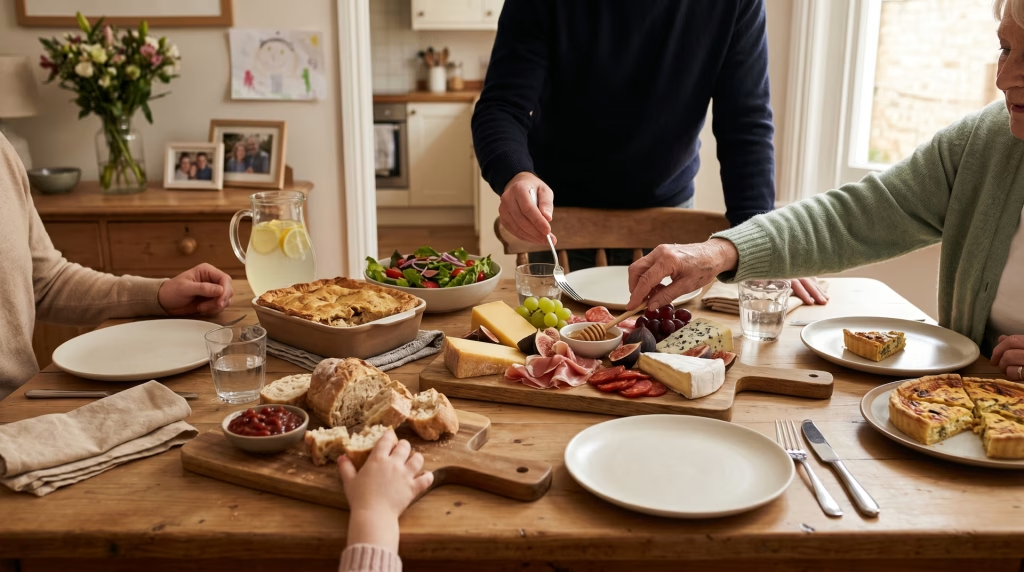
How food and drink connect people: hosting, sharing, family meals, social occasions, gift-giving, group eating, household bonding, generational ritual. The need dimension that drives occasion and channel decisions, particularly for categories where consumption is socially rather than individually structured.
Occasion needs
What the food or drink needs to do for the specific eating moment: breakfast routines, lunch behaviours, snacking patterns, evening meal logic, on-the-go moments, social occasions, indulgence moments. The unit of need that matters most for food and drink specifically, and the one generic frameworks consistently miss because they treat consumer need as occasion-independent.
Ritual needs
The habit and routine layer that shapes everyday food and drink behaviour: morning rituals, weekly rhythms, seasonal patterns, special-occasion behaviour, household routines. The need dimension that drives the deepest commercial loyalty because ritual is the structural shape of consumer behaviour over time, and the dimension that surfaces opportunities generic needs frameworks treat as too granular to matter.

Food and drink is all we do
We are not a generalist research consultancy that takes the occasional food brief. Food and drink is the only sector we work in. Our senior team knows the categories, the consumers, the occasions and the rituals that shape food and drink need specifically. The taxonomy is built from inside the sector rather than imported from broader consumer research, which is why the needs we surface translate cleanly into innovation, brand and strategic work that food and drink leadership teams can act on.
That focus is why we work with 11 of the UK’s top 40 food and drink brands.
Other ways to unlock growth opportunities
Needs Landscaping is the consumer-needs foundation behind much of the broader Unlock Growth Opportunities toolkit. The most common buyer journey from this page is into one of the four innovation-side Challenge 02 services, with the needs evidence feeding forward into strategic mapping, pipeline architecture or platform work.
-

Opportunity Mapping
Strategic mapping of where to play in food and drink.
-

Future Food Pipeline Builder
A structured methodology for building credible, sequenced, executable food and drink innovation pipelines.
-
Exploratory Insight
Senior-led discovery work for early-stage briefs where the scope is not yet defined, the question is not yet clear, or the team needs structured hypothesis generation before commissioning more structured work.
-

Segmentation
Structured consumer segmentation that produces actionable audience groupings, not descriptive profiles that gather dust.

View our case studies
-
Factor 75
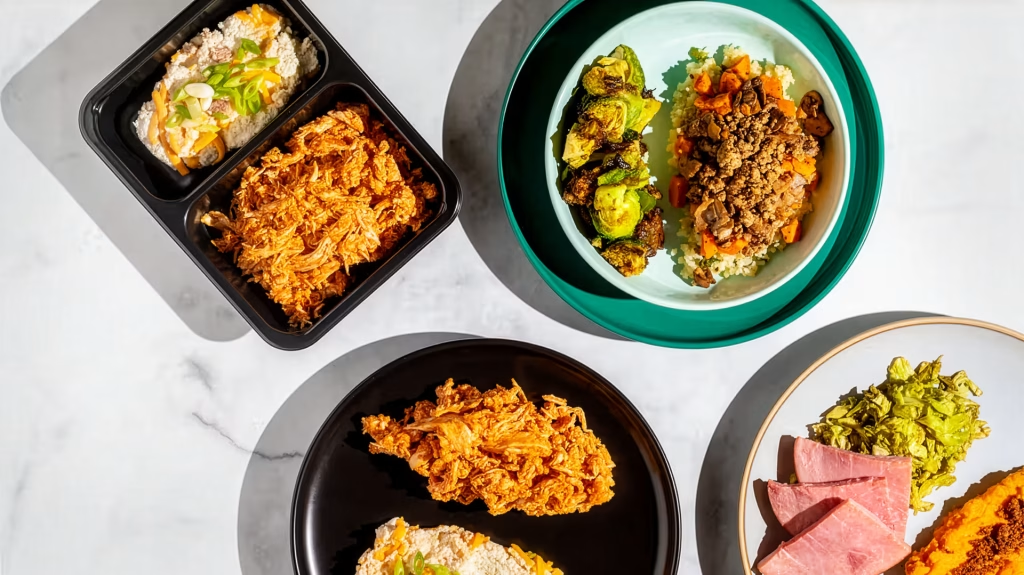
Factor 75 needed rapid recipe development across multiple dietary requirements while integrating seamlessly with their existing process. FIS Group embedded a development team inside Factor's Chicago facility, delivering 25 compliant recipes across GLP-1, keto and low carb requirements and establishing a scalable model for ongoing portfolio expansion.
-
Mars
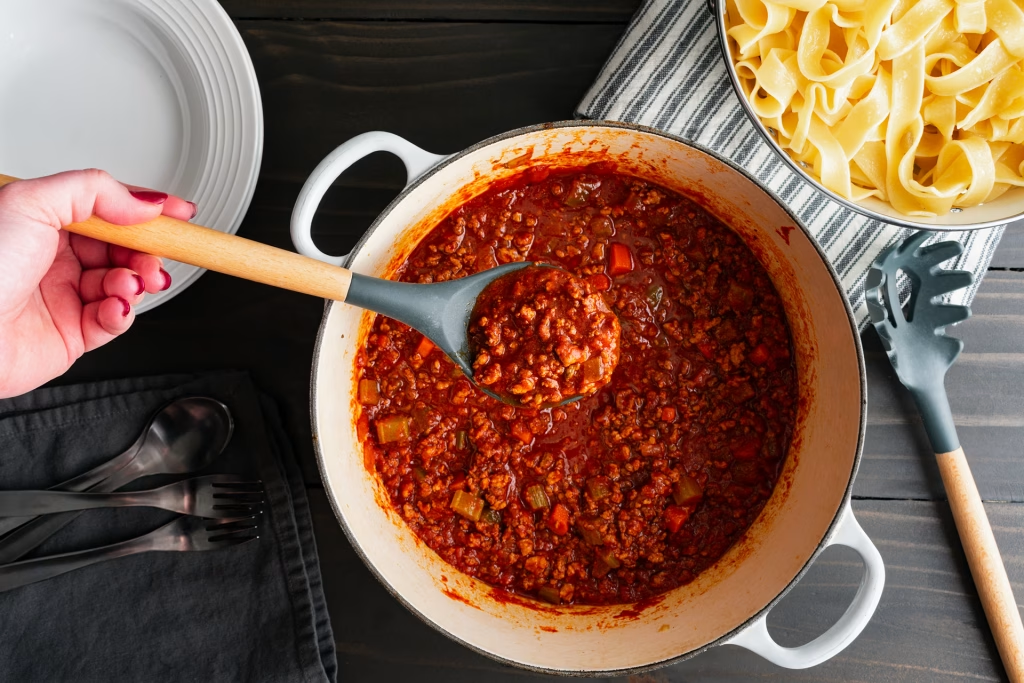
Mars needed a true research partner to decode consumer meal behaviour across three markets. FIS Group delivered a bespoke Meal Moments programme combining in-the-moment diary capture, qualitative exploration and strategic workshop facilitation – turning occasion-level data into immediate commercial direction.
-

Oscar Mayer
Oscar Mayer needed category understanding in convenience and discount channels that could drive retailer conversations. FIS Group delivered a multi-phase programme combining quantitative, qualitative and innovation expertise, turning research into a commercial asset at the negotiating table.
FAQs
Segmentation clusters consumers into groups based on shared characteristics (behaviour, attitude, need, demographic). Needs Landscaping maps the structured landscape of consumer needs themselves, prioritised by commercial opportunity. The two are complementary tools that often run together: needs landscaping builds the needs framework, segmentation then clusters consumers around the needs and other dimensions. Different units of analysis (needs vs consumers), different deliverables (needs map vs segment profiles), different commercial uses (innovation and brand positioning vs audience strategy and targeting).
Usage and Attitude (U&A) maps category usage, brand awareness, attitudes and the drivers of choice quantitatively at scale. Needs Landscaping maps consumer needs structurally and qualitatively, with the focus on the depth of need rather than on the breadth of stated behaviour. The two work together in major programmes: U&A delivers the quantitative baseline, Needs Landscaping delivers the structured needs framework that the U&A data is interpreted against. Different methodologies, different units, different commercial uses.
Opportunity Mapping is strategic: it identifies where to play across audiences, occasions, territories, categories and channels, with sizing and prioritisation. Needs Landscaping is insight: it maps the consumer-needs foundation that strategic mapping work often builds on. The most common buyer journey is to commission needs landscaping first (to build the needs evidence base) and then Opportunity Mapping second (to turn the priority needs into a sized, prioritised commercial map). Different layers of the same overall commercial decision.
Both are useful. Most major innovation and brand programmes commission both. The needs lens is particularly valuable when the brief is about innovation direction (because innovation has to address need to land commercially), category positioning (because brand stretch into new spaces depends on need fit), or NPD development (because product specification depends on the need it is built against). The audience lens (segmentation) is more valuable when the brief is about audience strategy, targeting and channel planning. Most decisions need both: the needs landscape says what to build, the segmentation says who to build it for.
That is the question this service exists to answer. The structural feature of our methodology is that the needs framework is built backwards from the commercial decision the evidence has to support, rather than as a standalone consumer description. Each priority need is scoped at the level of specificity needed for the next phase of work to brief against (innovation specification, brand positioning, strategic direction). Generic needs that fail the specificity test do not make the priority set. We will tell you straight at the scoping stage if your brief is at risk of producing needs that are too generic to act on, and we will recommend tightening the scope before the work starts rather than after.
Primary research-led, with senior food and drink specialists running the interpretation throughout. The needs framework is structurally rigorous (five food and drink-specific dimensions, three commercial opportunity lenses, prioritisation criteria built explicitly into the methodology). The work is grounded in real consumer research rather than in desk synthesis alone. We will tell you straight at scoping what sample sizes, depth of qualitative research and integration with quantitative work makes sense for the credibility your brief requires.
Eight to twelve weeks from scoping call to activation readout is the typical window. Compressed timelines are possible where the strategic context is well-defined and the audience or category scope is tight. More complex briefs (multi-market, multi-category, integrated with quantitative work) typically run twelve to sixteen weeks. We give realistic timelines at proposal stage based on the brief and the depth of needs work required.
Yes. We run needs landscaping projects across the UK, mainland Europe, the US and the UAE, with local recruit and local fieldwork support where the cultural and language context requires it. International needs work is structurally valuable when the consumer culture is meaningfully different from the home market, because food and drink need varies more across cultures than generic consumer need does. We will tell you straight at scoping what approach makes sense for your specific international brief.
Yes, and this is the most common commissioning structure for major innovation or strategic programmes. The natural sequence is Needs Landscaping first (to build the needs foundation), then Opportunity Mapping, Future Food Pipeline Builder or Platform and Territory Building second (to turn the needs into strategic direction or innovation execution). Some programmes commission needs landscaping integrated with the strategic work; others commission it as a separate foundation engagement. We will scope the right combination at the scoping call based on what the brief actually needs.
Project-based, scoped against the category, occasion or audience scope, the geographic coverage, the depth of primary research, and the integration with other strategic or quantitative work. Single-market UK needs work on a focused brief is the lowest entry point; multi-market multi-category integrated needs and strategic work is the highest. We give a clear, all-in quote at proposal stage with no hidden extras, and we will tell you straight if your budget will not buy the depth your brief requires.
Got an innovation or strategic decision that needs a structured needs foundation?
Tell us the commercial decision the needs evidence has to support, the scope (category, occasion, audience or brand context), the existing strategic or insight work to integrate, and the timeline. We will tell you whether needs landscaping is the right tool, what scope makes sense, what taxonomy depth the brief implies and what it will cost. Twenty minutes on a call.