
When the pipeline needs to be built, not just imagined
Most innovation pipelines fail before NPD touches them, and the reasons are familiar. The pipeline is built around an inspiring set of trends rather than a defensible view of where the category is actually heading. The platforms are aspirational rather than credibly buildable. The sequencing is missing, so everything is “year one” and nothing ships. Strategy and execution come apart, so it gets signed off in the boardroom and quietly abandoned in the kitchen. It looks busy on paper, but the confidence to back it is missing. Future Food Pipeline Builder fixes this. The work maps how food and drink will actually shift across the next three years (consumer behaviour, occasion logic, category dynamics, channel evolution, supply chain reality), picks the platforms worth building against your real commercial position, sequences the moves into a credible year-one, year-two and year-three shape, and produces a pipeline ready to brief into NPD. It backs fewer, better bets. Senior food and drink specialists run the work throughout, so the foresight reads against the real commercial reality of the sector rather than generic frameworks lifted from other industries.
It is not the right tool for every brief. If the question is where to play (which audiences, which territories, which categories), Opportunity Mapping is the right starting point. If the question is about building specific innovation platforms in depth, Platform and Territory Building is the better fit. If the work is purely about generating ideas, Challenge 03 ideation tools are the right answer. Future Food Pipeline Builder sits between strategic mapping and ideation, scoped specifically to the architecture and sequencing of the pipeline that turns one into the other.
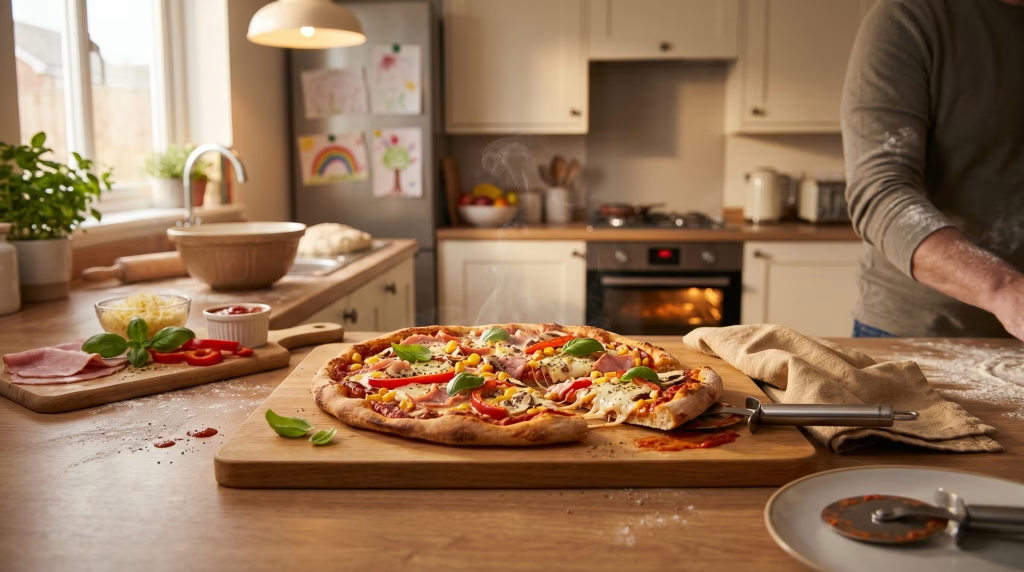
Consumer occasion shifts and Category dynamics
Category dynamics
How the category itself is evolving: premium tier behaviour, mainstream tier shifts, value tier dynamics, sub-category emergence and decline, the structural shape of where the category will sit in three years. The category-level shifts that determine which pipeline plays have a credible commercial future.
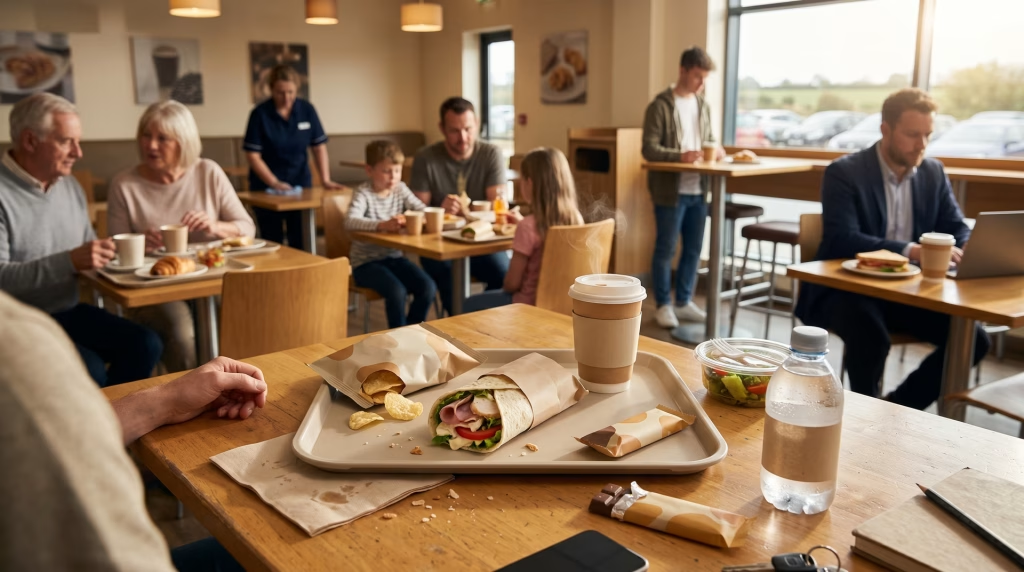
Channel evolution and Supply chain and operational reality
Channel evolution
Where shopping and eating are moving across channels: grocery shifts, foodservice evolution, QSR dynamics, on-the-go growth, digital and e-commerce maturation, quick commerce, hospitality recovery and reshape. The channel reality that determines where pipeline plays will actually be sold and consumed.
Food and drink is all we do
We are not a generalist futures consultancy that takes the occasional food brief. Food and drink is the only sector we work in. Our senior team knows the categories, the consumers, the channels, the retailers and the operational realities. The foresight is built from inside the sector rather than imported from broader consumer industries, and the pipeline lands as commercially credible because it is anchored in the realities the team has actually lived rather than in trend frameworks generic to all consumer goods.
That focus is why we work with 11 of the UK’s top 40 food and drink brands.
Other ways to unlock growth opportunities
Future Food Pipeline Builder is one tool in the broader Unlock Growth Opportunities toolkit. Depending on the brief, one of these might be a better fit, or a stronger partner alongside the pipeline work.
-

Opportunity Mapping
Strategic mapping of where to play in food and drink.
-

Platform & Territory Building
Deep platform development that picks up where opportunity mapping ends and where execution begins.
-
Needs Landscaping
Structured consumer-needs mapping that surfaces the unmet, under-served and emerging needs worth commercial attention.
-

Hothouse
For when you need an urgent burst of creativity, clarity & objectivity. Let our experts take the brief off your hands, build the right stim & develop finished concepts.

View our case studies
-
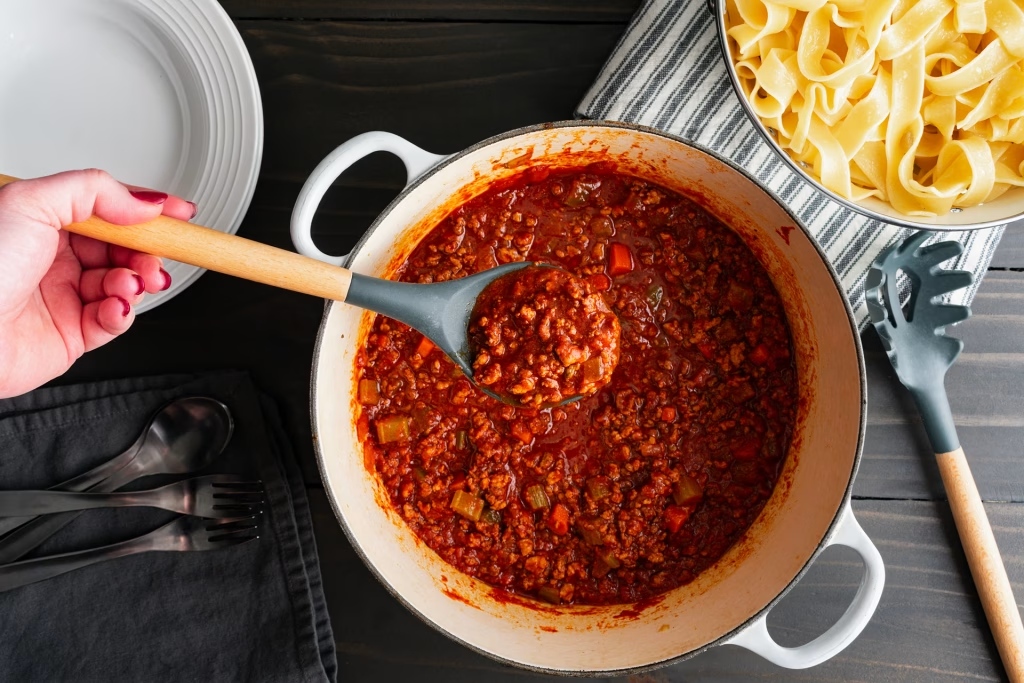
Mars
Mars needed a true research partner to decode consumer meal behaviour across three markets. FIS Group delivered a bespoke Meal Moments programme combining in-the-moment diary capture, qualitative exploration and strategic workshop facilitation – turning occasion-level data into immediate commercial direction.
-
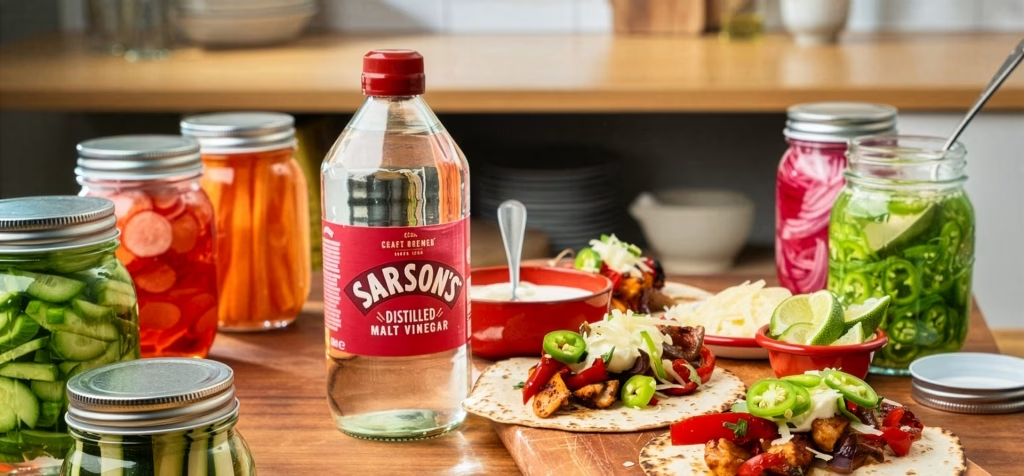
Mizkan
Mizkan needed a growth strategy to attract younger consumers to the vinegar category and expand usage occasions. FIS Group delivered a hybrid process combining trend mapping, consumer research and innovation workshop facilitation, producing high-potential proposition territories with a full activation toolkit for development.
-
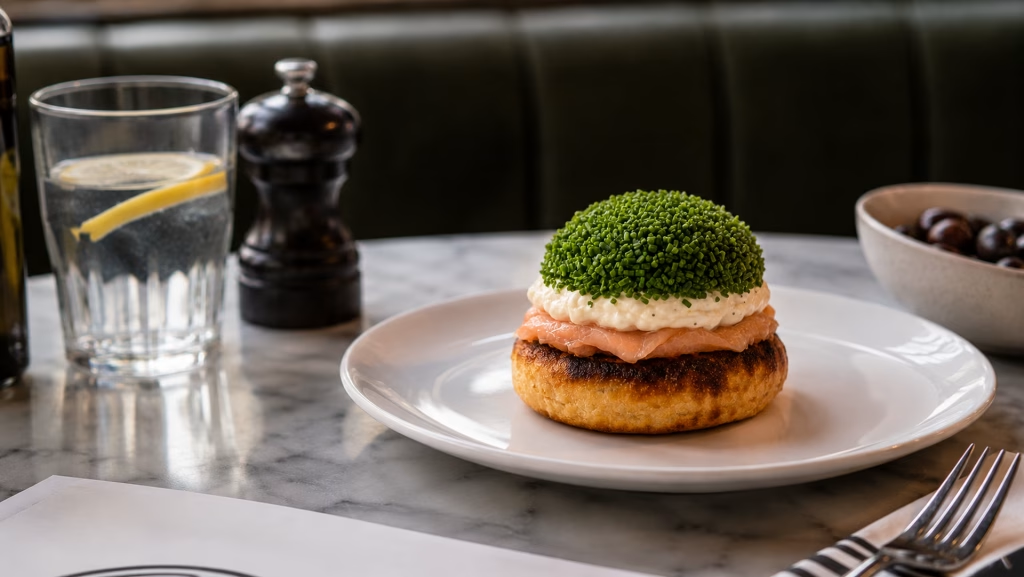
Pizza Express
Pizza Express needed trend-led hero dishes for their Christmas 2024 and September seasonal launches. FIS Group delivered a two-phase innovation sprint from concept ideation through kitchen development to full supplier briefing specifications, with all menu items reaching restaurants nationwide on schedule.
FAQs
Opportunity Mapping is about where to play strategically: which audiences, which territories, which occasions, which categories deserve commitment. Future Food Pipeline Builder is about how to sequence the moves: which platforms to build, in what order, against what dependencies and decision gates. The two are complementary tools at different points in the same commercial decision. Most major innovation programmes commission Opportunity Mapping first to lock the strategic direction, then Future Food Pipeline Builder to architect the execution.
Platform and Territory Building goes deep on a single platform: developing it, sizing it, building the proposition, scoping the execution. Future Food Pipeline Builder works at the pipeline-architecture level: identifying and sequencing the platforms worth building across the full three-year horizon. The two often run together: the pipeline architecture identifies the platforms, the platform-and-territory work then goes deep on the priority platforms one by one.
Three years is the typical pipeline horizon, sequenced as year one (executable now), year two (in development), year three (in foresight and option-keeping). Some briefs need longer horizons (five-year strategic pipelines for board-level innovation strategy, ten-year category vision work for category-shaping brands), and we will scope accordingly. We will tell you straight at scoping what horizon makes sense for your specific brief and what depth of foresight is credible at each year.
A futures report tells you what might happen. A pipeline tells you what to do about it. Our work translates foresight into architecture: which platforms to build, in what order, against what operational reality. The output is built to feed NPD briefs, board presentations and commercial budgeting, not to live in a futures-thinking folder. If you want a futures report without the pipeline architecture, there are specialist futures agencies that will sell you one. We do the work that turns foresight into commercial direction.
That is the question this service exists to answer. The pipeline is sequenced specifically against execution reality (NPD capacity, supply chain readiness, channel timing, commercial budgeting) and the platforms are validated against operational credibility before they enter the pipeline. Platforms that fail the credibility test are stripped out rather than carried forward. We will tell you straight which platforms in any draft pipeline are at risk of failing execution, and we will recommend stripping them out rather than including them for theatre.
Yes, and this is one of the most common uses of the work. The pipeline gives leadership teams, NPD teams, commercial teams and finance a shared reference point for the innovation direction across three years. The activation toolkit is designed for internal alignment work alongside the NPD briefing work, with the platform descriptions, sequencing roadmap and commercial case all formatted for cross-functional use.
Ten to fourteen weeks from scoping call to activation is the typical window. Compressed timelines are possible where the strategic foundation is already strong (Opportunity Mapping in place, audience and territory decisions locked) and the pipeline is being built rather than rebuilt from scratch. More complex pipelines (multi-brand portfolio, multi-market, longer horizons) typically run fourteen to twenty weeks. We give realistic timelines at proposal stage.
It will. Pipelines are built to be refreshed annually or biennially rather than to predict the future perfectly. The architecture builds in decision gates and option-keeping moments specifically so the pipeline can be adapted as foresight evolves, rather than relying on the original forecast holding for three years. We will tell you straight at the scoping call what refresh cadence makes sense for your category, and how much foresight robustness the methodology can credibly deliver versus what depends on assumption.
Yes, and this is the strongest commercial structure for major innovation programmes. The natural sequence is Opportunity Mapping first (strategic direction), Future Food Pipeline Builder second (pipeline architecture), Platform and Territory Building third (platform-deep work on the priority platforms). Some programmes run all three as an integrated work programme; others commission them sequentially as the work develops. We will scope the right combination at the scoping call based on what the brief actually needs.
Project-based, scoped against the brand or category scope, the time horizon, the geographic coverage, the audience for the deliverable and the depth of activation toolkit required. Single-brand UK pipeline work is the lowest entry point; multi-brand international pipeline architecture with full activation toolkit is the highest. We will give you a clear, all-in quote at proposal stage with no hidden extras, and we will tell you straight if your budget will not buy the depth your brief requires.
Got an innovation pipeline that needs to be built to be shipped?
Tell us the commercial decision the pipeline has to support, the brand or category in scope, the time horizon, the existing pipeline work to integrate or replace, and the audience for the deliverable. We will tell you whether pipeline work is the right tool, what scope makes sense, what foresight depth the brief requires and what it will cost. Twenty minutes on a call. No qualifying call before the qualifying call.