
One integrated, briefable specification.
A strong innovation platform gives your team a shared direction to create, test and scale big ideas. Our Innovation Territories framework brings together consumer needs, macro trends and category insight to define clear strategic platforms – aligning teams, inspiring ideas and laying the foundation for sustainable growth.
Innovation Territories & Platform Definition
Identification and development of strategically relevant innovation territories rooted in emerging consumer needs, evolving behaviours, cultural shifts and category white space. Each territory is shaped into a distinct platform for growth, with a clear proposition, opportunity space and strategic boundaries that provide direction for innovation, brand and commercial decision-making. The outcome is a portfolio of credible future-growth platforms rather than a collection of disconnected ideas.
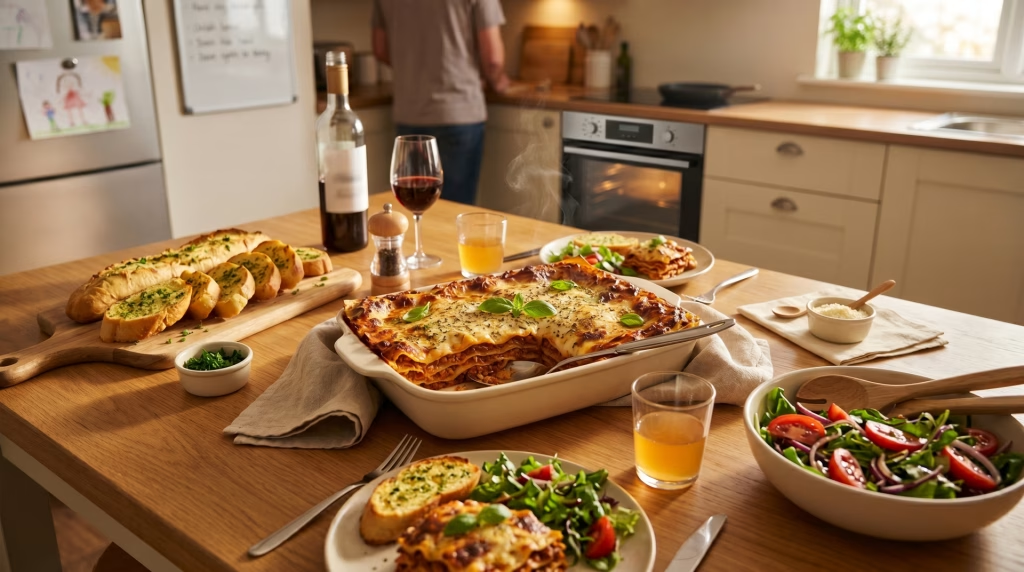
Audience, Occasion & Commercial Opportunity
Definition of the audiences and occasions where each territory has the strongest right to win, using behavioural and occasion-led insights rather than broad demographic segmentation. Commercial potential is quantified through market size, usage frequency, channel opportunities and growth headroom, creating a robust business case that supports prioritisation and investment decisions.
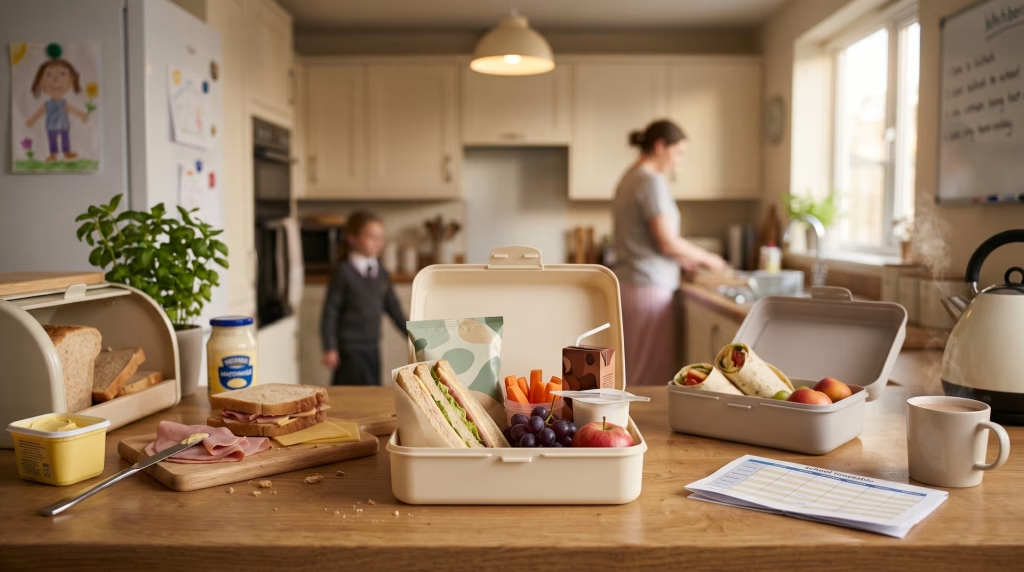
Activation roadmap
Translation of innovation territories into a structured programme of action, with priorities, sequencing, decision gates, capability requirements and key dependencies clearly mapped. This creates a practical pathway from opportunity identification to proposition, product and portfolio development, ensuring innovation activity remains aligned, commercially focused and executable.

Food and drink is all we do
We are not a generalist brand or strategy consultancy that takes the occasional food brief. Food and drink is the only sector we work in. Our senior team knows the categories, the audiences, the occasions, the channels and the operational realities. The platform is built against the real commercial environment the brand operates in, and the specification is anchored in food and drink experience rather than in generic platform frameworks that treat food and drink as one sector among many.
That focus is why we work with 11 of the UK’s top 40 food and drink brands.
Other ways to unlock growth opportunities
Platform and Territory Building is one tool in the broader Unlock Growth Opportunities toolkit. Depending on the brief, one of these might be a better fit, or a stronger partner alongside the platform work.
-

Opportunity Mapping
Strategic mapping of where to play in food and drink.
-
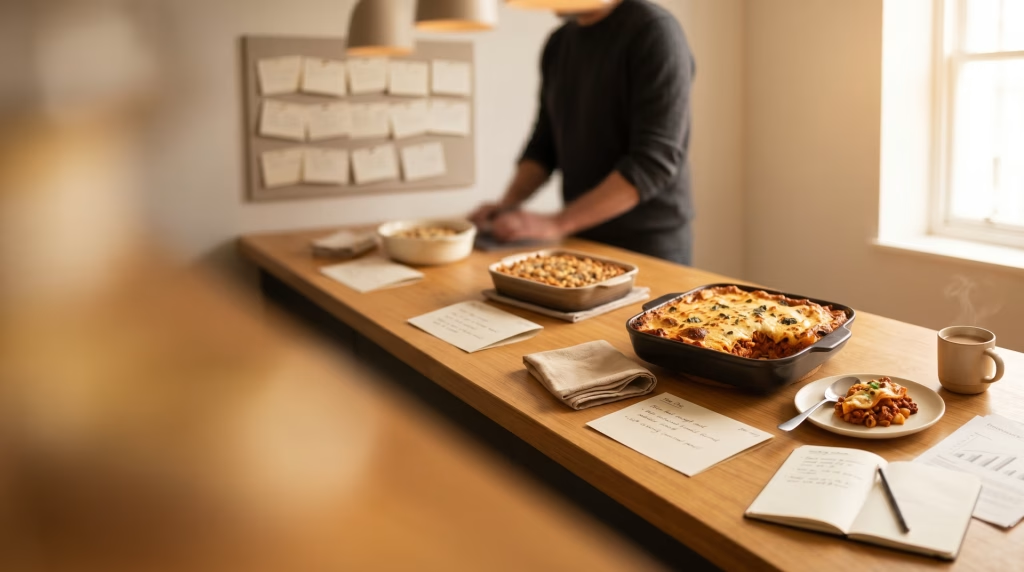
Future Food Pipeline Builder
A structured methodology for building credible, sequenced, executable food and drink innovation pipelines.
-

Hothouse
For when you need an urgent burst of creativity, clarity & objectivity. Let our experts take the brief off your hands, build the right stim & develop finished concepts.
-
Needs Landscaping
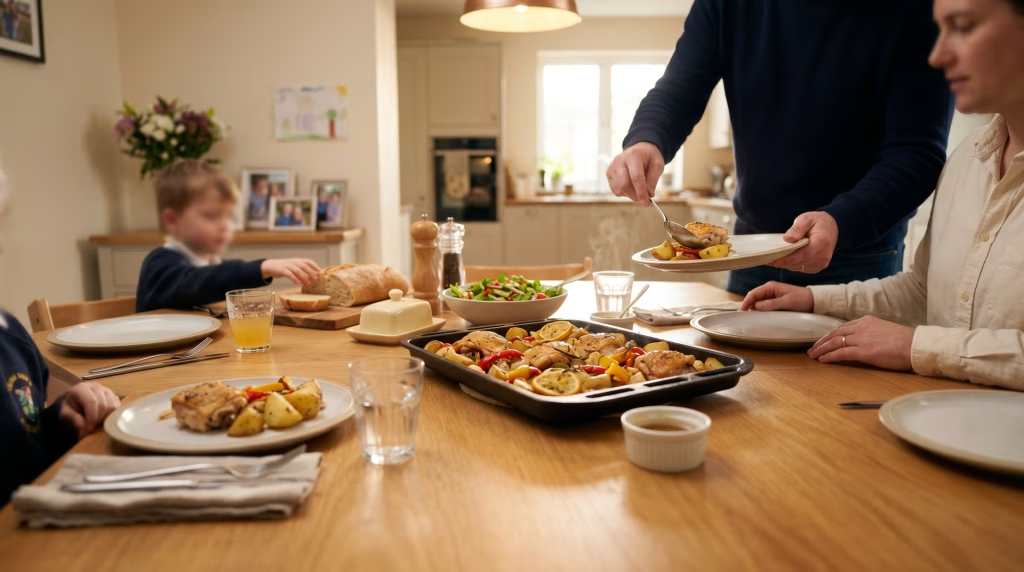
Structured consumer-needs mapping that surfaces the unmet, under-served and emerging needs worth commercial attention.

View our case studies
-

Burger King
Burger King needed in-depth consumer testing of two new burger builds across multiple variants before launch. FIS Group delivered a real-store central location test with penalty analysis and innovation expert input, providing precise optimisation insight and benchmarks to inform future menu development.
-
Geeta's
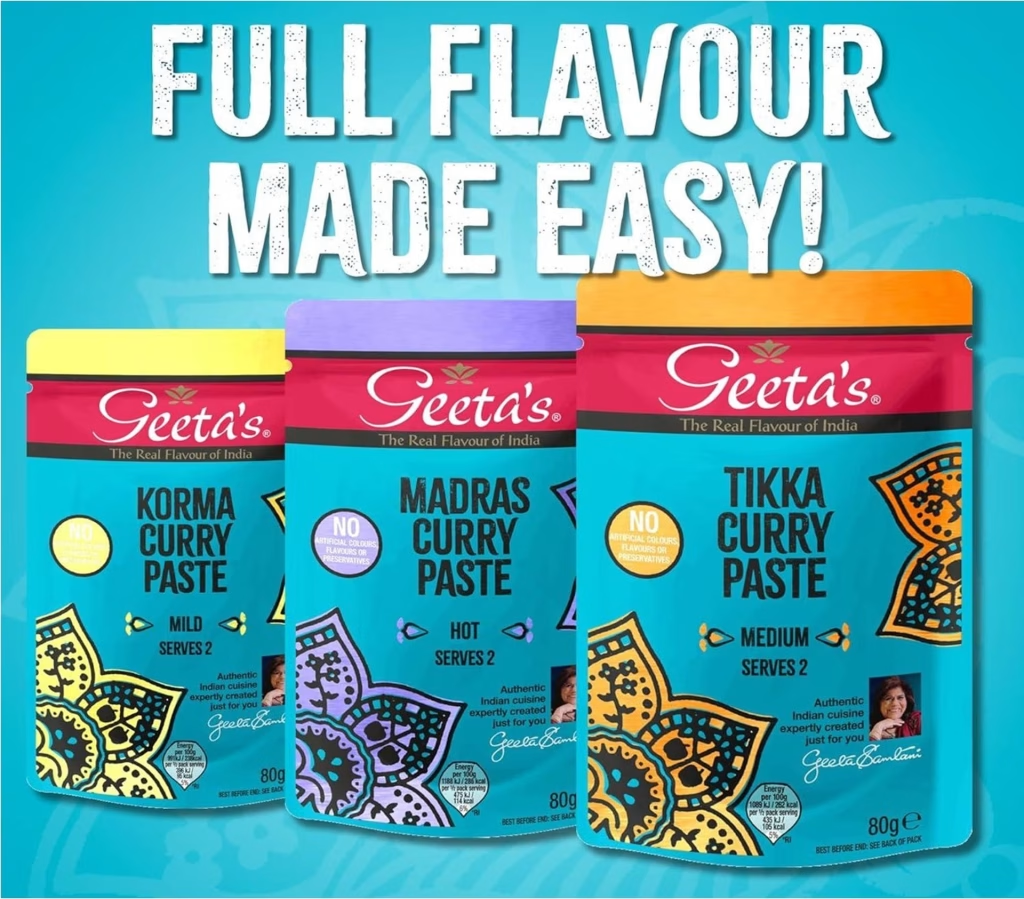
Geeta's commissioned FIS Group to expand their portfolio into curry pastes and chutneys, building on a successful earlier partnership. We developed three new paste flavours in pouch format and a range of savoury chutney recipes, each rooted in authentic Indian flavour but designed for UK consumers and existing manufacturing capabilities.
-

Mars
Mars needed a true research partner to decode consumer meal behaviour across three markets. FIS Group delivered a bespoke Meal Moments programme combining in-the-moment diary capture, qualitative exploration and strategic workshop facilitation – turning occasion-level data into immediate commercial direction.
FAQs
Opportunity Mapping works at the strategic level: identifying and prioritising the opportunities worth committing to across the full opportunity universe. Platform and Territory Building goes deep on a single (or small set of) priority platform: developing the proposition, building the territory, scoping the audience and occasion, sizing the commercial reality, building the activation roadmap. The two often run together: the mapping identifies the priority platforms, the platform and territory work then goes deep on them one by one.
Future Food Pipeline Builder works at the pipeline-architecture level: sequencing multiple platforms across a three-year horizon, with the architecture and dependencies explicit. Platform and Territory Building goes deep on individual platforms: specifying them concretely enough that brand, NPD, design and commercial teams can build against them. The two often run together: pipeline architecture sequences the platforms, platform and territory work develops the specification for each one.
Most brand strategy agencies do platform work as part of brand identity development, with the focus on positioning, brand expression and creative territory. Our work is broader: the platform specification covers proposition, territory, audience and occasion, commercial sizing and activation roadmap, integrated together by the same senior team. Brand strategy work often produces strong creative territories that lack commercial specification; pure commercial work often produces strong sizing without creative territory. Our work integrates both, with the food and drink sector specialism that brand strategy agencies typically lack.
That is the question this service exists to answer. The structural feature of our methodology is that the specification is built backwards from execution rather than forwards from strategy. The proposition is articulated concretely. The territory has explicit boundaries. The audience and occasion are scoped specifically. The sizing is broken down to where it can be acted on. The activation is sequenced with decision gates. If any dimension is left too abstract to brief against, we re-work it rather than ship it. We will tell you straight at the scoping stage if your brief is at risk of producing a platform that is hard to build, and we will recommend tightening the scope before the work starts rather than after.
Yes. Multi-platform development is a common variant, particularly for clients with multiple priority platforms identified through opportunity mapping or pipeline work. The work is scoped to develop the platforms together so the architecture is coherent across the portfolio, with the territory boundaries clear enough that the platforms do not overlap or contradict each other commercially. Multi-platform work takes longer than single-platform work and costs more, but the integrated coherence is usually worth it for portfolio briefs.
Brand and visual identity development sits adjacent to but slightly outside our platform and territory building scope. We build the platform specification including the territory architecture (the commercial and creative space the platform owns), the proposition (what the platform stands for), and the brand-relevant scoping (language, tone, audience). The visual identity execution (logos, design systems, creative artwork) is typically delivered by brand or design agencies working from our platform specification. We work alongside those agencies on most platform projects, with the platform specification as the brief they execute against.
Platform refresh work is a common variant. The work picks up the existing platform, evaluates what is still credible commercially and what has been overtaken by audience shift, competitive movement or category evolution, and rebuilds the dimensions that need replacing while retaining what is still working. We will tell you straight at scoping what needs rebuilding and what can be picked up from the existing platform, including the case for not refreshing if your existing platform is still genuinely fit for purpose.
Ten to fourteen weeks from scoping call to briefable specification is the typical window for single-platform development. Multi-platform development typically runs fourteen to twenty weeks depending on the number of platforms and the depth of activation work required. Compressed timelines are possible where the strategic foundation is already strong (opportunity mapping in place, audience and territory decisions locked) and the platform is being developed rather than refreshed from scratch. We give realistic timelines at proposal stage.
Yes, and this is one of the most common uses of the work. The platform specification gives brand, NPD, design and commercial teams a shared reference point that they can all brief against rather than each developing their own version of the platform from a strategic deck. The activation roadmap is designed for cross-functional use alongside the proposition and territory architecture, with the specification formatted to be picked up by each execution team in the form they actually work with.
Project-based, scoped against the platform scope, the depth of specification required, the audience and occasion complexity, the geographic coverage and the activation roadmap detail. Single-platform UK development is the lowest entry point; multi-platform multi-market development with full activation toolkit is the highest. We give a clear, all-in quote at proposal stage with no hidden extras, and we will tell you straight if your budget will not buy the depth your brief requires.
Got a priority platform that needs to be specified, not just described?
Tell us the priority platform (or set of platforms), the strategic context, the execution teams that have to brief against the work, and the timeline. We will tell you whether platform and territory building is the right tool, what scope makes sense, what depth of specification the brief requires and what it will cost. Twenty minutes on a call. No qualifying call before the qualifying call.