
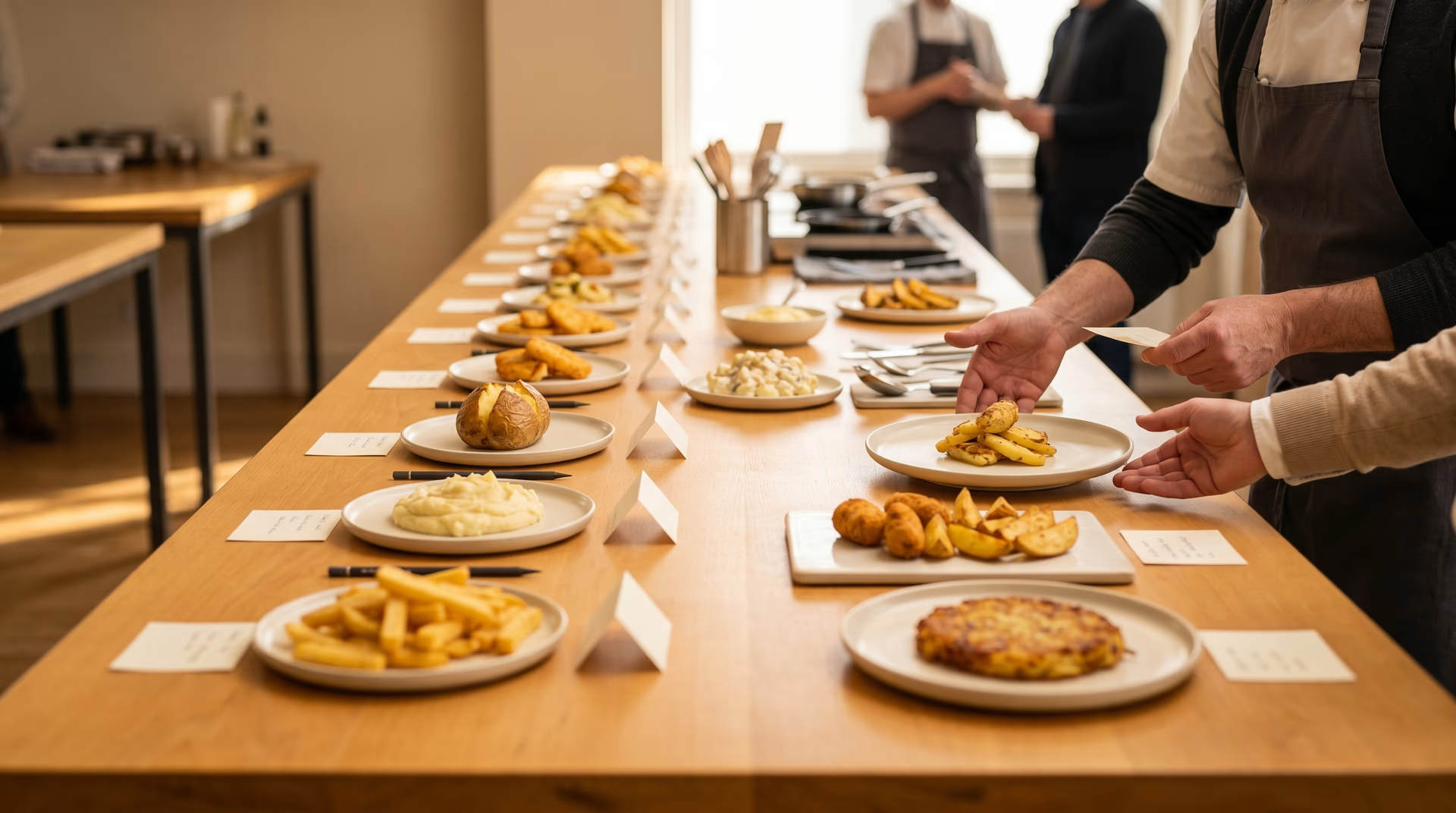
When the showcase has to earn commercial follow-on, not just creative recognition
Most food and drink showcase work fails at the same point. The applications look creative and culinary-credible. The team is pleased with the work. The showcase event runs well. But six months later, the commercial follow-on has not materialised: the trade audience did not list the products that the showcase was meant to demonstrate; the strategic partner did not progress the conversation the showcase was meant to advance; the internal team did not commit to the capability the showcase was meant to validate. The showcase was creatively successful but commercially inert.
The structural problem is that most showcase work is commissioned as creative work first and commercial work second. The brief focuses on what the showcase will look like rather than on what the showcase needs to achieve. The audience and the commercial follow-on are treated as backdrop rather than as design constraints. The creative work is technically right but commercially disconnected because the audience’s commercial decision-making logic was not built into the brief from the start.
Demonstration work engineered to win commercial follow-on.
Application Showcases is the integrated methodology for showcase work that demonstrates capability while earning commercial follow-on. The work scopes the showcase against the commercial decision the audience has to make (will the buyer list this, will the partner progress this, will the leadership commit to this) and designs the applications backwards from that decision. Senior culinary and innovation specialists deliver the showcase work; senior commercial specialists scope the audience and the commercial framing. Output is showcase work that lands in front of the audience designed to earn the commercial follow-on, not just to demonstrate that the work was done.
It is not the right tool for every brief. If the brief is developing new products for commercial deployment, R&D Sprints (FMCG) or Menu Development (foodservice) are the right tools. If the brief is consumer testing rather than trade demonstration, Product Testing or Menu Testing are structurally different. If the brief is pure creative work with no commercial follow-on intent, specialist creative agencies are more proportionate. Application Showcases sits specifically when the brief is demonstration work designed to advance a commercial conversation.
What we do differently
-
Showcase work scoped against the commercial decision the audience has to make
The structural difference between Application Showcases and creative-only showcase work. Our methodology starts with the commercial decision the audience has to make (will the buyer list this, will the partner progress this, will the leadership commit to this) and designs the showcase work backwards from that decision. The applications themselves are creatively credible but they earn that credibility through the commercial framing the audience needs to see, not just through chef ambition. The commercial logic is the design constraint, not the creative ambition.
-
Senior culinary credibility plus commercial framing throughout
The methodological core. Most showcase work comes from one of two backgrounds: culinary agencies that produce creative work without commercial framing, or marketing agencies that produce commercial framing without culinary credibility. Both produce showcases that fail predictably. Our team brings together senior culinary specialists (working at the tiers the audience expects to see) with senior commercial specialists who scope the audience and the commercial follow-on. The integration is what makes the showcase commercially purposeful rather than just creatively interesting.
-
Audience-led methodology, not creative-led
Most showcase briefs start with the creative ambition (let us show what we can do) and find the audience afterwards (who shall we invite). Our methodology starts with the audience (who specifically needs to see this, what commercial decision are they making, what evidence do they need to advance) and scopes the creative work against that audience. The result is showcases that land with the people they need to land with, designed to advance the specific commercial conversations the showcase is meant to support.
-
Integrated with the broader innovation toolkit
Application Showcases sits as a specialised service within the broader Challenge 04 innovation work. Showcases often follow R&D Sprints or Menu Development work (where the development produces capability that needs commercial demonstration), or Challenge 03 ideation work (where the ideation produces directions that need trade validation). The integration is built in: showcases are scoped against where they sit in the broader innovation programme, not as standalone events disconnected from the wider work.
What we use Application Showcases for
B2B ingredient or technology showcase for trade audiences
You are an ingredient manufacturer, food technology company or supplier and need to demonstrate what your product enables to retail buyers, foodservice operators or brand teams. Application Showcases scopes the showcase against the specific commercial decision the trade audience is making (will they specify, will they list, will they integrate), develops applications that demonstrate possibility at the credibility level the audience expects, and lands the work in front of the audience the conversation needs to advance with.
Capability demonstration for retailer or foodservice buyer pitches
Your team is pitching capability to a retailer or foodservice buyer (new range possibilities, own-label development credentials, new tier or category capability) and needs showcase work that earns the listing decision rather than just demonstrates creative range. Application Showcases scopes the showcase against the specific buyer commercial logic, develops applications that match the buyer’s listing criteria, and lands the work in the buyer review meeting designed to advance the listing conversation.
Internal capability showcases for cross-functional alignment
Your senior leadership, board or cross-functional team needs to see what specific capabilities can deliver before committing investment to broader innovation programmes. Application Showcases provides the capability demonstration scoped against the internal commercial decision (will the leadership invest, will the board approve, will the cross-functional team align), with the applications designed to make the case visible rather than to demonstrate creative breadth alone.
Strategic partnership showcase work
You are progressing a strategic partnership conversation (joint development, brand partnership, supply partnership, capability JV) and need showcase work that demonstrates what the partnership could deliver. Application Showcases scopes the showcase against the partnership commercial logic, develops applications that show the partnership working in product reality, and lands the work in the partnership conversation designed to advance the deal.
Trade show and industry event applications
You are exhibiting at a major trade show, industry event or category showcase moment and need application work that earns commercial outcomes from the event (trade conversations advanced, buyer meetings booked, partnership conversations progressed). Application Showcases scopes the showcase against the event commercial purpose, develops applications that match the audience the event delivers, and supports the event execution so the showcase translates into commercial follow-on rather than into creative recognition alone.
Press, PR and category education moments
You are leading category education work (new ingredient category, emerging technology, sustainability development, new sourcing model) and need application work that demonstrates the category possibility to media, trade press and broader food and drink audiences. Application Showcases develops applications scoped against the education narrative and the commercial purpose underneath it, so the press moment translates into commercial credibility for the work the showcase represents.
-
How an Application Showcase project runs
From audience and commercial purpose to commercial follow-on
-
Scoping call.
Twenty minutes on a call. You tell us the audience, the commercial decision the audience is making, the commercial follow-on you need to earn, the existing capability or development the showcase needs to demonstrate, the event or context the showcase will run in, and the timeline. We tell you whether Application Showcases is the right tool, what format makes sense, what cross-functional team composition the brief requires and roughly what it will cost. Where the brief would be better served by R&D Sprints (FMCG product development), by Menu Development (foodservice menu work), or by creative agency work without commercial intent, we will recommend the right alternative honestly.
-
Audience and commercial framing.
Senior commercial specialists scope the audience and the commercial framing in detail: who specifically needs to see the showcase, what commercial decision they are making, what evidence they need to advance the decision, how the showcase output will be measured against commercial follow-on. The audience and commercial framing is signed off by the client before the application brief opens, so the creative work is scoped against agreed audience and commercial parameters rather than against creative ambition alone.
-
Application brief and development.
Senior culinary and innovation specialists develop the application brief backwards from the audience and commercial framing: which applications demonstrate the commercial logic the audience needs to see, what culinary credibility level the audience expects, what executional fidelity the showcase requires. Development runs against the application brief with cross-functional input throughout (culinary, innovation, commercial specialists working together).
-
Showcase execution.
The showcase work is delivered to the audience in the context the brief requires: trade event, buyer review, internal capability presentation, strategic partner meeting, press moment. Senior team is present at the execution to support the commercial conversation alongside the application work, with the applications themselves prepared to the executional standard the audience expects rather than at demo-kitchen quality alone.
-
Follow-on support.
Application Showcases includes follow-on support after the showcase event: documentation of the applications and the showcase for ongoing commercial conversations, integration with the client team's commercial follow-up workflow, support for the specific commercial decisions the showcase was meant to advance. The follow-on phase is where most generic showcase work ends; for us it is where the showcase commercial value is captured.
Three formats. Scoped against the audience, the application volume and the showcase ambition.
Application Showcases flexes against the brief and the showcase context. The three formats below are the typical shapes we run, with the format selected at scoping rather than assumed. Focused showcases for defined audiences with specific commercial purpose; trade showcase programmes for broader audience reach across multiple events; strategic capability showcases for the most significant capability demonstration briefs.
Focused Showcase
Single showcase event for a defined audience (one buyer pitch, one partnership conversation, one internal capability presentation), typically four to ten applications scoped against the specific commercial decision. Suited to focused commercial conversations where the audience and the commercial follow-on are clearly defined. Typically delivers within four to six weeks of scoping including event execution. The most common Application Showcase format and the cleanest commercial proposition.
Trade Showcase Programme
Multi-event showcase programme across a defined audience set, typically ten to twenty applications running across multiple trade events, buyer pitches or industry moments. Suited to B2B ingredient and technology showcase work where the audience reach justifies multi-event programming, range demonstration work, or sustained capability positioning across the trade calendar. Typically runs across six to twelve weeks with multiple execution moments.
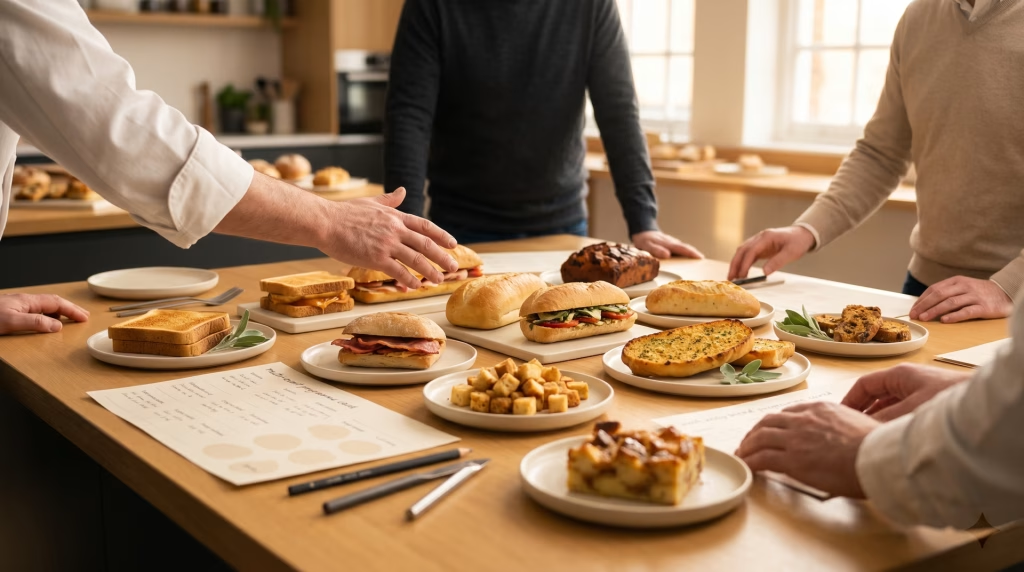
Strategic Capability Showcase
Major capability demonstration for senior commercial decisions (board investment, strategic partnership commitment, leadership capability case), typically with deeper application development (more development per application, higher executional fidelity, more sustained follow-on support). Suited to the most significant showcase briefs where the commercial decision being advanced is substantial. Typically runs across eight to fourteen weeks with sustained follow-on support.
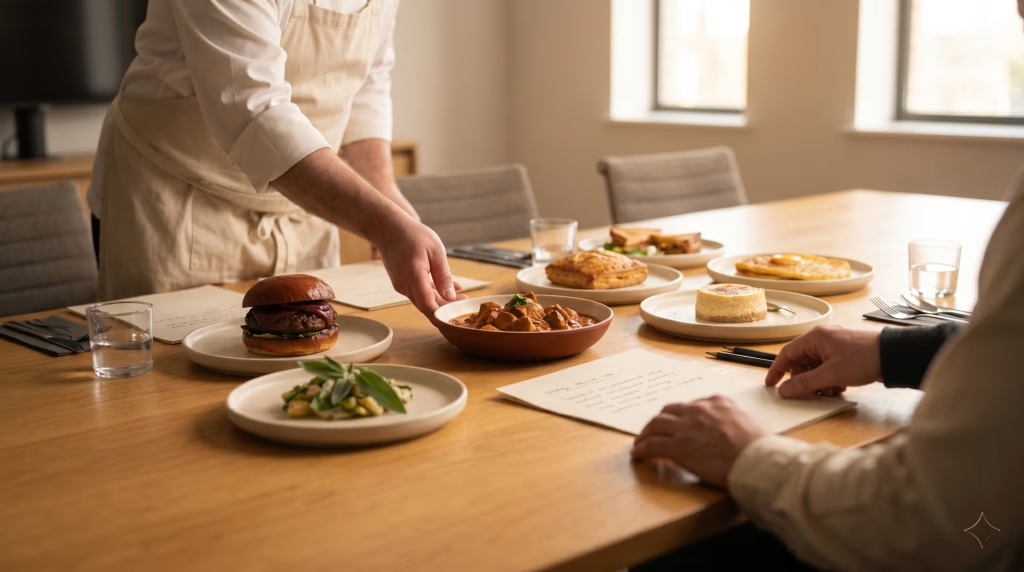
Food and drink is all we do
We are not a creative agency that takes the occasional showcase brief or a marketing consultancy that adds culinary work on the side. Food and drink is the only sector we work in, and the showcase work is scoped backwards from the commercial decisions the audience has to make. Our senior culinary specialists understand the tier credibility audiences expect to see; our senior commercial specialists understand the commercial logic the audience is making decisions against. The integration is what makes the showcase commercially purposeful rather than just creatively interesting.
That focus is why we work with 11 of the UK’s top 40 food and drink brands.
Other ways to build, test and refine what wins
Application Showcases is one tool in the broader Build, Test & Refine What Wins toolkit. Depending on the brief, one of these might be a better fit, or a stronger partner alongside the Showcase work.
-
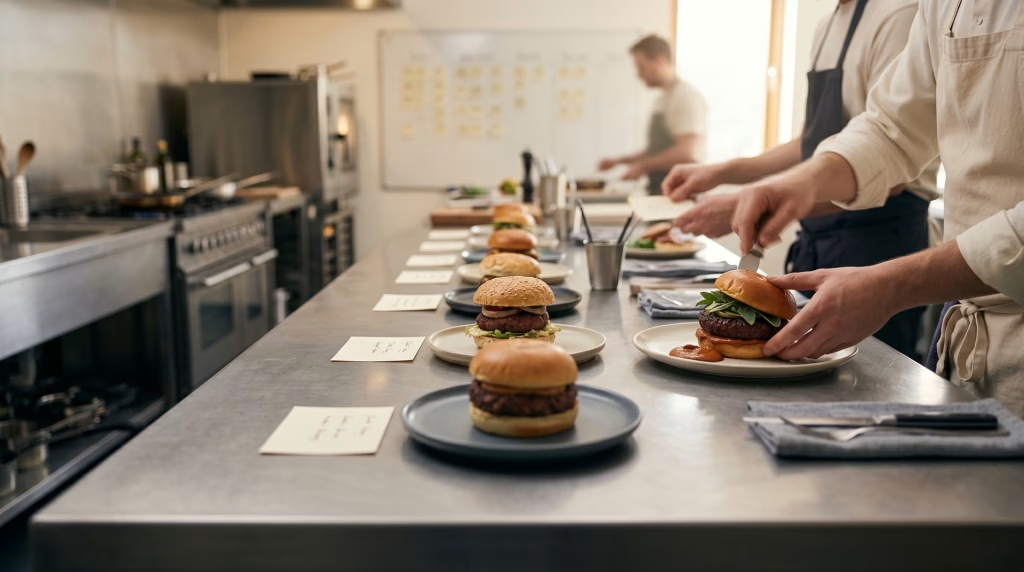
R&D Sprints
A compressed R&D methodology designed for food and drink innovation work where speed matters as much as quality.
-
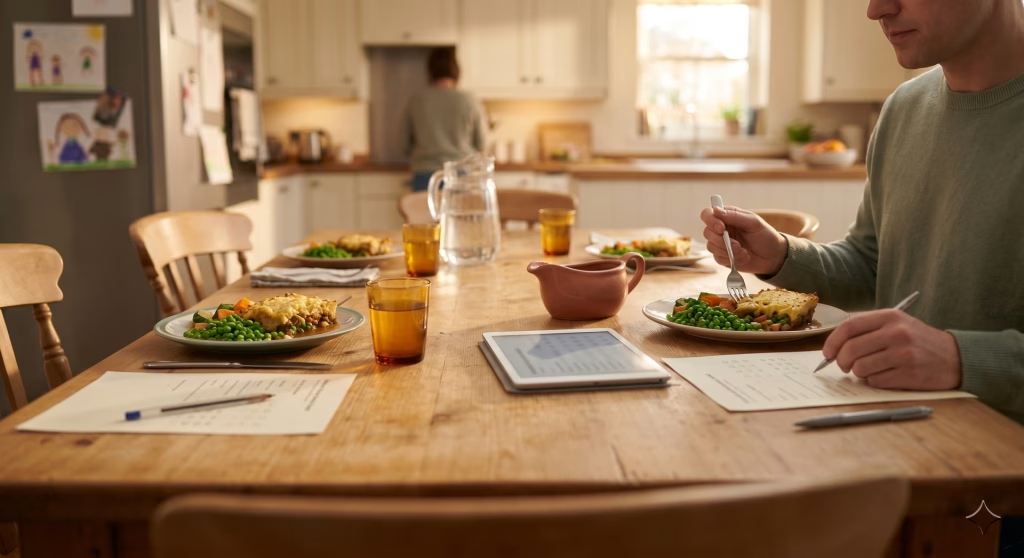
Product Testing (IHUT, CLTs, in-restaurant)
Specialist consumer product testing for food and drink innovation.
-
Menu Development
Specialist menu development for foodservice, QSR, restaurants, hospitality and contract catering.

View our case studies
-
Factor 75
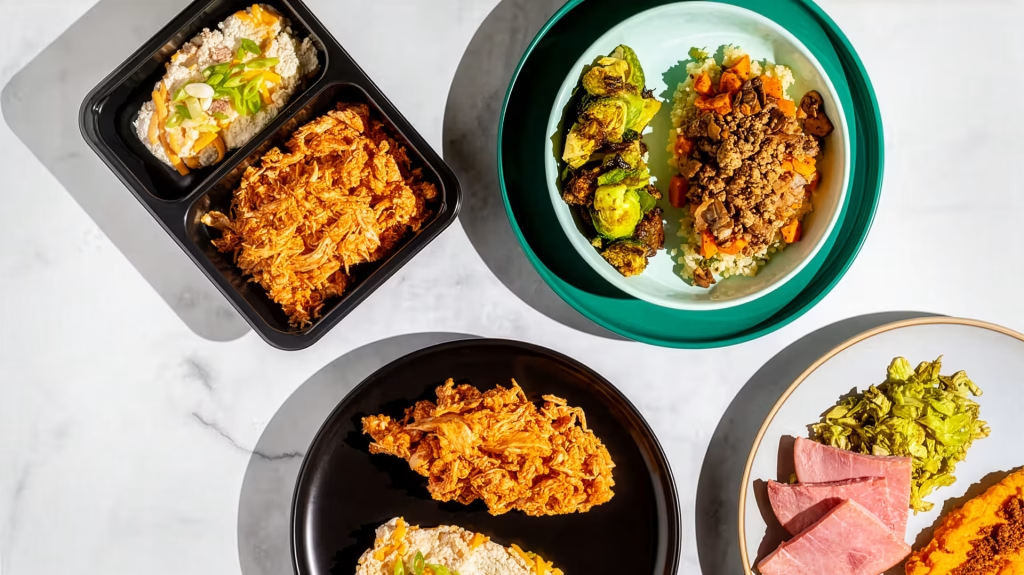
Factor 75 needed rapid recipe development across multiple dietary requirements while integrating seamlessly with their existing process. FIS Group embedded a development team inside Factor's Chicago facility, delivering 25 compliant recipes across GLP-1, keto and low carb requirements and establishing a scalable model for ongoing portfolio expansion.
-

Oscar Mayer
Oscar Mayer needed category understanding in convenience and discount channels that could drive retailer conversations. FIS Group delivered a multi-phase programme combining quantitative, qualitative and innovation expertise, turning research into a commercial asset at the negotiating table.
-

Superkeen
Superkeen needed rapid development of allergen-free products to support their expansion beyond cereals. FIS Group delivered a fast-paced sprint across two categories – nut butter concepts and tigernut cereal bars – producing signed-off gate zero samples meeting strict AIP requirements, ready for manufacturing briefs.
FAQs
Commercial purpose. R&D Sprints handles compressed FMCG product R&D for commercial deployment (working prototypes ready for retail). Menu Development handles foodservice menu architecture and items for operational deployment (kitchen-ready menus that go into live service). Application Showcases handles demonstration work for trade audiences, retailer buyers, foodservice operators, strategic partners and internal leadership (applications designed to advance commercial conversations, not for commercial deployment themselves). Different briefs, different deliverables. Many programmes commission Application Showcases alongside Sprints or Menu Development: the development work produces the capability, the Showcase demonstrates it to the audiences that need to see it.
Not guaranteed, because commercial follow-on depends on the audience’s commercial decision as much as on the showcase. But the methodology is built specifically for follow-on rather than for creative recognition: the audience and commercial framing are scoped first, the applications are designed backwards from the commercial decision, and the follow-on support is built into the deliverable. We will tell you straight at scoping what commercial follow-on the methodology can realistically support and what depends on factors outside the showcase (audience commercial context, competitive pressure, internal client team capacity to follow up). The honesty is part of what justifies the methodology over creative-only showcase work.
Multiple audience types depending on the brief. B2B trade audiences (retail buyers, foodservice operators, brand teams considering ingredient or technology adoption). Strategic partners (potential JV partners, brand collaborations, supply partnerships). Internal audiences (senior leadership making investment decisions, board approvals, cross-functional alignment). Press and trade media for category education work. We scope the right audience methodology at the start, with the understanding that the audience type changes the showcase design significantly (a B2B trade showcase is structurally different from an internal capability case).
Multiple integration models depending on the brief. Some Showcases run entirely externally with our team scoping, developing and executing the work, with the client team engaged at brief, sign-off and execution moments. Some run as integrated work with the client team embedded in the development (where the showcase represents capability the client team needs to own ongoing). Some run as capacity-augmentation when client teams are committed elsewhere but the commercial moment requires external support. We design the integration model at scoping.
The showcase event itself (or the showcase moment if not a standalone event) plus the surrounding documentation that supports commercial follow-on. Specifically: the application work (developed, presented and executed to the brief), the showcase context (event delivery, presentation materials, supporting context), the documentation that captures the showcase for ongoing commercial conversations (visual record, application specifications where relevant, commercial framing materials), and the follow-on support workflow with the client team for the specific commercial decisions the showcase was meant to advance.
Four to six weeks for focused showcases from scoping to event execution. Trade showcase programmes typically run six to twelve weeks across multiple execution moments. Strategic capability showcases run eight to fourteen weeks with sustained follow-on support. Compressed timelines are possible for focused briefs where the application capability is already developed (and the showcase is about commercial framing and execution rather than development). Realistic timelines at proposal stage based on the application development requirement.
We deliver Application Showcases at trade shows, industry events, retailer category days, foodservice operator meetings, partnership events and press moments. Trade show delivery is operationally more complex than standalone showcase work because of the event constraints (timing, stand context, audience flow, competitive context), and we will scope the trade show specifics at the start to confirm the commercial purpose can be served credibly within the event constraints. Where the trade show context does not support the showcase commercial purpose, we will be honest about that and recommend a different format.
Yes, in markets where the audience and the application capability align. UK and European Application Showcases run through our established trade, retailer, foodservice and strategic partner relationships. US and UAE showcase work is operationally feasible for specific briefs but requires scoping honestly because the audience commercial context (trade norms, listing logic, partnership norms) varies materially between markets in ways that affect the showcase methodology.
Yes, and this is a common commissioning structure for major commercial moments. Application Showcases sits naturally alongside Challenge 04 development work (R&D Sprints, Menu Development) where the development produces capability that needs trade demonstration, alongside Challenge 03 ideation work (Co-creation, Hothouse, Creative Workshops) where the ideation produces direction that needs trade validation, and alongside Challenge 05 services (Retailer Pitch Support, Briefing Pack Creation) where the showcase is part of broader commercial launch work. We will scope the right combination at the scoping call.
Project-based, scoped against the format (focused, trade programme, strategic capability), the application volume, the audience and execution context, the cross-functional team composition, and the depth of follow-on support. Focused single-event UK showcases are the lowest entry point; strategic capability showcases with sustained follow-on are the highest. We give a clear, all-in quote at proposal stage with no hidden extras, and we will tell you straight if your commercial purpose would be better served by a different service combination.
Got a showcase that needs to earn commercial follow-on, not just creative recognition?
Tell us the audience, the commercial decision the audience is making, the commercial follow-on you need to earn, the capability the showcase needs to demonstrate, the event or context, and the timeline. We will tell you whether Application Showcases is the right tool, what format makes sense, what cross-functional team composition the brief requires and what it will cost. Where R&D Sprints, Menu Development or another service would be better, we will recommend that honestly.