
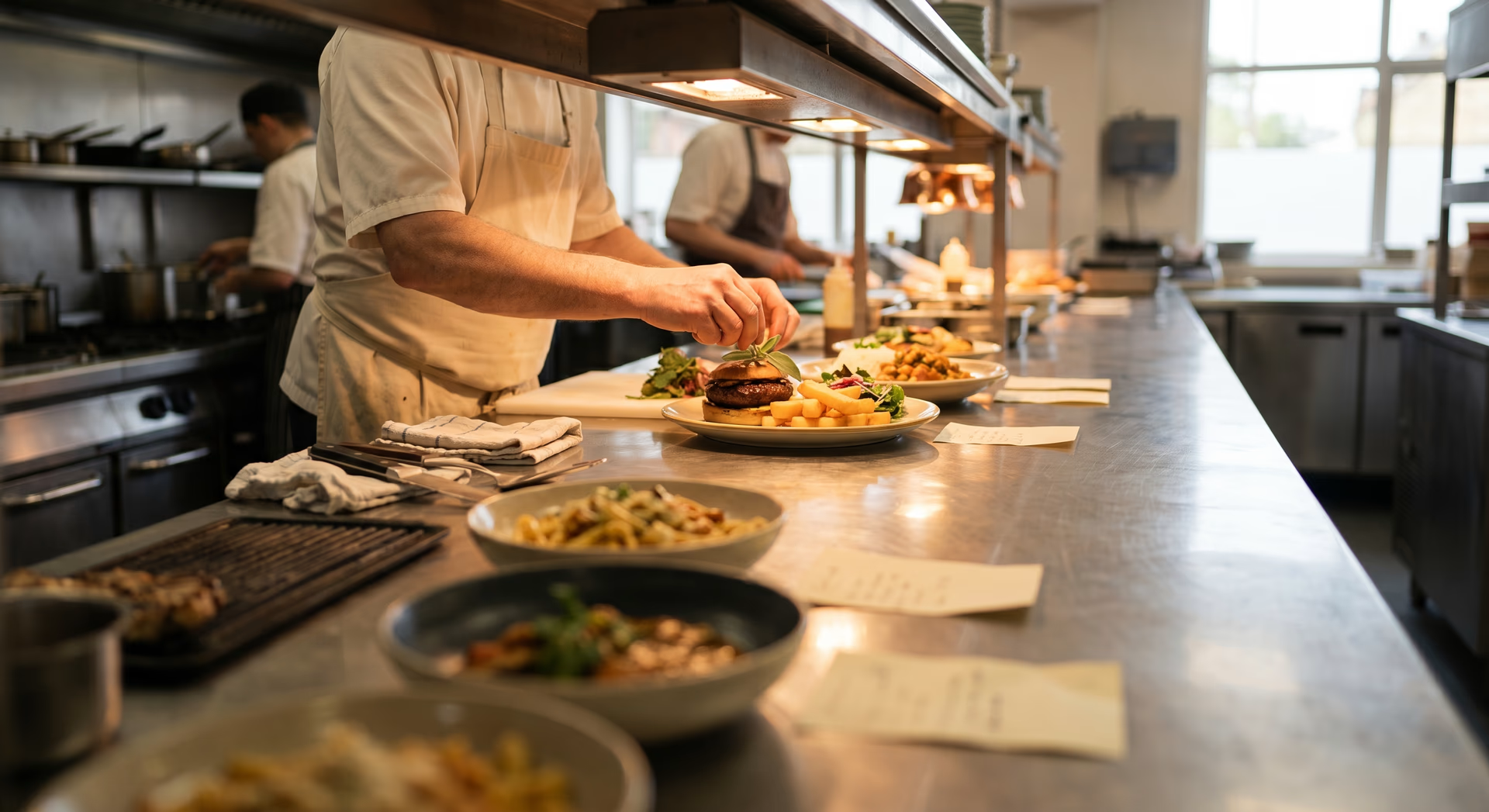
When a menu needs to excite customers, not just survive service
A great menu does a lot of heavy lifting. It gives people a reason to choose you over everywhere else on the street, it earns its place on social media, it drives the marketing, lifts average spend and brings customers back. And then, every single service, it has to actually work: real kitchens, real staff, real timings, real allergen management, real cost per plate. Most menu development is strong on one of those sides and weak on the other.
Some menus look brilliant and read beautifully, then fall apart in the kitchen. The dishes cannot be made consistently at volume, the costings do not hold, and the whole thing gets reworked at real expense. Others are operationally tidy, commercially safe and completely forgettable, with nothing to talk about, nothing to post and nothing to make anyone walk in. It usually comes down to who built the menu: culinary teams that understand food but not kitchen operations, or operations specialists who understand kitchens but cannot create dishes people get excited about.
Menu Development brings both together. We pair senior culinary talent with deep knowledge of consumer and food trends, and build operational reality in from the first conversation rather than bolting it on at the end. The result is menus that create genuine excitement, dishes worth talking about and worth posting, an offer that drives sales and footfall, all of it costed, consistent and ready for a real kitchen. This is the part of the industry we love most, and it shows.
It is not the right tool for every brief. If you are working on FMCG product development rather than foodservice menus, R&D Sprints is the better fit, a different commercial context with a different output. If you already have a menu and want to know how it performs with real consumers, Menu Testing is the place to start. If the brief is purely operational, kitchen workflow and cost management with no culinary development, a specialist operations consultancy is more proportionate. Menu Development is for menu work that needs culinary credibility and operational reality built in together.
What we do differently
-
Culinary credibility and operational reality integrated from the start
The structural difference between integrated menu development and the typical culinary-or-operational split. Our team brings together senior culinary specialists (chefs working across the tiers from Michelin through to QSR) with food and drink innovation expertise and operational kitchen specialism. The cross-functional working means operational reality is built into the development as a design constraint rather than discovered as a problem afterwards. Items go to operational pilot with the cooking reality already accounted for, not learnt at pilot stage when reworking is expensive and the launch window is tight.
-
Menu architecture work alongside item development
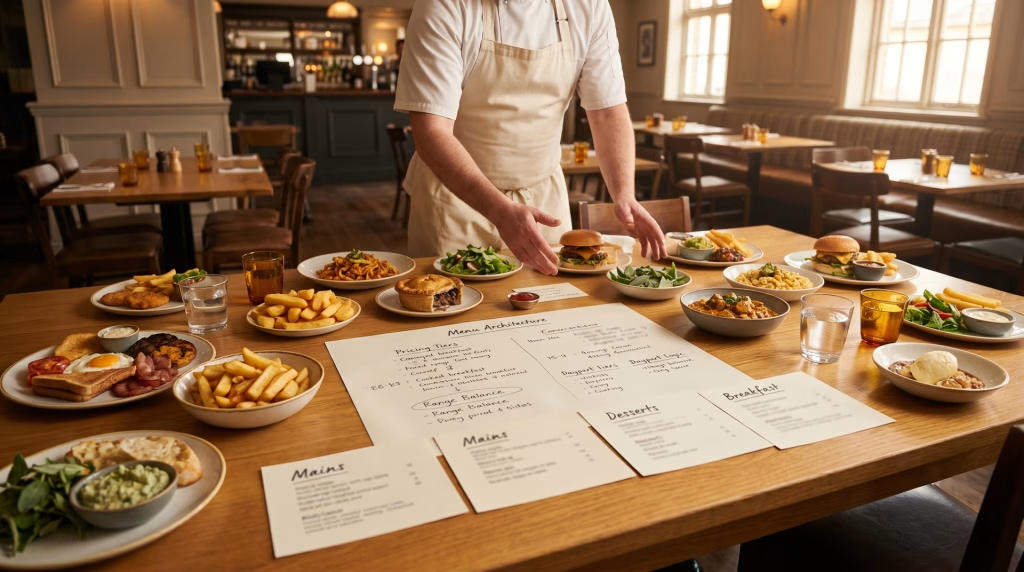
The methodological flexibility. Most menu development services focus on item-level work (new dishes, LTO development, seasonal additions). Important but incomplete. The menu architecture work (range balance, daypart logic, pricing tier strategy, range coherence across the menu) is what determines whether the items actually work commercially when they reach the menu. Our menu development handles both: the items themselves and the menu architecture they sit within, scoped at the brief level so the buyer commissions the right depth without paying for architecture work the brief does not need.
-
Senior food and drink specialists with foodservice channel depth
The team composition. Foodservice is structurally different from FMCG in ways generic food and drink agencies miss: the channel commercial reality (cost in cup, gross profit, day-part economics), the operational reality (kitchen workflow, staff capability, prep time, equipment limits), the consumer reality (occasion expectations, menu engagement, decision-making at point of order). Our senior team works in foodservice continuously rather than dipping in from FMCG, which is why the development lands as commercially credible to foodservice leadership rather than as an outsider view of how restaurants should work.
-
Designed to feed forward into Menu Testing and operational pilot
Menu Development output is built for the next phase: menu items ready for Menu Testing (consumer evaluation in real foodservice context) or for operational pilot (real-kitchen, real-staff, real-time trial), depending on the brief. The methodology produces operational-ready output rather than development specifications, which closes the gap between menu development and menu deployment. The two services (Menu Development and Menu Testing) often run together as a sequence in major menu briefs.
What we use Menu Development for
Menu refresh and major menu architecture work
Your menu needs significant refresh: items underperforming, range balance off, daypart logic outdated, customer feedback signalling time for change. Menu Development runs the full menu work end-to-end: menu audit, architecture rework, item development for the new range, integration with the existing items that stay. Output is the refreshed menu ready for operational pilot or phased rollout, with the rationale defensible against operator, franchisee or board scrutiny
LTO and seasonal menu development
Your operational rhythm includes LTOs (limited time offers), seasonal menus, festive ranges or campaign-anchored menu work. Menu Development applies to focused brief work: developing the LTO range against the brief, scoping the operational reality (kitchen workflow, prep, allergen management), delivering kitchen-ready items within the campaign timeline. Designed to deliver LTO menus that perform at operational scale, not just at the demo kitchen.
Daypart menu development
Your menu needs daypart-specific development (breakfast, lunch, dinner, late-night, all-day) where the items and architecture have to work for the specific occasion. Menu Development handles the daypart logic explicitly: which items work at which times, how the menu reads at each daypart, what the operational implications are of running different menus across the day. Often commissioned alongside daypart strategy work that defines the commercial opportunity per daypart.
Range rationalisation alongside new development
Your menu has too many items and the range needs rationalising while new items get developed to replace the cuts. Menu Development handles both: which items go (based on performance, operational complexity, range balance), which stay (the core that defines the menu), which get developed (the new items that earn their place in the rationalised range). Output is a tighter, sharper, commercially stronger menu with the rationalisation logic clear.
New restaurant or brand launch menu
You are launching a new restaurant brand, new format, or new concept and need the menu developed from scratch. Menu Development scopes the menu architecture against the brand strategy and operational model, develops the items against the architecture, and delivers the launch menu ready for operational pilot. Often run alongside Concept Screening or Co-creation work that validated the brand direction, with the Menu Development translating the brand direction into deliverable menu.
Hospitality and contract catering menu work
Your hospitality operation (hotel F&B, event catering) or contract catering operation (workplace, education, healthcare) needs menu development specific to that channel context: occasion expectations, operational constraints, contract commercial realities. Menu Development applies the methodology to the specific channel context rather than treating hospitality and contract catering as variants of restaurant menu work, because the commercial reality is structurally different in ways generic menu agencies miss.
-
How a Menu Development project runs
From brief to kitchen-ready menu
-
Scoping call.
Twenty minutes on a call. You tell us the menu brief, who your customer is, the operational context (channel, format, kitchen type, scale), the strategic context (brand position, commercial targets, daypart logic), the output target (item set, range, full menu) and the timeline. We tell you whether Menu Development is the right tool, what format makes sense, what the brief requires, and roughly what it will cost. Where the brief would be better served by consumer research, R&D Sprints, Menu Testing or specialist operations consultancy, we will recommend the right alternative honestly.
-
Menu architecture and item brief.
Senior team scopes the menu work against the brief: menu architecture decisions (range balance, daypart logic, pricing tier strategy) where the brief requires architecture-level work, item briefs for the development work (creative brief, operational constraints, commercial parameters, allergen and dietary requirements). The brief structure is signed off by the client before the development phase opens, so the development is scoped against agreed parameters rather than discovered through development.
-
Development and culinary work.
Senior culinary specialists develop the items against the brief, with food and drink innovation expertise integrated throughout. Items go through multiple development iterations with cross-functional review (culinary, innovation, operational specialists working together rather than sequentially). The methodology produces items at culinary credibility levels while keeping operational reality as an active design constraint throughout the development.
-
Operational reality check.
Before the items are handed over, they are tested against operational reality: cooking in conditions that match the operational kitchen (equipment, staff capability, timing, scale), full costing built against the operational commercial parameters, allergen and dietary documentation, prep and service workflow checked. The operational check is not a separate phase added afterwards; it runs alongside the development from the start, but this is the formal sign-off point before handover.
-
Deliverable handover.
The menu deliverable is handed over scoped for the next phase: items with full specifications (recipe, prep, plating, costing, allergens, equipment requirements), menu architecture documentation (where architecture work was in scope), operational rollout recommendations, integration with internal culinary team for ongoing menu management. The deliverable lands within two to three weeks of the final development iteration, ready for Menu Testing, operational pilot or direct rollout depending on the brief.
Item-focused development
Focused development of specific dishes or menu items against a defined brief, typically four to eight items. Suited to LTO development, seasonal additions, focused range extensions, specific dish briefs (signature dishes, response to gaps in the menu). Architecture work is light or out of scope. Typically delivers kitchen-ready items within four to six weeks of scoping
Range development
Menu section or daypart range development, typically eight to fifteen items plus the architecture work that defines how the range sits within the broader menu. Suited to daypart menus, sub-range development (kids menu, vegan range, premium tier), or range refresh work. Architecture work scoped against the range coherence and the broader menu integration. Typically delivers within six to ten weeks.
Full menu work
Complete menu architecture and item development, typically fifteen to thirty plus items across the menu plus full architecture work. Suited to major menu refresh, new restaurant launch, brand relaunch menus, or significant strategic menu shifts. Architecture work is foundational: range balance, daypart logic, pricing tier strategy, range coherence. Typically delivers within ten to sixteen weeks depending on the menu complexity and the operational rollout context.
Food and drink is all we do
We are not a generalist culinary agency that takes the occasional foodservice brief or an operational consultancy that adds culinary work on the side. Food and drink is the only sector we work in, and the foodservice channel is one of the contexts our senior team works in continuously rather than dipping into from FMCG. Our culinary specialists understand kitchen reality at the tiers they work in; our operational specialists understand culinary credibility because they work alongside the culinary team rather than on top of it. The integration is what makes the development commercially credible to foodservice leadership.
That focus is why we work with 11 of the UK’s top 40 food and drink brands.
Other ways to build, test and refine what wins
Menu Development is one tool in the broader Build, Test & Refine What Wins toolkit. Depending on the brief, one of these might be a better fit, or a stronger partner alongside the Menu Development work.
-
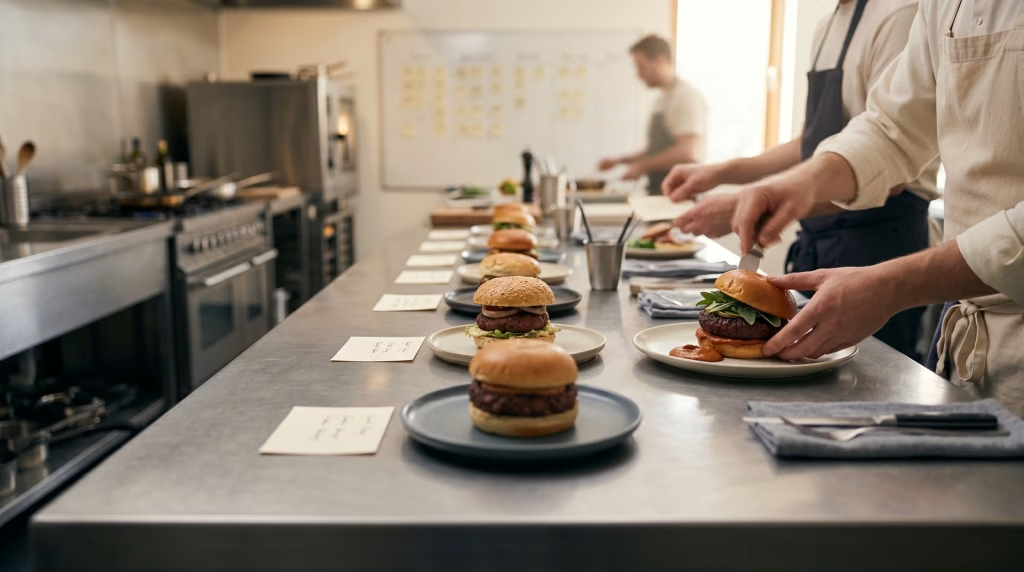
R&D Sprints
A compressed R&D methodology designed for food and drink innovation work where speed matters as much as quality.
-
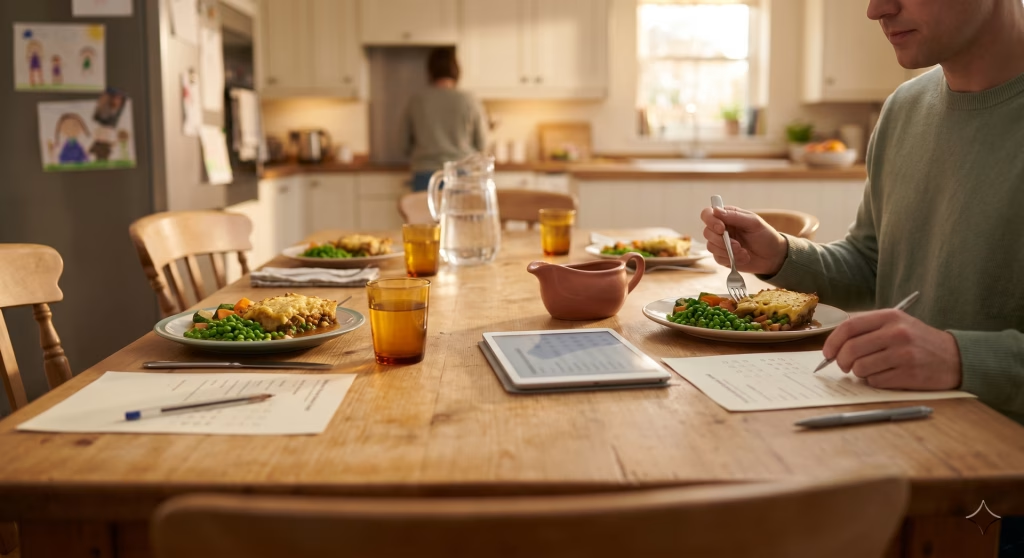
Product Testing (IHUT, CLTs, in-restaurant)
Specialist consumer product testing for food and drink innovation.
-
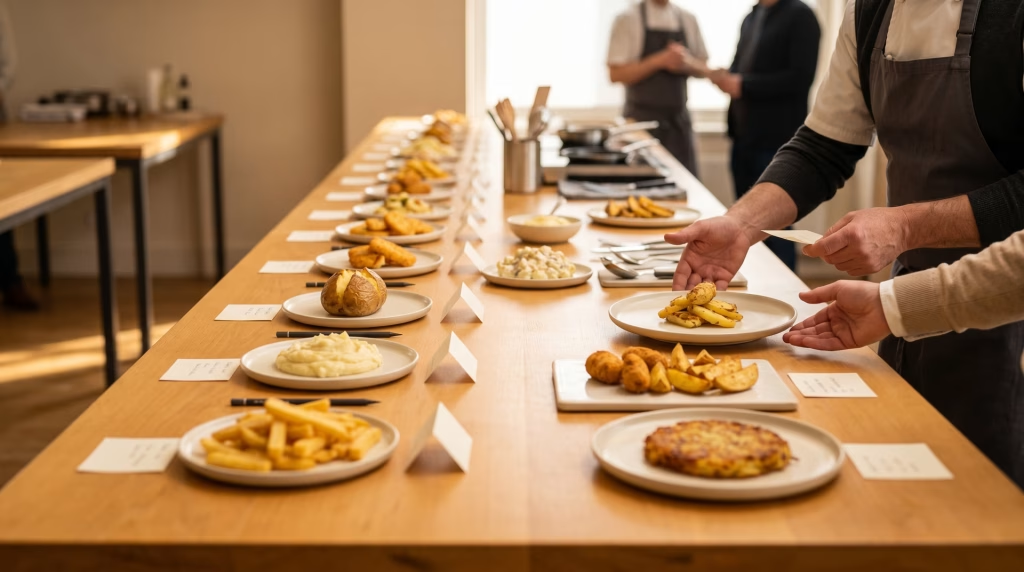
Application Showcases
Specialist food and drink showcase work that demonstrates capability, ingredient possibility or innovation direction to the audiences that need to see it.

View our case studies
-
HelloFresh
HelloFresh needed a clear, consumer-evidenced view of where their next stage of growth could come from. FIS Group combined international qualitative research, data mining and a two-day innovation workshop to produce a prioritised pipeline across three platform roadmaps, grounded in both fresh insight and the company's own knowledge base.
-

Superkeen
Superkeen needed rapid development of allergen-free products to support their expansion beyond cereals. FIS Group delivered a fast-paced sprint across two categories – nut butter concepts and tigernut cereal bars – producing signed-off gate zero samples meeting strict AIP requirements, ready for manufacturing briefs.
-
YO!
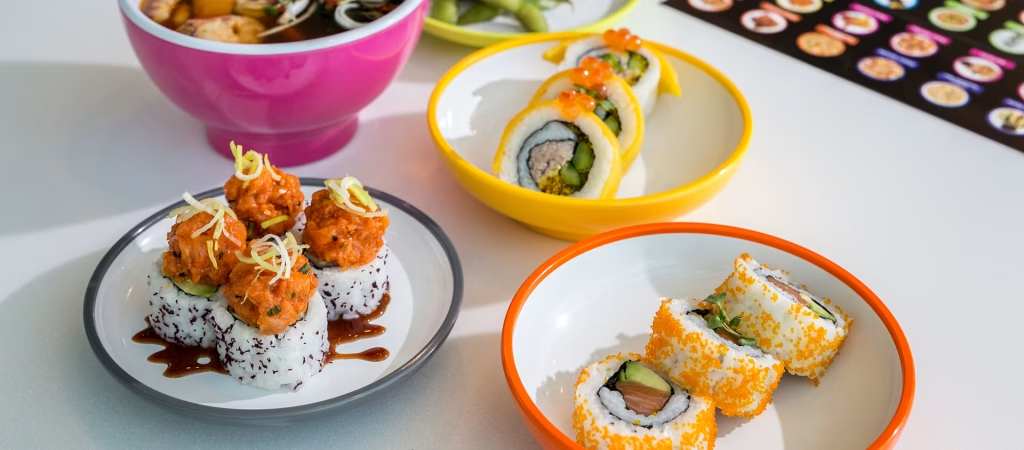
YO! needed to understand customers across three channels while balancing growth with brand loyalty. FIS Group combined quantitative survey work with agile listening groups to shape twelve months of marketing decisions.
FAQs
Commercial context and output type. R&D Sprints handles compressed FMCG product development: working prototypes for retail, scoped against retailer commercial reality (supply chain, shelf life, retailer listing). Menu Development handles foodservice menu work: kitchen-ready items and menu architecture, scoped against operational reality (kitchen workflow, cost in cup, day-part economics, staff capability). Different commercial contexts, different output types, different team composition (Menu Development includes senior culinary specialists working in foodservice tiers; R&D Sprints includes R&D specialists working in FMCG categories). We will recommend the right service at scoping based on the brief.
Yes. Operational reality is built into the methodology as a design constraint from the start, not added at pilot stage. Our team includes operational kitchen specialists working alongside the culinary specialists, with the cross-functional working integrated through every iteration. The operational check (cooking in conditions that match the operational kitchen, full costing against operational commercial parameters, allergen and prep workflow documentation) is not a separate phase added afterwards; it runs alongside the development from the start. This is the central methodological difference between our Menu Development and culinary-only agencies that learn the operational reality at pilot stage when reworking is expensive.
Yes, when the brief is scoped properly. Each item is developed against the specific operational reality of the kitchens it will run in: equipment available, staff capability, prep time, service window, allergen management, batch versus à la carte preparation. The development methodology requires items to demonstrate operational viability before they leave the development phase, which is more restrictive than culinary-only development but is what produces menus that scale without significant rework after launch. We will tell you at scoping if your brief implies operational constraints that materially limit the culinary direction.
Multiple integration models depending on the brief. Some Menu Development runs entirely externally with our cross-functional team, with the menu handed over to the internal culinary team for ongoing menu management. Some runs as integrated work with the internal culinary team embedded in the development, which preserves internal capability while gaining the external specialism. Some runs for capacity-augmentation when internal culinary is fully committed elsewhere. We design the integration model at scoping based on the brief, the internal culinary context and the menu work scope.
Built into the development methodology rather than added afterwards. Each item is developed against the commercial parameters (cost in cup target, gross profit, menu pricing tier strategy) as a design constraint, with the costing tracked through every development iteration rather than calculated at the end. Where commercial parameters and culinary direction create tension, the senior team works through the trade-off explicitly with the client rather than presenting the tension as a development surprise.
Built into the development methodology as a design constraint from the start. Each item is developed with allergen profile clear from the brief, dietary versions (vegetarian, vegan, gluten-free) scoped against the brief, allergen management workflow documented through the development. The allergen and dietary documentation is part of the deliverable, ready for operational rollout. Where the brief implies aggressive allergen-friendly positioning (free-from menus, allergen-clean operations), we will scope honestly about the operational implications and the development trade-offs.
Yes, and this is the most common commissioning structure for major menu work. Menu Development delivers kitchen-ready items, Menu Testing evaluates them with consumers in real foodservice context. Some programmes commission both as one integrated engagement scoped at the start; others sequence them. We will scope the right combination at the scoping call based on the menu brief and the commercial decision the work has to support.
Kitchen-ready menu items with full specifications, plus menu architecture documentation where architecture work was in scope. Specifically: each item with recipe, prep instructions, plating guidance, costing breakdown, allergen profile, equipment requirements, prep time, service workflow; menu architecture documentation showing range balance, daypart logic, pricing tier strategy where these were in scope; operational rollout recommendations covering staff training, kit requirements, phasing if relevant; integration documentation for the internal culinary team to take ongoing menu management forward.
Four to six weeks for item-focused development, six to ten weeks for range development, ten to sixteen weeks for full menu work depending on complexity. Compressed timelines are possible for focused briefs (LTO development with tight campaign windows, response to commercial pressure) where the operational complexity is contained. More complex briefs (multi-channel, multi-market, significant operational change implied by the menu work) typically run longer. Realistic timelines at proposal stage.
Yes, with careful scoping. International menu work is operationally more complex than single-market because the operational reality (kitchen equipment, staff capability, supply chain, allergen regulation, cultural expectations) varies significantly between markets. We run Menu Development across the UK and Europe with established channel relationships, and selectively in the US and UAE for specific channel briefs. We will scope international capability honestly at the scoping call based on the specific markets and channels.
Got a menu that needs to work in real kitchens at real scale?
Tell us the menu brief, the operational context, the strategic context, the output target, the integration with internal culinary team and the timeline. We will tell you whether Menu Development is the right tool, what format makes sense, what cross-functional team composition the brief requires and what it will cost. Where R&D Sprints, Menu Testing or another service would be better, we will recommend the right alternative honestly