
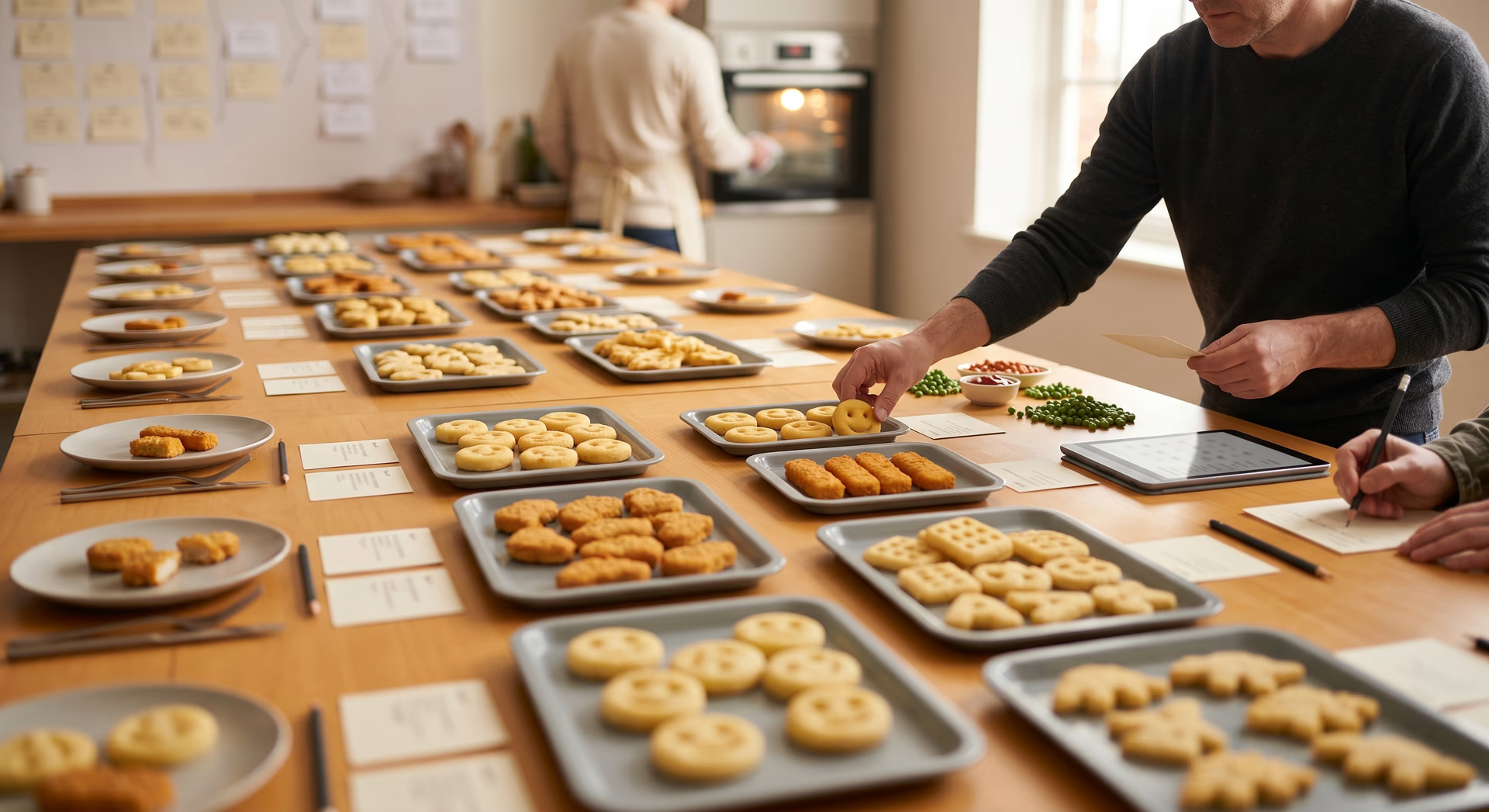
What Idea Arena is actually for
Most innovation programmes get stuck at the same point. The workshop has gone well, there are 40 ideas on the wall and the energy is high. Then comes the part nobody talks about much: deciding which of those ideas are worth properly developing. Usually that means an internal vote. Strategic fit, operational feasibility, who is loudest in the room. All legitimate lenses. But consumer appetite, the one thing that decides whether any of it sells, tends to arrive too late, once concepts have already been shaped, costed and resourced. Idea Arena was built to close that gap. It brings the consumer voice forward, before development begins, so the ideas you back are the ones real people actually want.
Idea Arena is a knockout tournament methodology that tests between 16 and 54 early-stage concepts in a single consumer study. Ideas compete head to head, round by round, until the strongest are left standing. Three metrics score every concept: win rate, response speed and a revival flag for the dark horses that punched above their weight. You get a visual scorecard with every idea tiered Green, Amber or Red, and the qualitative reasons surfaced next to the numbers rather than buried in an appendix. The decision is on the page, not in the room. It is fast enough to run before development starts, rigorous enough to defend the prioritisation, and engaging enough that respondents stay with you to the final round. Idea Arena works as part of a full FIS Group innovation programme, or as a standalone study.
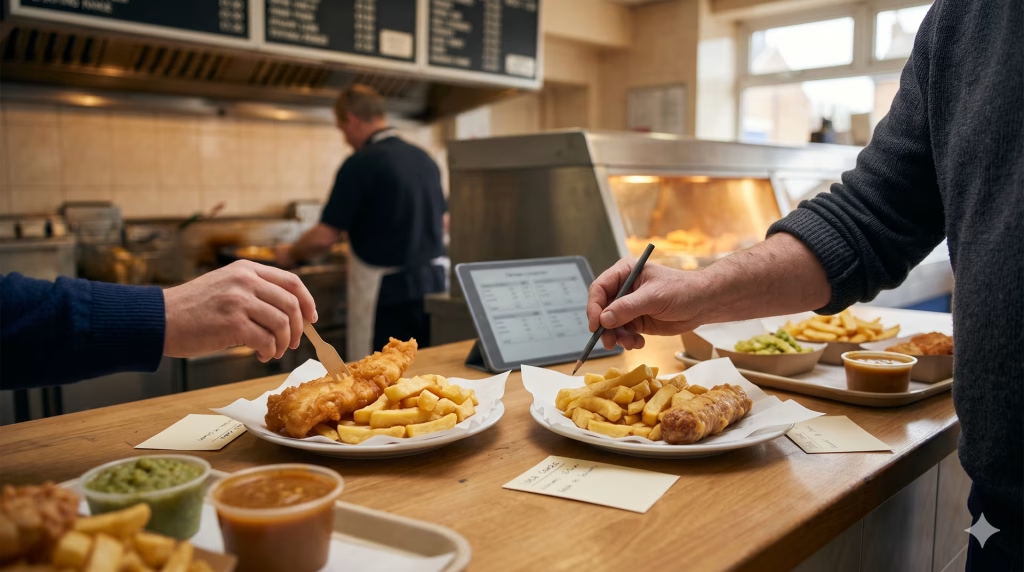
The engagement score, and a dashboard you can actually read.
The engagement score: Most idea testing asks consumers to rate each concept on its own, which is how you end up with everything scoring a polite seven out of ten and nothing clearly winning. Idea Arena works differently. Ideas compete head to head, and the engagement score reflects how each one performs against the others. It draws on three things: win rate, how often an idea beats its rivals; response speed, the reaction time that shows how instinctively people back it; and a revival flag for the dark horses that lost early but kept pulling people back in. Because the scoring is comparative rather than absolute, it does not just hand you the safe, familiar ideas. It surfaces a varied set of real priorities, the obvious front-runners alongside the distinctive dark horses a simple average would bury, so you walk away with range in your priority list rather than a flat list of lookalikes.
The dashboard: And you get all of it on one page. Every idea ranked, scored and tiered Green, Amber or Red, with the qualitative reasons sitting right next to the numbers rather than buried in an appendix. It is built to be read at a glance by the people who have to make the call, so you can see what won, what is worth a second look and what to park, without wading through a sixty-slide deck. The decision is on the page, not in the room.
Focused Arena
Twenty to thirty ideas tested in a single tournament structure with a focused comparison framework. Suited to briefs where the pool is moderately wide but the comparison is anchored on a tight set of dimensions (typically two or three) rather than the full food and drink-specific framework. Used for range proliferation, focused proposition filtering, or pre-screening of mid-sized NPD pipelines. Typically delivers the filtered priority set within four to six weeks.
Standard Arena
Thirty to sixty ideas tested across the full food and drink-specific comparison framework, with the tournament structure handling the volume in a single methodology. Suited to most major Arena briefs: Hothouse output filtering, large NPD pipeline pre-screening, brand proposition pools at scale. The most common Arena format. Typically delivers the filtered priority set within six to eight weeks.
Multi-stage Arena
Sixty or more ideas tested across sequential tournament rounds, with the methodology structured for the volume that single-stage Arena cannot handle credibly. First-round filtering on broader comparison dimensions, follow-on rounds on the surviving pool with deeper comparative analysis. Suited to the largest Idea Arena briefs: very wide Hothouse output, multi-portfolio range development, mass campaign filtering. Typically delivers the filtered priority set within eight to twelve weeks.
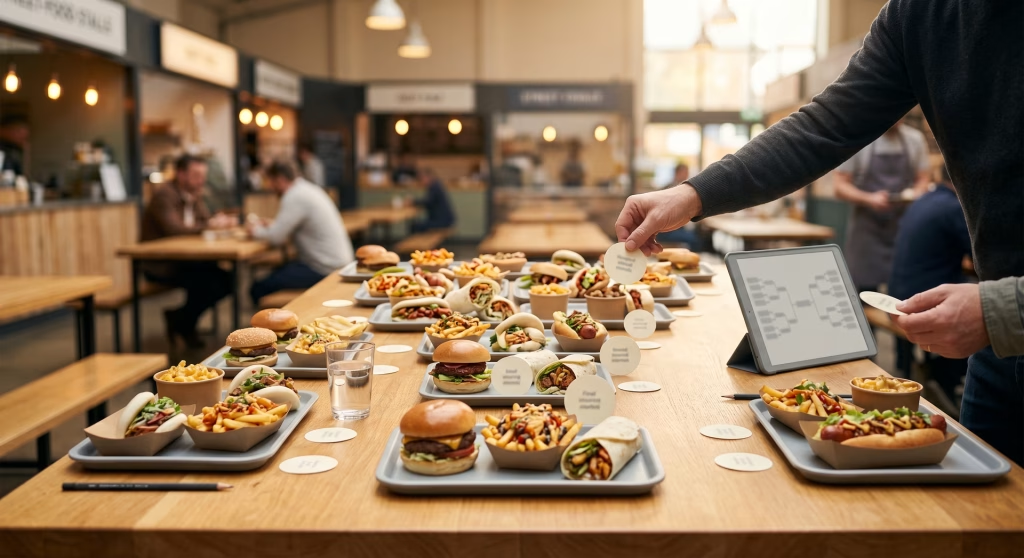
Food and drink is all we do
We are not a generalist research agency that takes the occasional food brief. Food and drink is the only sector we work in. Our senior team knows specifically how tournament testing maps to commercial reality in this sector, which categories the comparative framework predicts well and which need adapted dimensions, where the interpretation needs to push against the surface rankings. Generic tournament testing can deliver preference data; sector specialists can read what the rankings actually predict for the commercial decisions that follow.
That focus is why we work with 11 of the UK’s top 40 food and drink brands.
Other ways to create and refine ideas
Idea Arena is one tool in the broader Create and Refine Ideas toolkit. Depending on the brief, one of these might be a better fit, or a stronger partner alongside the Arena work.
-
Concept Testing
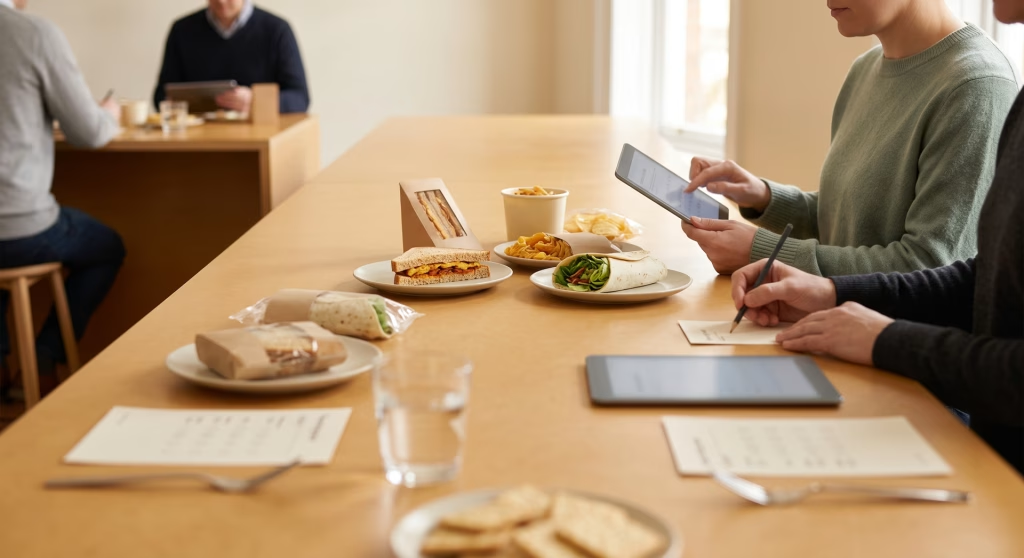
Bespoke quantitative concept testing for food and drink innovation, designed to prioritise which concepts go forward into NPD investment, brand development or commercial commitment – and to sharpen how they are positioned and communicated.
-
Concept Labs
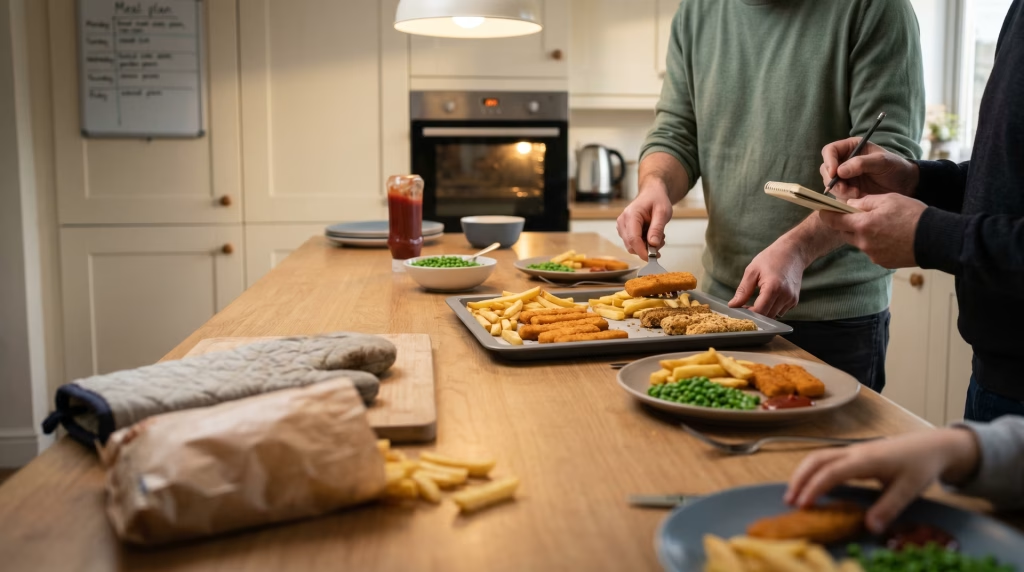
Iterative concept development with consumers, structured to refine, sharpen and evolve a focused set of five to six priority concepts until they are ready to land as intended.
-

Hothouse
For when you need an urgent burst of creativity, clarity & objectivity. Let our experts take the brief off your hands, build the right stim & develop finished concepts.
-

Creative Workshops
Expert-facilitated ideation workshop to unlock innovation.

View our case studies
-

Burger King
Burger King needed in-depth consumer testing of two new burger builds across multiple variants before launch. FIS Group delivered a real-store central location test with penalty analysis and innovation expert input, providing precise optimisation insight and benchmarks to inform future menu development.
-

Chaiiwala
Chaiiwala needed to professionalise their product development process and rebuild their menu architecture to support a scaling QSR estate. FIS Group delivered a full operational audit, menu architecture rebuild, repositioned core items and a year-long LTO programme, through to launch day training with the senior operations team.
-
Mars
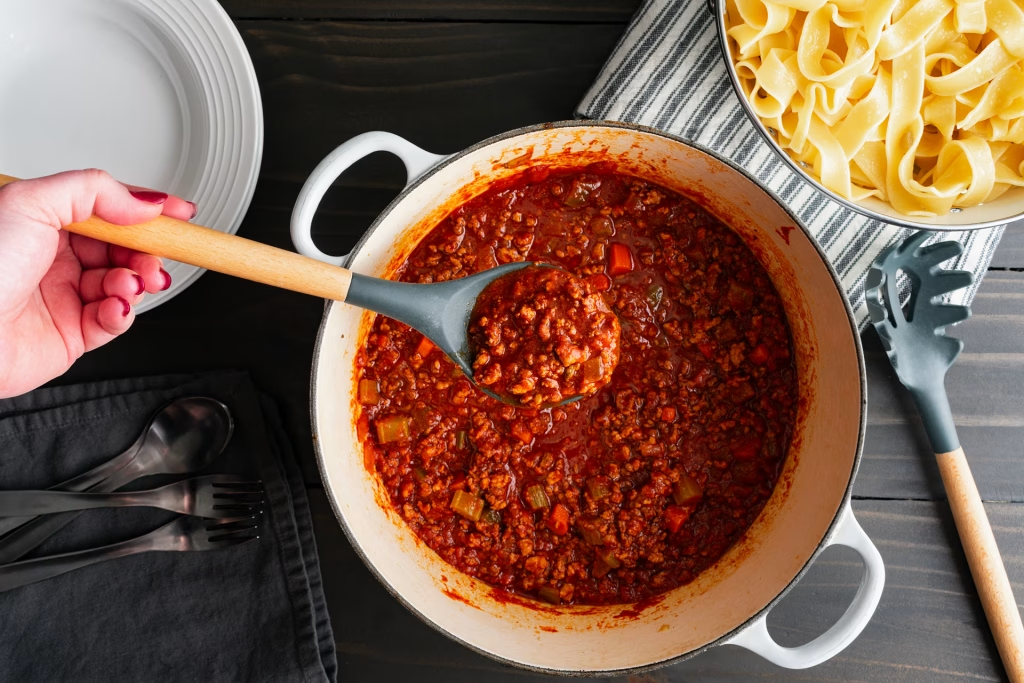
Mars needed a true research partner to decode consumer meal behaviour across three markets. FIS Group delivered a bespoke Meal Moments programme combining in-the-moment diary capture, qualitative exploration and strategic workshop facilitation – turning occasion-level data into immediate commercial direction.
FAQs
Scale and depth. Concept testing is structured testing of a focused concept set (typically eight to fifteen developed concepts) for decision-grade prioritisation, with detailed per-concept scoring across the food and drink-specific metric framework. Idea Arena is tournament testing of a wider pool (typically twenty to fifty or more ideas) for filtering rather than for final prioritisation, with comparative methodology that surfaces priorities through tournament structure rather than through absolute scoring. The two are complementary at different stages of the same innovation flow. Idea Arena filters the wide pool down to the priority set; concept testing tests the priority set at depth. Many major programmes commission both in sequence.
Twenty to thirty ideas in a focused Arena, thirty to sixty in a standard Arena, sixty or more in a multi-stage Arena. The pool size determines the methodology choice: smaller pools fit single-stage tournaments with focused comparison, larger pools need sequential rounds because the comparative methodology cannot credibly handle very wide pools in a single stage. We recommend the right format at scoping based on the actual pool size and the comparison depth the brief requires.
Instead of scoring each idea on its own, consumers compare ideas against each other, head to head, round by round. Every one of those match-ups feeds the engagement score, which is what ranks the pool. The score is built from three things: win rate, how often an idea beats its rivals; response speed, the reaction time that shows how instinctively people back it; and a revival flag for the dark horses that lost early but kept pulling people back in. Because the ranking comes from how ideas perform against each other rather than from an absolute rating, it sorts a wide pool quickly and surfaces genuine priorities rather than a row of polite sevens. The comparisons are anchored on food and drink dimensions that matter commercially, not generic preference, and the tournament structure is shaped at scoping around your pool size and the brief.
For filtering decisions, yes. Arena is built specifically for the decision “which of these many ideas are worth deeper investment,” and the methodology produces defensible comparative evidence on that question. For final commercial decisions (NPD investment, brand commitment, commercial casing), Arena is the filtering layer rather than the final test: the priority set from Arena typically goes into Concept Screening for the deeper per-concept evaluation that final commitment decisions require. We will tell you straight at scoping whether your decision requires Screening depth or whether Arena filtering is sufficient on its own.
Yes, and this is the most common commissioning structure for wide-pool innovation programmes. The natural sequence is Arena first (filtering the wide pool to the priority set), Screening second (testing the priority set at depth). Some programmes commission both as one integrated engagement scoped at the start; others sequence them. We will scope the right combination at the scoping call based on the pool size and the commercial decision the work has to support.
The filtered priority set with the senior interpretive layer, plus the full tournament data for the wider pool. Specifically: the priority idea set with rationale for the filtering decisions, the full tournament rankings (so dropped ideas can be defended if challenged later), the patterns across the priority set (where winners cluster, where losses concentrate), recommendations for the next phase (typically Concept Screening of the priority set, but sometimes direct development or re-ideation depending on what the tournament reveals). Format agreed at the start so the work lands in the meeting it needs to land in.
Four to six weeks from scoping call to filtered priority set for focused Arena work. Standard Arena typically runs six to eight weeks; multi-stage Arena eight to twelve weeks. Compressed timelines are possible where the methodology is straightforward (single-market, single-audience, focused comparison framework) and the fieldwork can run on existing panel infrastructure. We give realistic timelines at proposal stage.
Yes. We run Idea Arena across the UK, mainland Europe, the US and the UAE, with sample structure and methodology adapted for each market. International Arena has higher operational complexity than single-market work because the tournament methodology has to handle cross-market comparability (for global filtering decisions) or market-specific calibration (for local decisions). We recommend the right approach at scoping.
Project-based, scoped against the format (focused, standard, multi-stage), the pool size, the geographic scope, the depth of comparative analysis required and the audience for the deliverable. Focused single-market UK Arena is the lowest entry point; multi-market multi-stage Arena is the highest. We give a clear, all-in quote at proposal stage with no hidden extras, and we will tell you straight if your pool is small enough that going directly to Concept Screening would be more efficient than commissioning Arena first.
Got a wide idea pool that needs filtering before deeper testing or development?
Tell us the pool, where it came from, the brief the filtering has to support, the priority set size you need at the end and the timeline. We will tell you whether Idea Arena is the right tool, what format makes sense, what comparison framework the brief implies and what it will cost. Where the pool is too narrow for Arena or the ideas need more development before tournament testing, we will recommend the right alternative honestly.