What we do differently
-
Output-led methodology, not energy-led
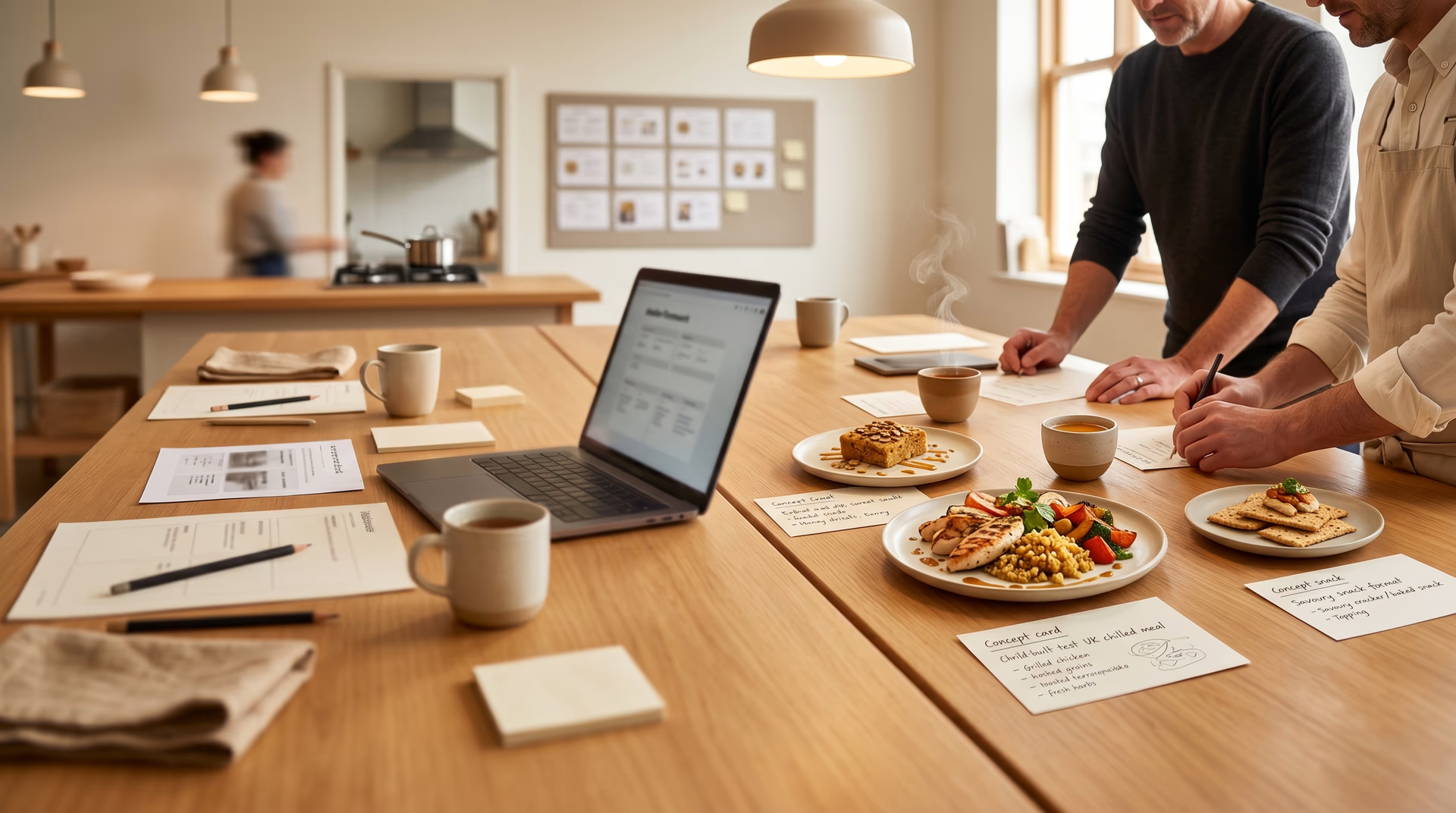
The structural difference between workshops that produce usable output and workshops that produce flipchart paper. We design the workshop backwards from the deliverable: how many concepts, in what form, at what level of specificity, ready for what next step. The methodology is built to produce that output, with the techniques chosen for what they deliver rather than for what they look like in the room. Energy in the room is welcome; output for the pipeline is the deliverable.
-
Built into the broader innovation toolkit, not standalone events
Generic workshops sit as standalone events: brief in, workshop out, deck delivered. Ours integrate with the broader Innovation and Optimisation toolkit. The workshop sits within or alongside structured strategic work (Opportunity Mapping, Platform and Territory Building), insight foundations (Needs Landscaping, U&A) and forward execution (Concept Labs, Concept Screening, Idea Testing). The integration is what makes the workshop output translate into pipeline rather than ending in a deck nobody opens again.
-
Structured output at the right level of specificity for the next step
Every workshop closes with output scoped for the next phase of work. Concepts described at briefable level of detail, not as concept titles. Creative territories articulated with explicit boundaries. Commercial propositions developed with audience and occasion specificity. The output is built to feed forward into concept screening, idea testing or NPD development, not to sit as a workshop record someone else has to translate into briefs.
Three formats. Scoped against the brief, the output and the team.
Workshops flex against the brief, the output required and the team available. The three formats below are the typical workshop shapes we run. Most briefs land on the full-day format; some need the compressed half-day, others need the two-day intensive. We will recommend the right format at the scoping call rather than push a default.
Half-day focused workshop
Three to four hours of structured ideation against a tight, defined brief. Suited to briefs where the strategic direction is clear and the workshop is doing focused concept generation, brief development or territory articulation rather than open ideation. Typically delivers a defined set of briefable outputs against the specific question the workshop was scoped against. The compressed format depends on strong pre-workshop preparation.

Full-day structured workshop
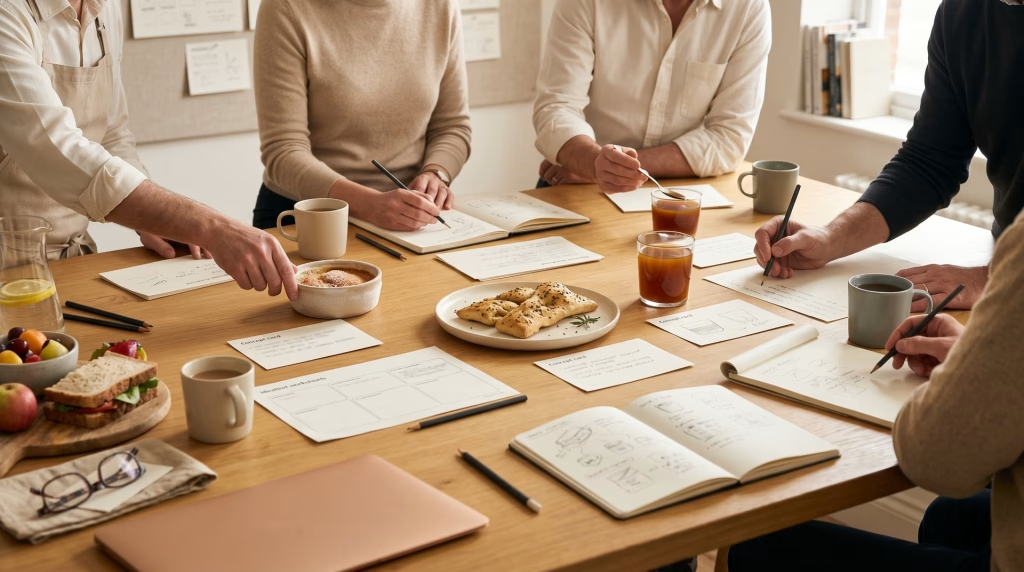
Seven to eight hours of structured ideation, the most common workshop format. Suited to most innovation, brand and commercial briefs where the team needs structured concept generation, territory development or proposition work and the brief is too broad for a half-day format. Typically delivers a richer set of outputs (more concepts, more developed territories, more cross-functional alignment) and allows enough room for the methodology to flex live to what the workshop is producing.
Two-day intensive workshop
Two consecutive days of structured ideation, often with multiple attendee cohorts and overnight reflection between the days. Suited to briefs where the output target is more ambitious (volume of concepts, depth of territory development, cross-functional alignment across larger teams), or where the brief covers multiple distinct streams that benefit from being developed together. Typically delivers the deepest workshop output and the strongest cross-functional alignment.
Food and drink is all we do
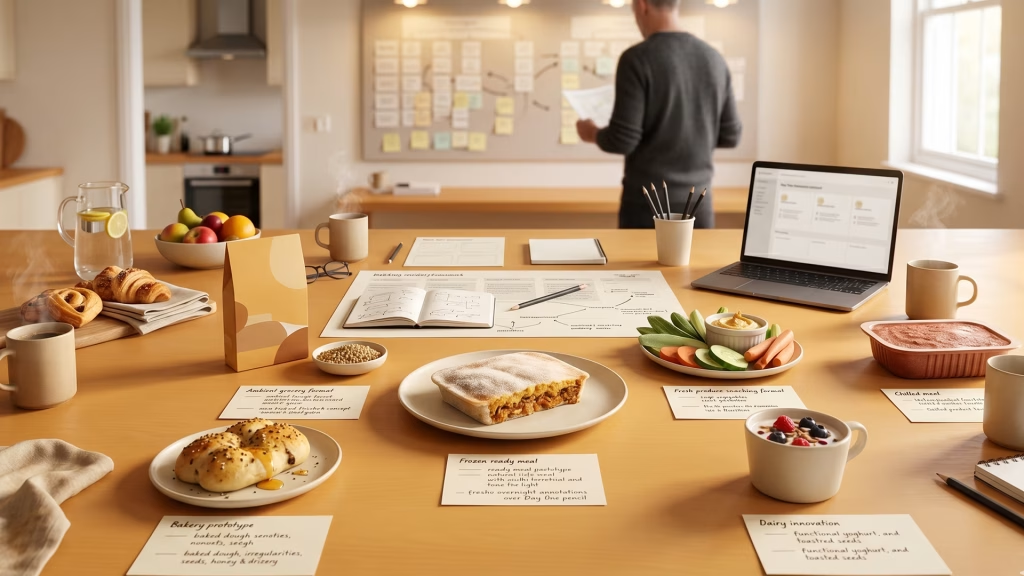
We are not a generalist facilitation agency that takes the occasional food brief. Food and drink is the only sector we work in. Our senior facilitators know the categories, the consumers, the occasions and the commercial realities of the sector, which means the interpretive layer that turns ideas into usable concepts happens live in the room with someone who knows what they are looking at. Generic facilitators can run good workshops; sector specialists are what makes the output translate into pipeline.
That focus is why we work with 11 of the UK’s top 40 food and drink brands.
Other ways to create and refine ideas
Creative Workshops are one tool in the broader Create and Refine Ideas toolkit. Depending on the brief, one of these might be a better fit, or a stronger partner alongside the workshop work.
-
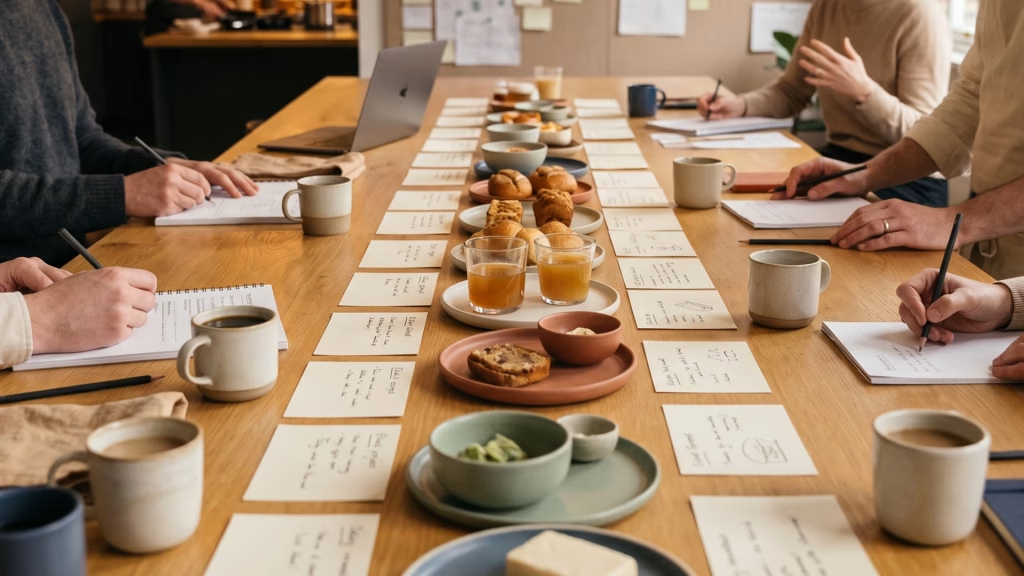
Hothouse
For when you need an urgent burst of creativity, clarity & objectivity. Let our experts take the brief off your hands, build the right stim & develop finished concepts.
-
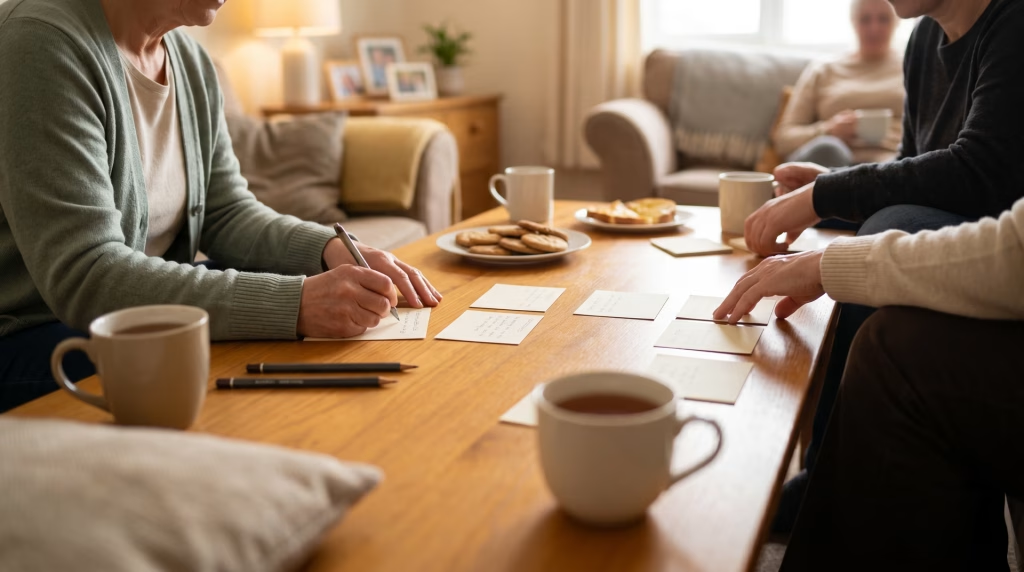
Co-creation (consumers)
The most consumer-centric ideas come from involving consumers in building them. Co-creation puts real people into the ideation process itself – alongside your team, not just in front of them.
-
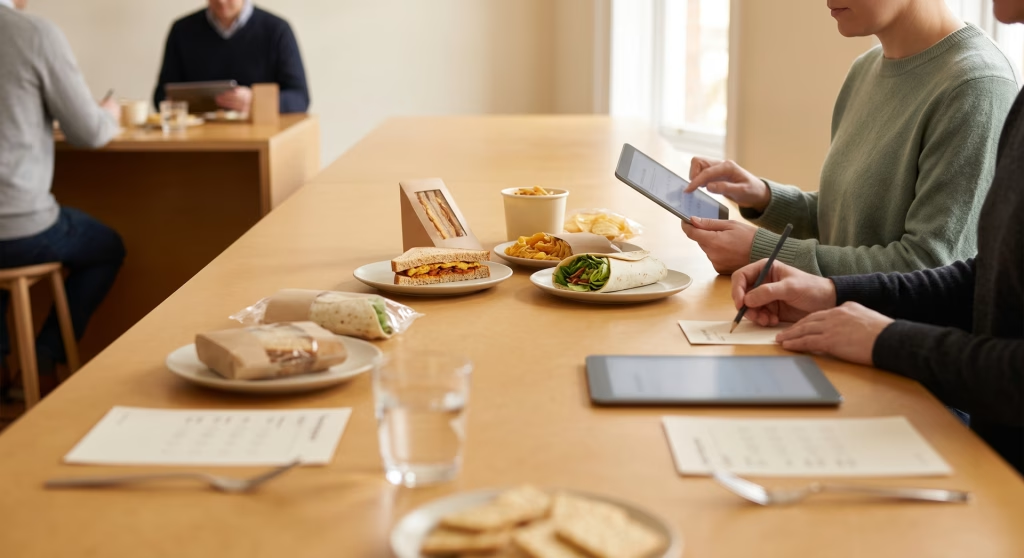
Concept Testing
Bespoke quantitative concept testing for food and drink innovation, designed to prioritise which concepts go forward into NPD investment, brand development or commercial commitment – and to sharpen how they are positioned and communicated.
-
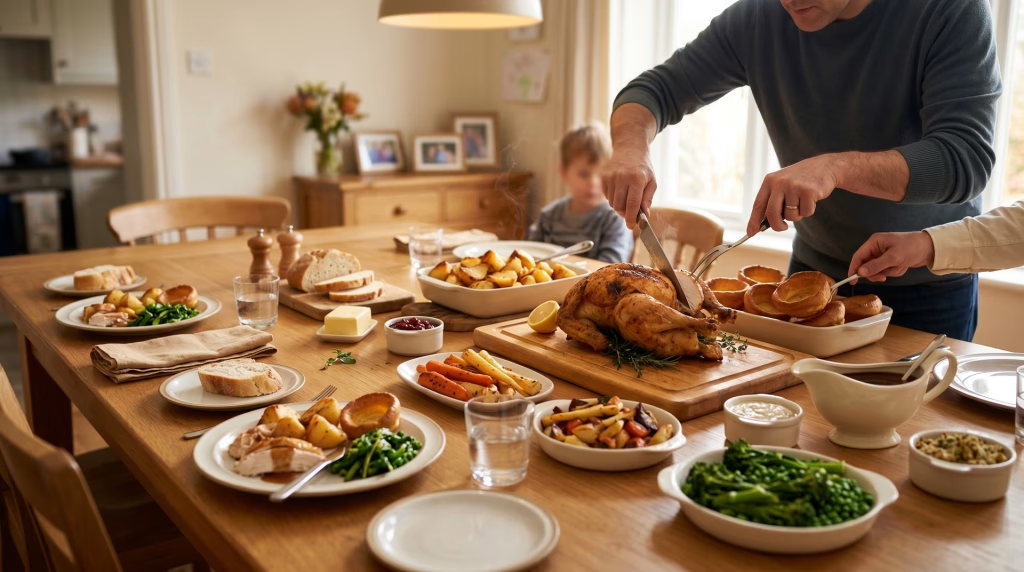
Platform & Territory Building
Deep platform development that picks up where opportunity mapping ends and where execution begins.

View our case studies
-

Burger King
Burger King needed in-depth consumer testing of two new burger builds across multiple variants before launch. FIS Group delivered a real-store central location test with penalty analysis and innovation expert input, providing precise optimisation insight and benchmarks to inform future menu development.
-

Oscar Mayer
Oscar Mayer needed category understanding in convenience and discount channels that could drive retailer conversations. FIS Group delivered a multi-phase programme combining quantitative, qualitative and innovation expertise, turning research into a commercial asset at the negotiating table.
-
Starbucks
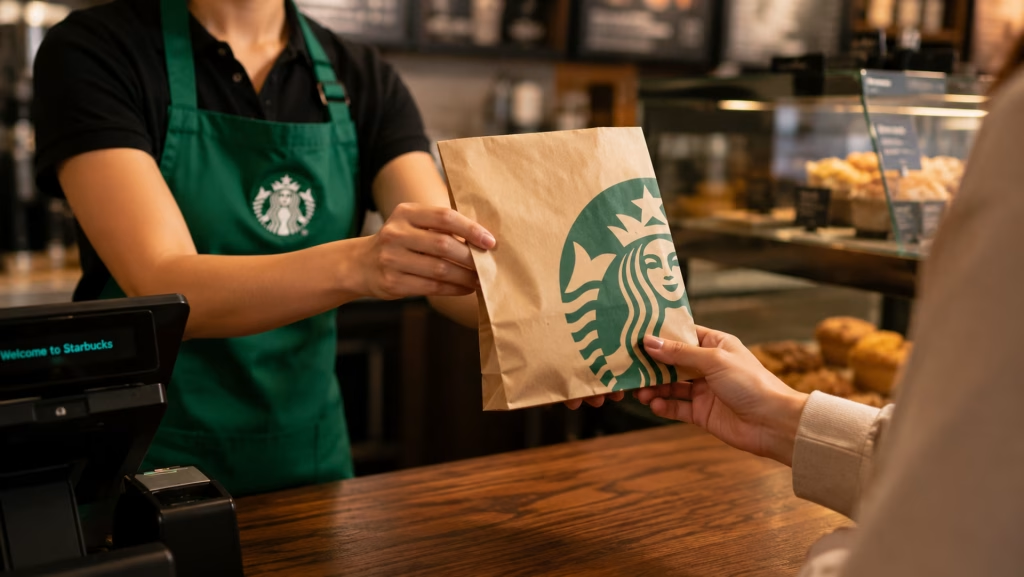
Starbucks needed cross-market ideation around iconic bakery platforms for EMEA, with a focus on winning with Gen Z. FIS Group facilitated a structured innovation workshop with trend-led platforms, generating ten big concepts refined into illustrated, testable briefs now entering NPD pipelines across multiple markets.
FAQs
Scale, depth and intent. Creative Workshops are flexible, scoped against specific briefs, and run as half-day, full-day or two-day sessions with the methodology adapted to the output target. Hothouse is more intensive: multi-day immersion with deeper methodology, multiple attendee cohorts, and a concept volume target most workshops cannot match. Both produce briefable output for the pipeline, but Hothouse is the right tool when the brief is a high-priority innovation platform that needs the depth, where workshops are the right tool when the brief needs structured ideation at a more flexible scale.
That is the question this service exists to answer. The structural feature of our methodology is that the workshop is designed backwards from the output, with the deliverable defined before the workshop starts. The senior food and drink facilitation in the room means the interpretive layer (which ideas have commercial legs, which need sharpening, which are not worth pursuing) happens live rather than in a post-event synthesis. The output is delivered at briefable specificity rather than as concept titles. If your brief is at risk of producing workshop output that will not translate to pipeline, we will tell you straight at the scoping stage and recommend tightening the brief before the workshop happens.
You can. The question is whether the workshop will produce the output you need. Internal facilitation works well for some briefs (when the team has internal facilitation capability, when the brief is well-defined, when the output bar is achievable internally). It struggles for others (when the brief is complex or open-ended, when senior interpretive judgement is needed about which ideas have legs, when the team needs an external voice to challenge internal orthodoxy productively). We will tell you straight at scoping whether your brief is one we should run or one you should run internally.
The workshop itself is half a day, a full day or two days depending on the format. The full programme (scoping, design, pre-workshop preparation, workshop, output synthesis, deliverable) typically runs four to six weeks from scoping call to final deliverable. Compressed timelines are possible for half-day workshops with strong pre-workshop preparation. Two-day workshops typically run six to eight weeks from scoping to deliverable.
Depends on the format and the brief. Half-day workshops typically deliver six to twelve briefable concepts or a smaller set of developed territories. Full-day workshops deliver fifteen to twenty-five concepts, or a richer territory or proposition set. Two-day workshops deliver thirty to fifty concepts or multiple developed territories with cross-functional alignment built in. The number is less important than the briefability: we will tell you at scoping what realistic volume the brief implies at the level of specificity you need.
Creative agency workshops are typically run as part of a broader brand or creative engagement, with the workshop output feeding into the agency’s creative work. Our workshops are sector-specialist ideation: the output is structured to feed forward into innovation pipeline, NPD development, brand strategy or commercial briefing, not into the agency’s own creative pipeline. Many clients commission both: our workshops for ideation that feeds innovation and strategic work, creative agency workshops for the brand expression and creative execution work that follows.
Typically the client team relevant to the brief: NPD, brand, marketing, commercial, operations, leadership depending on the scope. Optimal attendee numbers vary by format (six to twelve for half-day, eight to fifteen for full-day, twelve to twenty-five for two-day) and by brief (cross-functional briefs need broader attendance, focused briefs need tighter). We will recommend the right attendee shape at scoping and help the client team think through who should be in the room.
Agreed at the scoping call against the brief. Most workshops close with: a structured concept or territory output (briefable specifications, not just titles), the working materials from the day (captured live), and a structured synthesis deliverable that translates the room’s work into a form the team can take forward. Some workshops also include cross-functional alignment outputs (when the brief requires it), commercial framing for the output (when it is heading into investment or board conversations), or pre-briefing documents for follow-on agency or NPD work.
Yes, and this is the most common commissioning structure. Workshops sit naturally inside broader programmes: strategic work first (Opportunity Mapping, Platform and Territory Building, Future Food Pipeline Builder), workshop ideation against the strategic foundation, and concept testing or development to take the workshop output forward (Concept Screening, Idea Testing, NPD development). We will scope the right combination at the scoping call.
Project-based, scoped against the format (half-day, full-day, two-day), the pre-workshop preparation required, the senior facilitator commitment, the depth of post-workshop synthesis, and any integration with broader programme work. Single-format UK workshops are the lowest entry point; complex multi-day cross-functional programmes with extensive pre and post-work are the highest. We give a clear, all-in quote at proposal stage with no hidden extras.
Got a workshop brief that needs to produce output the pipeline can actually use?
Tell us the brief, the strategic context, the output you need at the end, the attendees and timing constraints. We will tell you whether a workshop is the right tool, what format makes sense, what pre-workshop preparation is needed and what it will cost.