
The challenge
For a business the size of Domino’s, the menu is never finished.
New products launch, core items evolve, and existing products are replicated with new suppliers as the supply base is strengthened and risk is reduced.
Every one of those changes carries the same non-negotiable: quality must be maintained or improved, and nothing enters the supply chain without meticulous consumer research behind it. Domino’s needed more than a testing supplier; they needed a research partner who understands their history, their store operations, their customers and their challenges, and who could support everything from routine product validation to shaping the long-term innovation pipeline.
What we did
Central location tests, in-home tests, digital discussion groups and agile listening groups, food safaris and innovation workshops.
How we did it
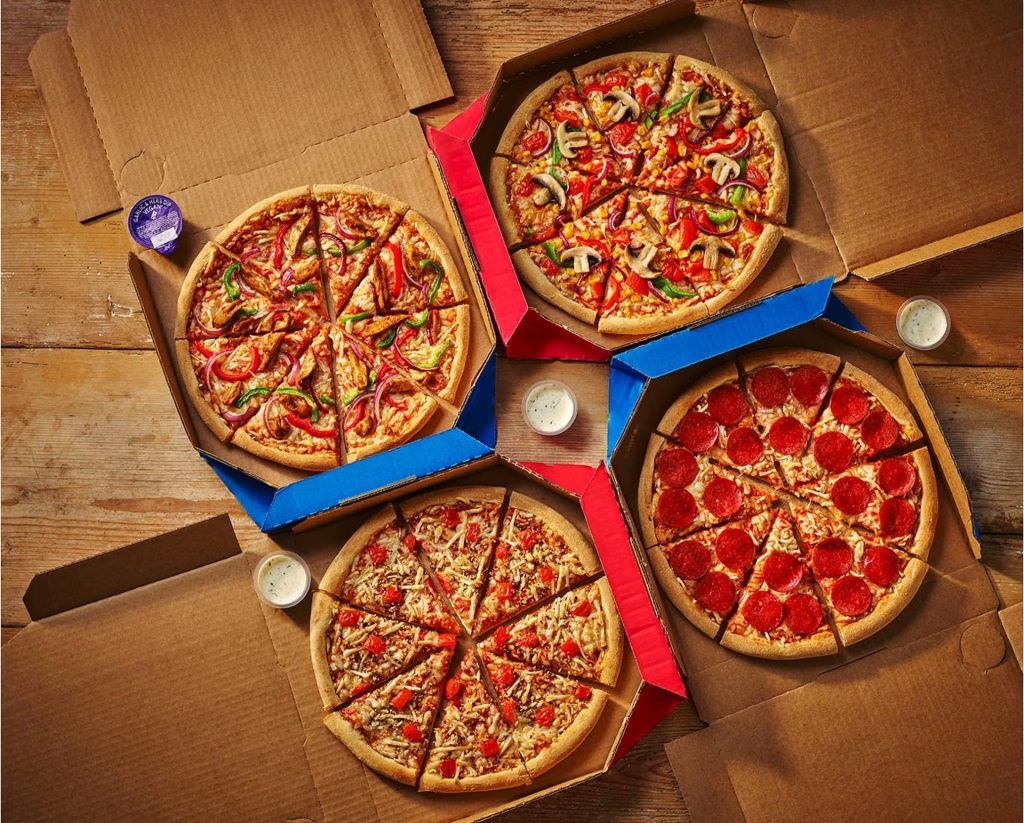
The heart of the partnership is rigorous, repeated product testing. Over many years, our product insight team has run multiple benchmarking tests of both new and existing products, telling Domino’s exactly how each performs with key consumer markets and where further improvement is needed. The methods flex to the question: central location tests when products need assessing in controlled conditions, in-home tests when real-life eating is the truer measure.
Around that core, the partnership has stretched well beyond testing. We have run innovation workshops, discussion groups and a food safari to help Domino’s plan future strategy, deepen their understanding of customer wants and needs, and build an innovation pipeline. We have also investigated allergy information: where and how it should be communicated across the different customer touch points, work where getting it right matters to every customer who depends on it.
Longevity changes how a partnership works. Understanding built across years of projects means each new brief starts from knowledge, not a standing start, and it is why Domino’s describe us as acting as an extension of their business.
What it delivered
A continuous flow of consumer-validated decisions. Benchmarking results are regularly used to brief suppliers and to show franchisees that products have been validated by consumers, putting evidence at the centre of conversations across the whole system. Beyond testing, the work has informed future strategy, customer understanding, packaging and the innovation pipeline.
In their words
“As a business Domino’s is always looking to improve its offering to its customers, either by launching new products or replicating existing ones with new suppliers. There is an ongoing requirement to strengthen our supplier base and minimise risk. To achieve this we have established a rigorous process to ensure product quality is maintained or improved. No products enter our supply chain without a meticulous consumer research process.
We have partnered with FIS Group over a number of years to achieve major success in these areas. FIS Group have a deep understanding of Domino’s history, store operations, its consumers but also its challenges. They are always highly collaborative and intuitive to the point where they act as an extension to our business. FIS Group proactively look for ways to drive efficiency, either by optimising costs or working instinctively to minimise lead-times.
I can’t think of a stronger partner to handle our consumer research needs than FIS Group, and very much look forward to completing a number of complicated and critical projects in the near future and beyond.”
Head of Procurement, UK & International, Domino’s
View more case studies
-
Oscar Mayer
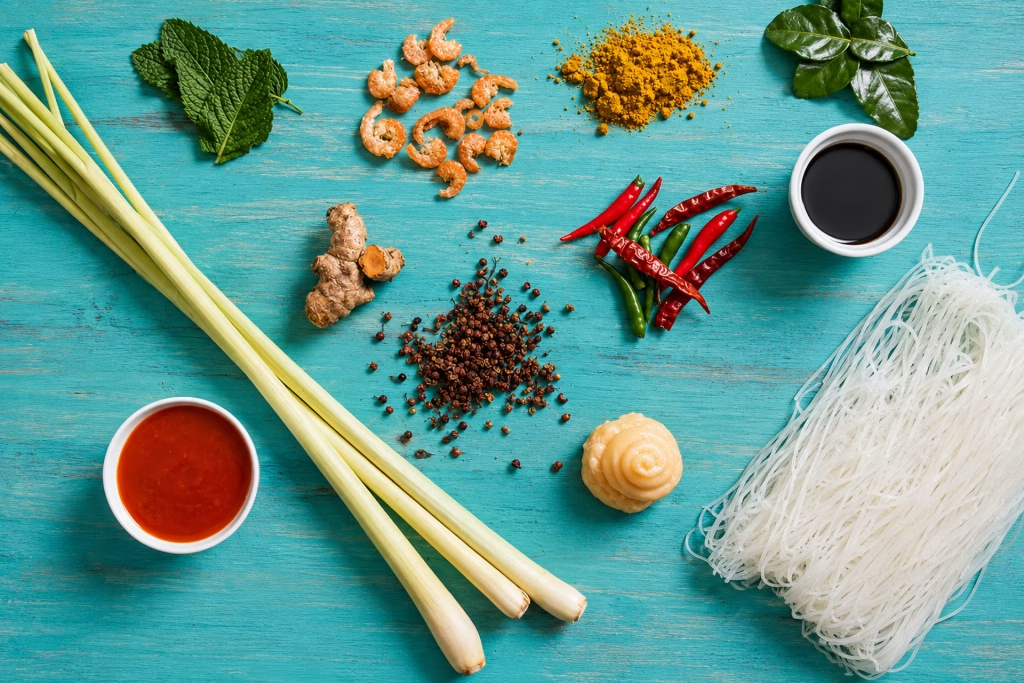
Oscar Mayer needed category understanding in convenience and discount channels that could drive retailer conversations. FIS Group delivered a multi-phase programme combining quantitative, qualitative and innovation expertise, turning research into a commercial asset at the negotiating table.
-
Factor 75
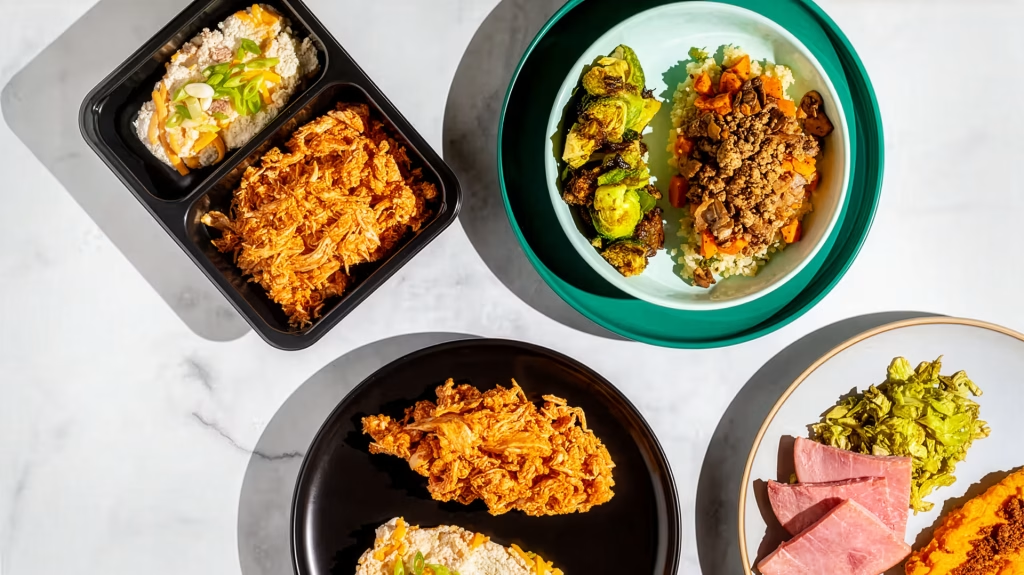
Factor 75 needed rapid recipe development across multiple dietary requirements while integrating seamlessly with their existing process. FIS Group embedded a development team inside Factor's Chicago facility, delivering 25 compliant recipes across GLP-1, keto and low carb requirements and establishing a scalable model for ongoing portfolio expansion.
-
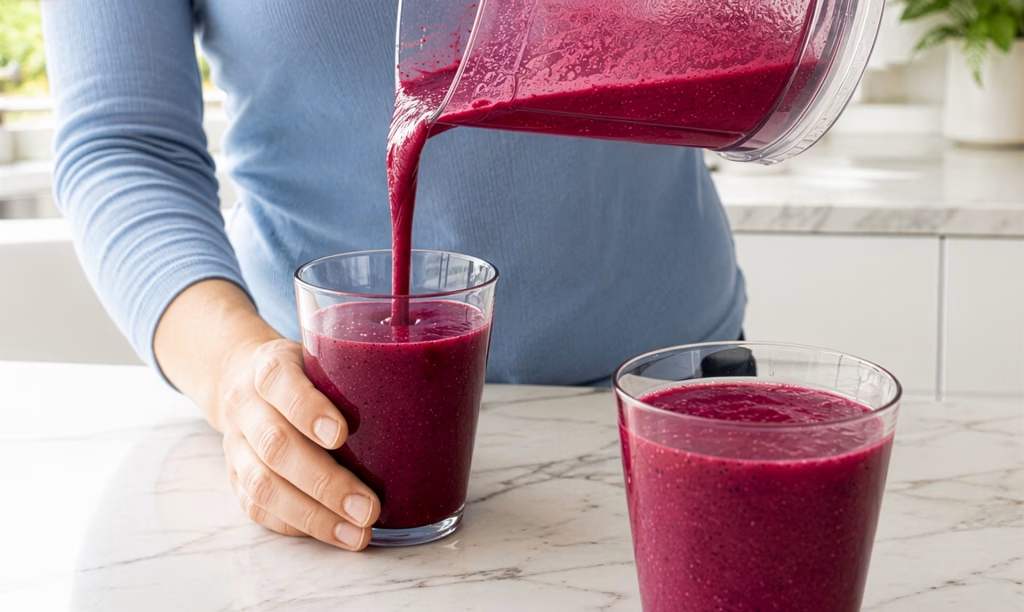
Biotiful Gut Health
Biotiful Gut Health needed three potential ambient territories validated before committing development resource. FIS Group investigated and defined each territory, developed concept iterations, ran quantitative consumer testing and built a DVF prioritisation model – giving Biotiful a clear, evidence-based view of where to focus first.

Got a brief? Let’s talk.
Tell us what you are working on. We will tell you straight whether we can help, what the right approach looks like, and how quickly we can move. No long discovery dance, no qualifying call before the qualifying call.