

The building side. Real food, real menus, real showcases.
Innovation tools in the Build, Test and Refine What Wins challenge are the building side. Where insight tools on this challenge test what already exists (in-home, in-restaurant and central location product testing, qualitative product testing, menu testing), innovation tools create the prototype, menu or application that the testing then evaluates. R&D Sprints turn validated concepts into working prototypes in weeks. Menu Development builds menus for QSR, high-street and coffee chain operators. Application Showcases bring a product to life across multiple uses, demonstrating versatility for buyers, operators or internal teams.
Three tools sit on this page, each one defined by what it produces. R&D Sprints produce a prototype. Menu Development produces a menu. Application Showcases produce a live event that lands a product in the audience’s hands. All three are run by senior food and drink specialists with operational credibility, working out of Mission Kitchen in London and on the ground wherever the brief requires.
Most build-and-test programmes pair this toolkit with the insight tools one click away, with build work running first and testing running on the output. Some briefs use only this toolkit, particularly when the testing will be run internally or by another agency and what the team needs is the build capability the in-house team cannot provide.
-
 Explore
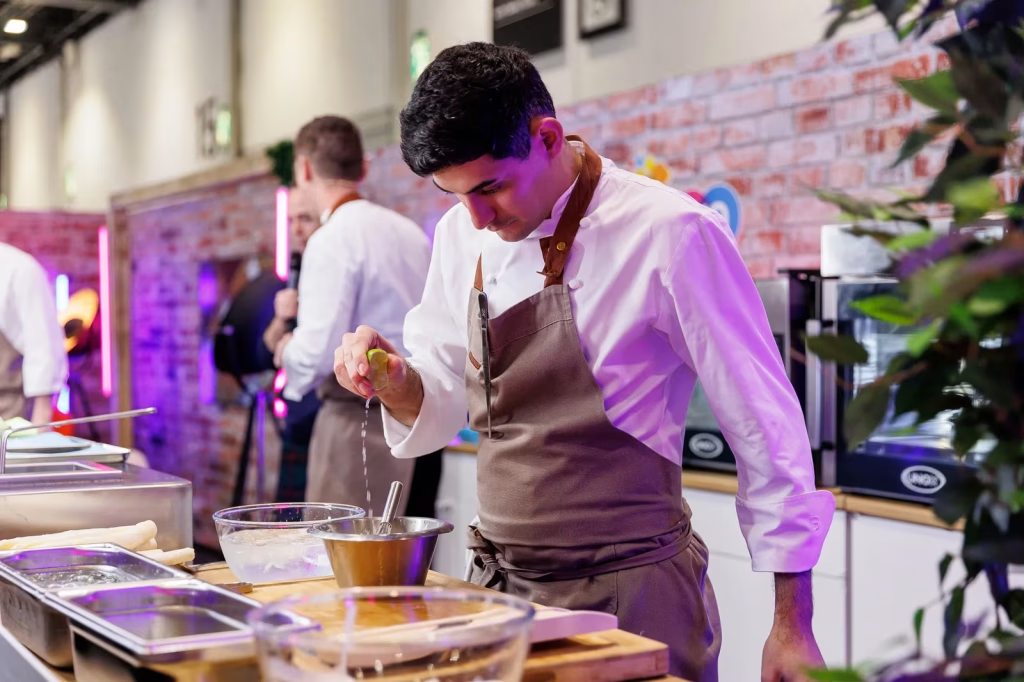
R&D Sprints
From validated concept to working prototype in weeks, not months.
What it is
A compressed, expert-led development process that takes months of typical R&D work and runs it in a focused multi-week sprint. The sprint combines trend foresight, culinary creativity and technical expertise, so the prototype that comes out is rooted in where the category is heading, built with credible craft, and pressure-tested for operational feasibility from session one. Used when timelines are tight, when an internal R&D team is at capacity, or when the brief needs cross-category thinking the in-house team would not produce alone. Protocept development is available as an additional layer where commercial protection of the early-stage work matters.
What you get
- A working prototype (or prototype set) delivered in a focused sprint window
- Trend foresight, culinary creativity and technical expertise combined in one continuous process
- A defendable rationale for why the prototype is built the way it is, ready for the next gate review
- Optional protocept development layer for commercial protection of early-stage work
When to use it
- When the development timeline is tight and standard R&D cycles cannot deliver
- When the internal R&D team is at capacity and external sprint resource is needed
- For briefs that need cross-category thinking the in-house team would not produce alone
- When the prototype has to be ready in time for a specific commercial milestone (gate review, retailer pitch, launch decision)
-
 Explore
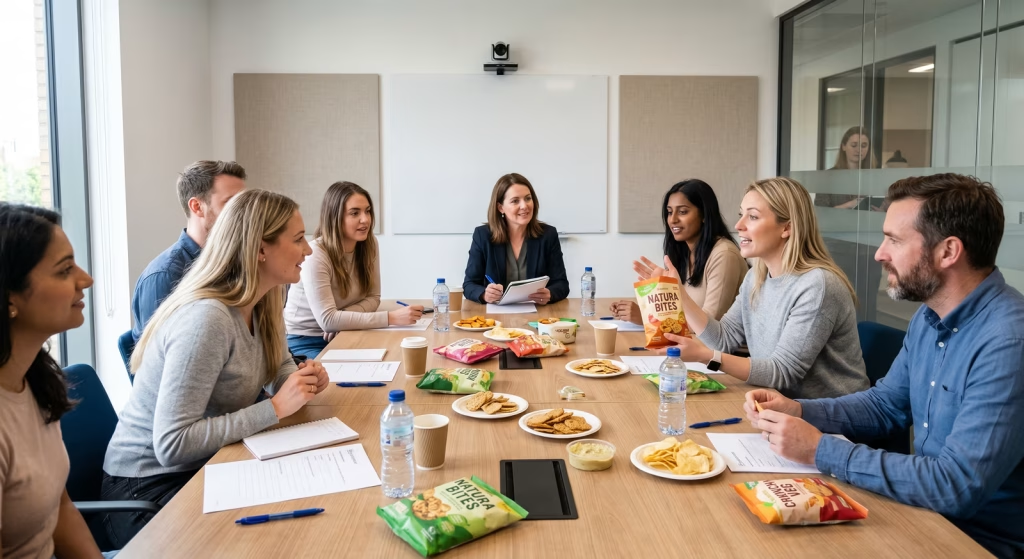
Menu Development
Menus built for the operation that has to deliver them.
What it is
Innovation, trend-led menu development for QSR brands, high-street restaurant chains and coffee chains. Tailored menu concepts that balance creative ambition with operational reality, designed by a team that understands what is possible in a real kitchen at speed and at scale. Each menu is built around the trend direction, the consumer appeal and the practical execution, so the work survives the journey from concept room to live service rather than dying at the operational gate. Not for independent restaurants: this is volume-driven foodservice work where the operational specification matters as much as the creative ambition.
What you get
- Tailored menu concepts designed around your specific operational context
- Trend-led dishes that balance creativity with executable specification
- Operational practicality built into the menu from the first concept onwards
- A working menu document with specification depth ready for kitchen rollout
When to use it
- For QSR brands launching new menus, range refreshes or seasonal propositions
- For high-street restaurant chains needing trend-led menu evolution
- For coffee chains expanding into food or evolving existing food propositions
- When internal kitchen teams need external creative input grounded in operational reality
-
Explore
Application Showcases
More than a presentation. An interactive tasting that sells the product back to your own team.
What it is
Curated, interactive showcase sessions that bring a product to life across multiple applications and contexts. We design the menu of applications, prepare the formats, present the product in the contexts that will matter to buyers, operators or internal stakeholders, and host the tasting as a live, structured session. Used to demonstrate versatility, flavour and functionality, and to generate the curated menu and content that can be repurposed for sales pitches, retailer meetings or social assets. The session itself is the deliverable: a live, multi-sensory experience that an internal deck cannot replicate.
What you get
- A curated showcase event designed around your product, your audience and your commercial goal
- Live, structured tasting across multiple applications and contexts
- Photography and content captured during the session for sales and social use
- A debrief on how the audience responded and what to do with the assets afterwards
When to use it
- Before a retailer pitch or commercial buyer meeting, where the product needs to be experienced rather than just described
- For ingredient or component brands demonstrating versatility to formulators or operators
- For internal teams (sales, marketing, NPD) who need to experience the product to sell or develop it credibly
- When social and content assets for the launch need to be generated alongside the showcase itself
How we run innovation tools work
-
We scope around what has to be in someone's hand
Twenty minutes on a scoping call. You tell us what the work has to deliver into someone's hand or onto someone's plate: a prototype for a buyer meeting, a menu for an operational kitchen, a tasting for an internal team. We tell you which of the three tools (or which combination) will get you there, in what timeline, run out of Mission Kitchen in London or on the ground wherever the work needs to happen.
-
Real kitchens. Real chefs. Real food.
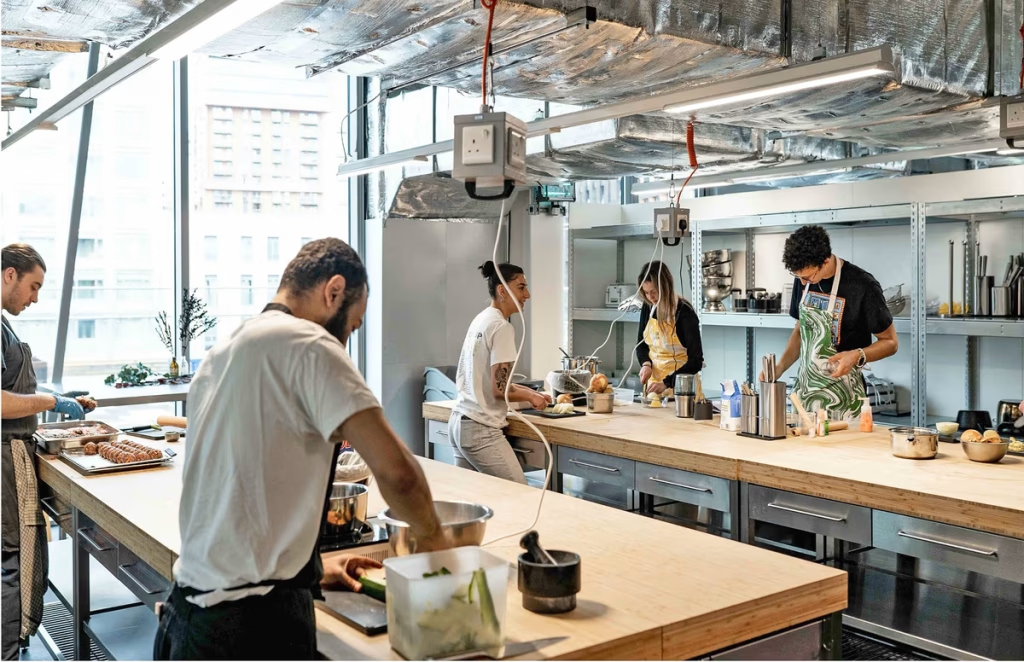
All three tools on this page depend on real kitchen capability. R&D Sprints need a working prototype kitchen. Menu Development needs to test dishes at speed and scale. Application Showcases need a kitchen that can prepare and present a curated menu live. Mission Kitchen in London is our home for all three, with the equipment, the space and the team to run the work properly. We can also run on the ground at client sites, manufacturer kitchens or operator locations when the brief requires.
-
Operational specification from the first dish
Food and menu work that ignores operational reality produces prototypes that win the development meeting and die at the production gate. Every project on this page is run with operational specification built in from the first dish: what the kitchen can deliver, what the supply chain can scale, what the operator can execute. The senior team has worked client-side inside operators and manufacturers, which means the gate questions are anticipated, not discovered later.
-
Made for the next step, not for the photo
We close with prototypes, menus or showcase outputs that are built for the next step of the work, not for the deck cover. A prototype that can be tested in-home or in-restaurant. A menu that can be specified and rolled out. A showcase that has generated the content and the buyer reaction that the next sales conversation needs. Built for what comes next, not for what looks good in a portfolio.
Choosing between the two toolkits
Innovation tools and insight tools on this challenge are designed to work together, but most programmes lean one way at the start. A short decision helper to point you to the right entry point.
Innovation tools are the right starting point when:
- You need to build a prototype, develop a menu, or create an application showcase
- The brief is “make this real” rather than “test what we have”
- The product, menu or application does not exist yet and needs creating
- You need internal teams to experience the product to sell or develop it credibly
- The development clock is ticking on a specific commercial milestone
Insight tools are the right starting point when:
- You have a prototype, product or menu already and need to test it
- The brief is “validate this” rather than “create this”
- Real-world consumer testing in the conditions the product will be sold in is the immediate need
- You need a defensible read on product performance against competition or a benchmark
- The output needs to support a gate review with consumer evidence
Most build-and-test programmes use both, with innovation tools building the prototype, menu or application and insight tools testing the result. If you are not sure which entry point is right, the scoping call is the fastest way to find out.
Made by people who actually make food.
Most food and drink innovation work is run by consultancies that advise on food but do not actually make it. The strategy is credible. The category insight is sharp. The frameworks are well constructed. And the moment the brief lands at the prototype stage, the work either gets handed off to a third-party kitchen the client has to manage, or it produces a deck-friendly concept that cannot survive the operational reality test.
Three things make our build work different. First, specialism. Food and drink is the only sector we serve, which means our senior team can read a prototype, a menu and an operational specification the way an experienced operator or product developer would, not the way a generalist consultant would. Second, real kitchen capability. Mission Kitchen in London is our home for prototype, menu and application work, with the equipment, the space and the team to run the work properly. We are not subcontracting the kitchen step to anyone. Third, operating bias. Our senior people have worked client-side as NPD leads, category managers, executive chefs and operations directors, which means the prototype comes with a credible route to manufacture, the menu comes with operational specification, and the showcase comes with a commercial point of view on what to do with the assets afterwards.
We are not a strategy consultancy that bolts a kitchen onto a deck. We are not a creative agency that styles food without making it. We are the team that runs build work with senior food and drink specialists who already know what the operator will ask, what the supply chain will need, and what the gate review will demand. The food is real. The kitchen is real. The people who make it are real.

Built the product. What comes next?
Innovation tools deliver a prototype, a menu or an application showcase. Most build-and-test programmes follow that output into one of two next moves, depending on whether the work is heading into testing or whether the testing is already done and the next step is commercialisation.
The natural cross-move within this challenge
Insight tools: product, menu and application testing
The prototype, menu or product is built. The next move is testing it in the conditions it will actually be sold in. In-home usage testing for retail products. Central location testing for controlled comparison. In-restaurant testing for foodservice. Qualitative product testing for the why behind the numbers. Menu testing in real or controlled foodservice environments. The point where the build gets validated by the consumer who will actually buy it.
Launch and Scale Innovation Successfully
Some build work closes with a product that has already been validated separately and the next move is commercialisation. When that is the case, the natural next step is the launch and scale toolkit. Retailer pitch support, briefing pack creation, 3PM manufacturing solutions, volumetric forecasting, REVU post-launch evaluation. The point where the built product becomes a launched commercial reality.
Build work, every channel in food and drink
-
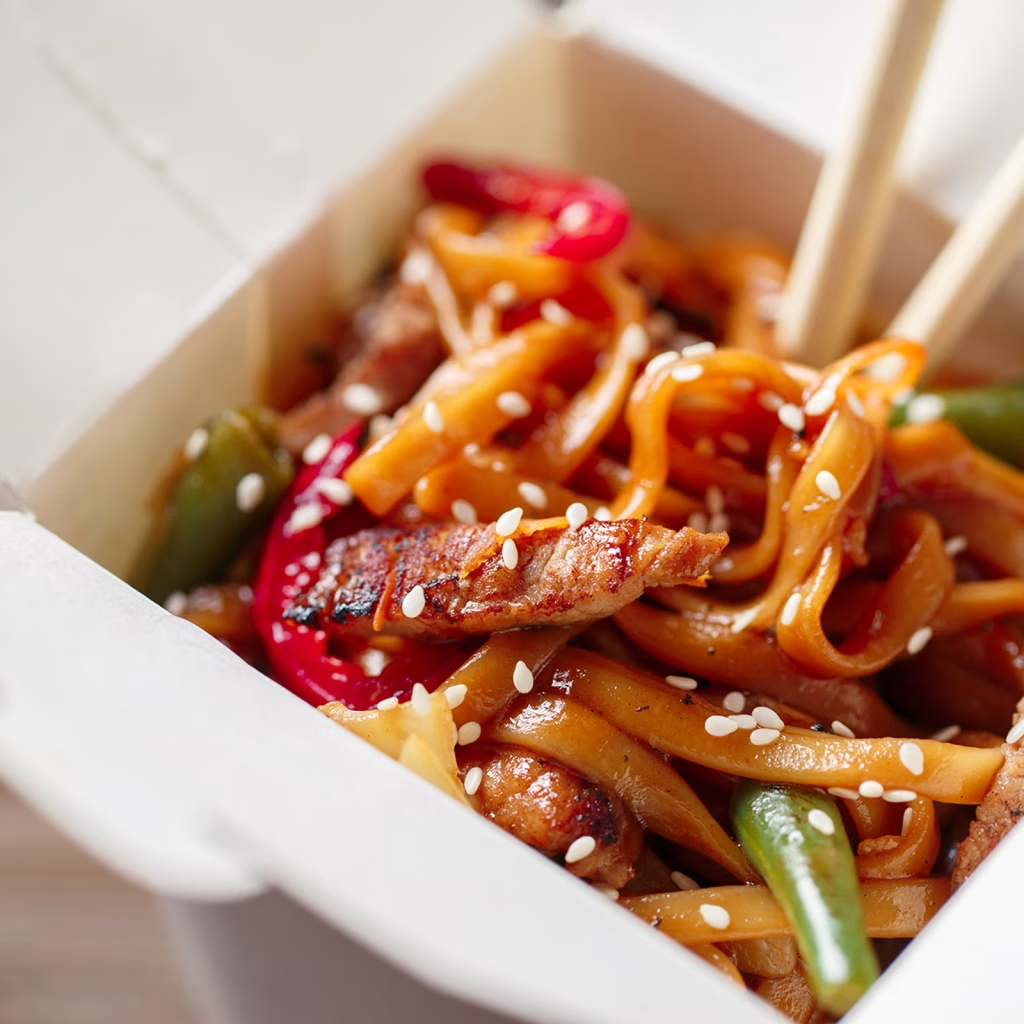
FMCG and branded manufacturers -
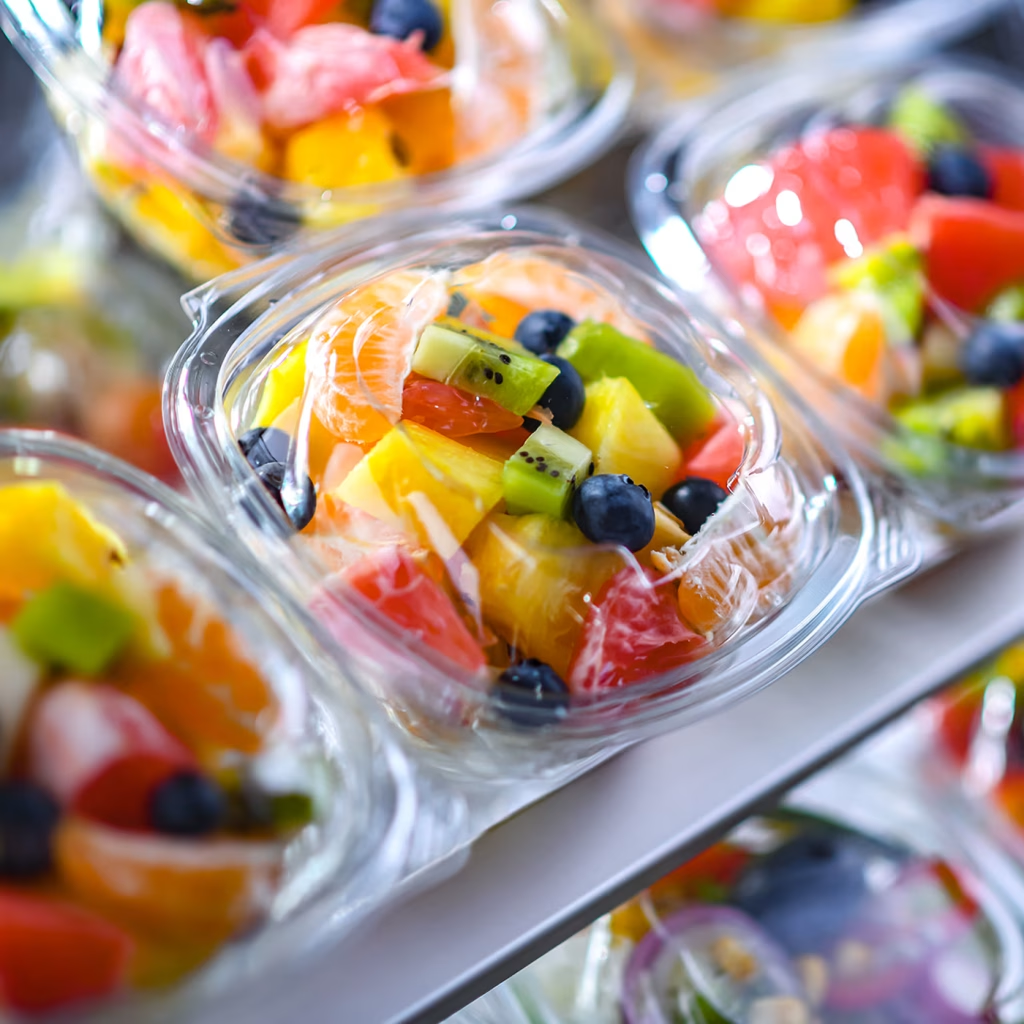
Grocery, retail and own label -
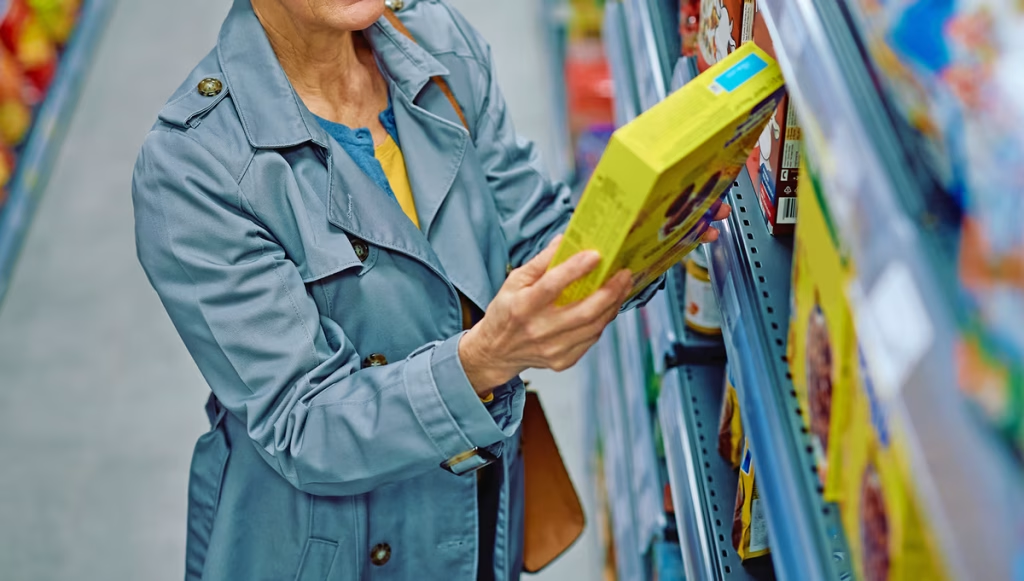
Food service -
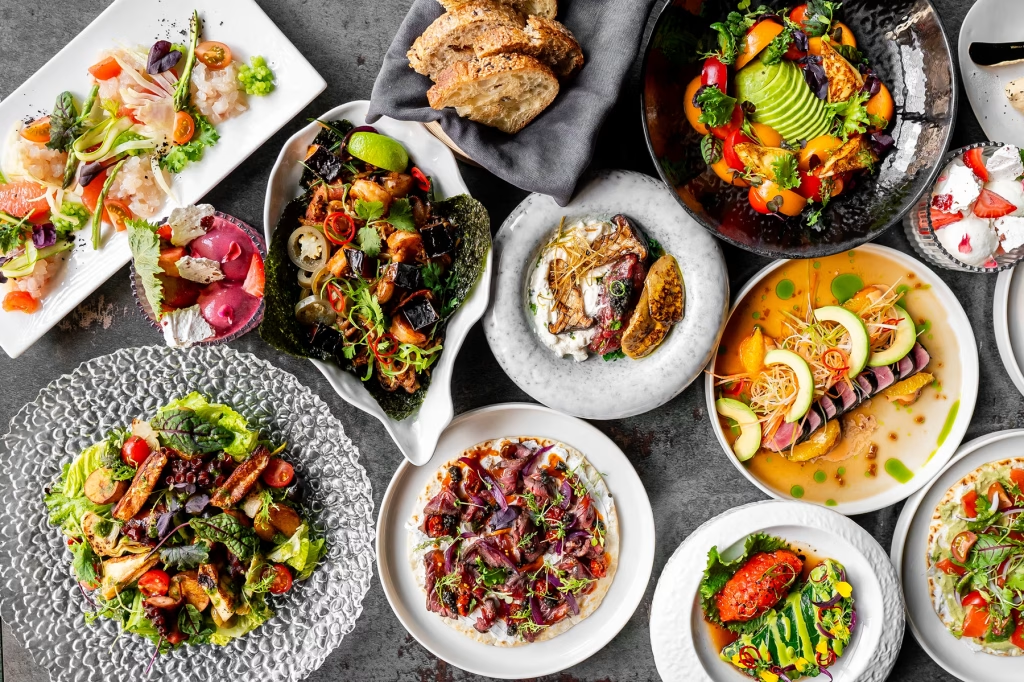
QSR and high street -
Hospitality
Build work that landed in someone’s hands
Two projects across different tools.

FAQs
R&D Sprints build prototypes (single product or product set development, typically for retail or FMCG). Menu Development builds menus (multi-dish menu programmes for QSR, high-street chains and coffee chains). The two tools share a kitchen and a team, but the output is different. Some larger programmes use both: an R&D Sprint to develop a hero product, and Menu Development to build the menu the product sits inside.
We develop them ourselves, in our own kitchen. Mission Kitchen in London is our home for prototype, menu and application work, with the equipment, the space and the team to run the work properly. When a brief requires development on the ground (a client site, a manufacturer kitchen, an operator location, an overseas market), we run it there. We are not subcontracting the kitchen step.
We focus Menu Development specifically on QSR brands, high-street restaurant chains and coffee chains. This is deliberate: menu development for independent restaurants is a different commercial proposition (smaller scale, different operational requirements, different cost-to-deliver economics) and we are not the right partner for that work. Independents looking for menu work would be better served by chefs who specialise in single-site or boutique consultancy.
A focused R&D Sprint runs three to six weeks from brief to finished prototype, depending on the complexity of the development, the number of prototype variants and whether protocept development is included as an additional layer. We will give you a realistic timeline at proposal stage tied to the commercial milestone the prototype is being built for.
Application Showcases are designed to be run in person because the value of the format is the live tasting experience: a sensory deliverable that a remote session cannot replicate. We can run hybrid versions where some stakeholders attend in person at Mission Kitchen and others join remotely, but the in-person element is core to the tool. If a fully remote alternative is needed, the briefing pack creation service inside Challenge 05 is a closer fit.
Mission Kitchen in London is our home for prototype, menu and application work. It is a working kitchen with the equipment, the space and the team to run R&D Sprints, Menu Development and Application Showcases properly. Yes, you can visit. Most client engagements on this challenge involve at least one session at Mission Kitchen, and some commercially significant briefs are built entirely around in-kitchen working sessions with the client team alongside our developers.
Need to make the product real?
Tell us what has to end up in someone’s hand: a prototype for a buyer meeting, a menu for an operational kitchen, a tasting for an internal team. We will tell you which combination of build tools will get you there, in what timeline, run out of Mission Kitchen in London or on the ground wherever the work needs to happen. Twenty minutes on a scoping call with a senior development specialist.